
In a bid to revive housing demand and improve investor confidence in the real estate sector, the National Real Estate Development Council (NAREDCO) has submitted a set of key policy recommendations to the Union Ministry of Finance, including a higher limit for interest deduction on home loans and the reinstatement of the Income Tax Settlement Commission.
The recommendations were announced ahead of NAREDCO’s Urban and Real Estate Development Conclave 2026, a national-level industry conclave being organised under the aegis of the Union Ministry of Housing and Urban Affairs.
Proposal to Raise Home Loan Interest Deduction Limit
NAREDCO has suggested a major rationalisation of tax benefits on housing finance. Under current provisions, deduction on interest paid on housing loans for owner-occupied houses is capped at ₹2 lakh per annum, while no such cap applies to rented properties.
In its submission, NAREDCO recommended that:
- The ₹2 lakh limit should be raised to ₹5 lakh or more for owner-occupied homes
- Deduction on interest should be allowed from the year in which capital is borrowed, similar to principal repayment benefits under Section 80C
- The existing condition requiring completion or acquisition within five years from the year of borrowing should be removed
“At least the limit of ₹2 lakh should be raised to ₹5 lakh or more for owner-occupied houses. Also, the five-year period for acquisition or completion from the year of borrowing should be dispensed with,” NAREDCO stated.
Currently, under Section 24(b) of the Income Tax Act, 1961 (corresponding to Section 22 of the Income Tax Act, 2025), full interest deduction is available only for rented properties, while owner-occupied homes face a strict cap and time-linked conditions.
Boosting Housing Demand Through Tax Rationalisation
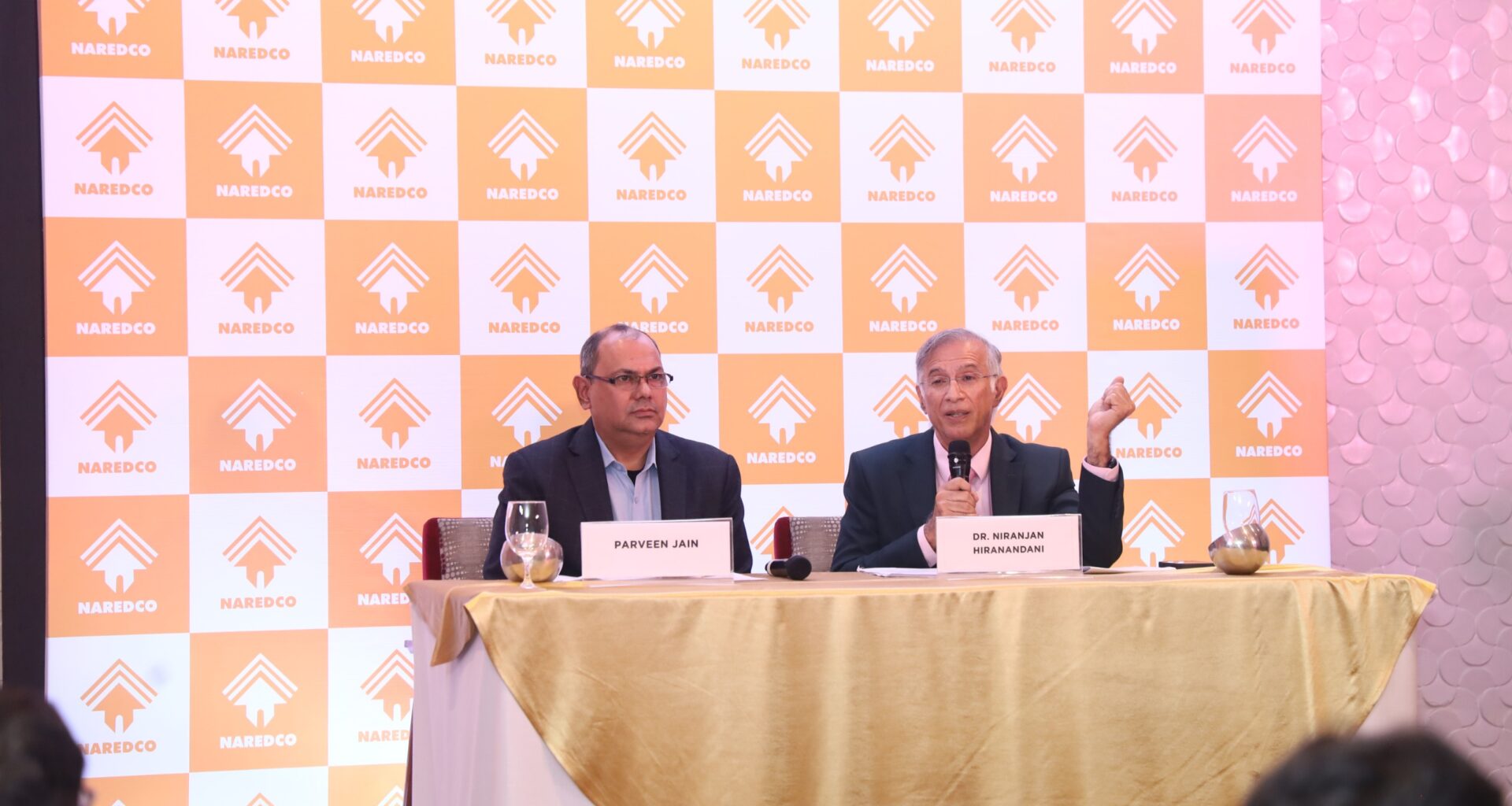
Commenting on the proposals, Mr. Parveen Jain, President, NAREDCO, said:
“The real estate sector plays a critical role in India’s economic growth, employment generation and urban transformation. Rationalising taxation, especially on housing finance, will directly stimulate end-user demand, provide relief to homebuyers impacted by project delays, and restore buyer confidence.”
NAREDCO noted that cash flow constraints and project delays have affected buyer sentiment, making enhanced tax relief critical for reviving housing demand.
Call for Reinstatement of Income Tax Settlement Commission
NAREDCO has also urged the government to reinstate the Income Tax Settlement Commission, which was discontinued with effect from February 1, 2021. The commission, established in 1976, provided taxpayers a one-time opportunity to settle disputes with tax authorities and obtain relief from penalties and prosecution.
The apex body pointed out that the current dispute resolution framework excludes certain cases—particularly those where lower appellate authorities disposed of appeals before July 22, 2024, but where the window for higher appeals remains open.
“Restoring and strengthening dispute resolution mechanisms like the Income Tax Settlement Commission is critical for fostering a transparent, investor-friendly environment in the real estate sector,” said Dr. Niranjan Hiranandani, Chairman, NAREDCO.
Wider Tax Reforms Suggested to Support Housing Demand
Among other measures, NAREDCO recommended:
- Reducing the effective tax rate (including surcharge and cess) for non-corporate entities to 25%
- Capping individual income tax rates at 30%, including surcharge and cess
The organisation highlighted that real estate contributes about 8% to India’s GDP and employs nearly 19% of the country’s workforce, making it the second-largest employer after agriculture.
Push for Rental Housing Incentives
To further promote affordable and rental housing, NAREDCO suggested removing the requirement of central government notification for availing tax benefits under Section 80-IBA of the Income Tax Act, 1961 (Section 142 of the IT Act, 2025).
Currently, only notified rental housing projects qualify for deductions. Removing this condition, NAREDCO said, would incentivise private developers to participate more actively in the rental housing segment, in line with the government’s ‘Housing for All’ vision.
Urban & Real Estate Development Conclave 2026 Announced
In this context, NAREDCO announced that the Urban and Real Estate Development Conclave 2026 will be held on 13–14 February 2026 at Yashobhoomi, New Delhi, in collaboration with AIFORERA and KPMG.
The conclave will bring together policymakers, government officials, industry leaders and investors to deliberate on key themes such as:
- Transit-oriented development
- Rental housing
- Sustainable redevelopment
- RERA reforms and regulatory alignment
- Institutional investments and digitisation
- Real estate’s role in achieving Viksit Bharat 2047
Also Read: budget expectations for real estate