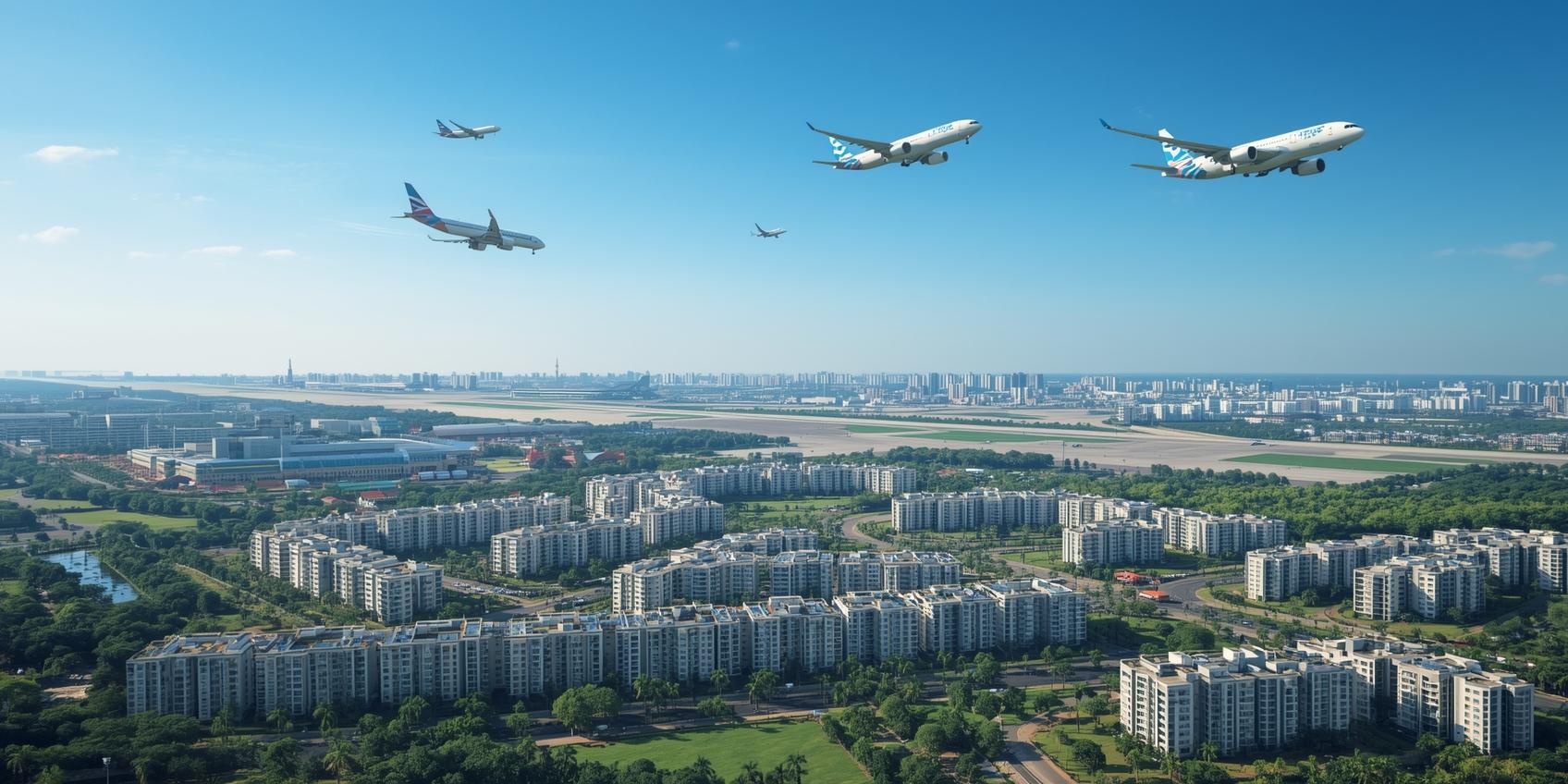

Infrastructure push fuels demand for second homes and luxury housing across Navi Mumbai and surrounding regions
The long-awaited launch of commercial operations at the Navi Mumbai International Airport has triggered a fresh wave of optimism across Navi Mumbai and its surrounding real estate markets. With the first commercial flight taking off this week, developers, investors, and homebuyers are rapidly shifting their focus toward Navi Mumbai and extended micro-markets, marking a new phase in the region’s property cycle.
The airport’s operational debut has arrived alongside accelerated execution of major infrastructure projects, positioning Navi Mumbai as one of the fastest-growing real estate corridors within the Mumbai Metropolitan Region (MMR).
Infrastructure Push Reshapes Navi Mumbai’s Real Estate Landscape
The airport launch is being reinforced by multiple connectivity upgrades, including:
- Mumbai Trans Harbour Link (Atal Setu), cutting travel time between South Mumbai and Navi Mumbai
- Mumbai–Navi Mumbai Metro, improving internal and suburban connectivity
- Alibaug–Virar Multimodal Corridor, enhancing east–west movement
- Mumbai–Pune Expressway upgrades, benefiting Khopoli, Karjat, and adjoining zones
Together, these projects are significantly improving accessibility, making Navi Mumbai and its peripheral locations more attractive for both residential end-users and long-term investors.
Property Prices Rise 15–35% in a Year
Infrastructure-led optimism has translated directly into sharp price appreciation. According to industry estimates, residential property prices across Navi Mumbai and nearby locations have recorded year-on-year growth ranging from 15% to 35% over the past 12 months.
Average YoY Price Appreciation (Dec 2024–Dec 2025)
- Ulwe: 30–35%
- Panvel: 25–30%
- Kharghar: 20–25%
- Taloja: ~20%
- Khopoli: 18–22%
- Karjat: 15–20%
- Alibaug: 20–25%
Markets closest to the airport, particularly Ulwe and Panvel, have seen the sharpest surge. At the same time, locations within a 45-minute connectivity radius of the airport are increasingly being identified as high-potential investment destinations.
Second Homes and Luxury Housing Gain Momentum
Changing lifestyle preferences and the continued adoption of work-from-home and hybrid work models are further accelerating demand for second homes, weekend residences, and lifestyle-driven housing.
Locations such as Karjat, Khopoli, Alibaug, and parts of Navi Mumbai are witnessing growing interest from Mumbai-based buyers seeking larger homes, open spaces, and long-term capital appreciation.
Reflecting this trend, CREDAI has organised a special property showcase in Navi Mumbai, while several leading developers are preparing to launch premium and luxury residential projects across these emerging corridors.
Industry View: Airport Marks a Structural Shift
Industry leaders view the airport launch as a defining milestone for the extended MMR property market.
Mohit Malhotra, Founder and CEO, NeoLiv, said the airport will act as a catalyst for long-term regional transformation.
“The first flight from Navi Mumbai International Airport marks a defining moment for the extended MMR, setting in motion a new phase of regional growth. While micro-markets closest to the airport will benefit immediately, its larger impact will unfold across strategically connected locations such as Khopoli.”
He pointed out that Khopoli’s location along the Mumbai–Pune Expressway positions it to benefit from improved accessibility, rising economic activity, and employment generation linked to the airport ecosystem.
Malhotra added that areas within a 45-minute travel radius of the airport offer a rare mix of connectivity, affordability, and lifestyle value, making them attractive for both end-users and long-term investors.
Outlook: Strong Upside Likely by 2026
Real estate analysts believe the current momentum is only the beginning. As the airport becomes fully operational and supporting metro and road infrastructure reaches completion, Navi Mumbai’s property market is expected to witness another major upswing by 2026.
With residential prices still significantly lower than Mumbai’s core markets, Navi Mumbai is increasingly being viewed as a long-term growth engine for the MMR housing market—especially for buyers who enter early in the infrastructure cycle.
Why Homebuyers Are Watching Navi Mumbai Closely
For homebuyers and investors alike, the Navi Mumbai story offers key takeaways:
- Airport-led growth is translating into real price appreciation, not just speculation
- Infrastructure delivery is now visible and operational, reducing execution risk
- Demand is expanding beyond end-use to second homes and lifestyle housing
- Peripheral markets offer better affordability with future upside
As connectivity improves and economic activity expands, Navi Mumbai appears well positioned to emerge as one of India’s most important urban growth corridors over the next decade.
Also Read: Navi Mumbai International Airport Set to Transform Regional Connectivity and Urban Growth