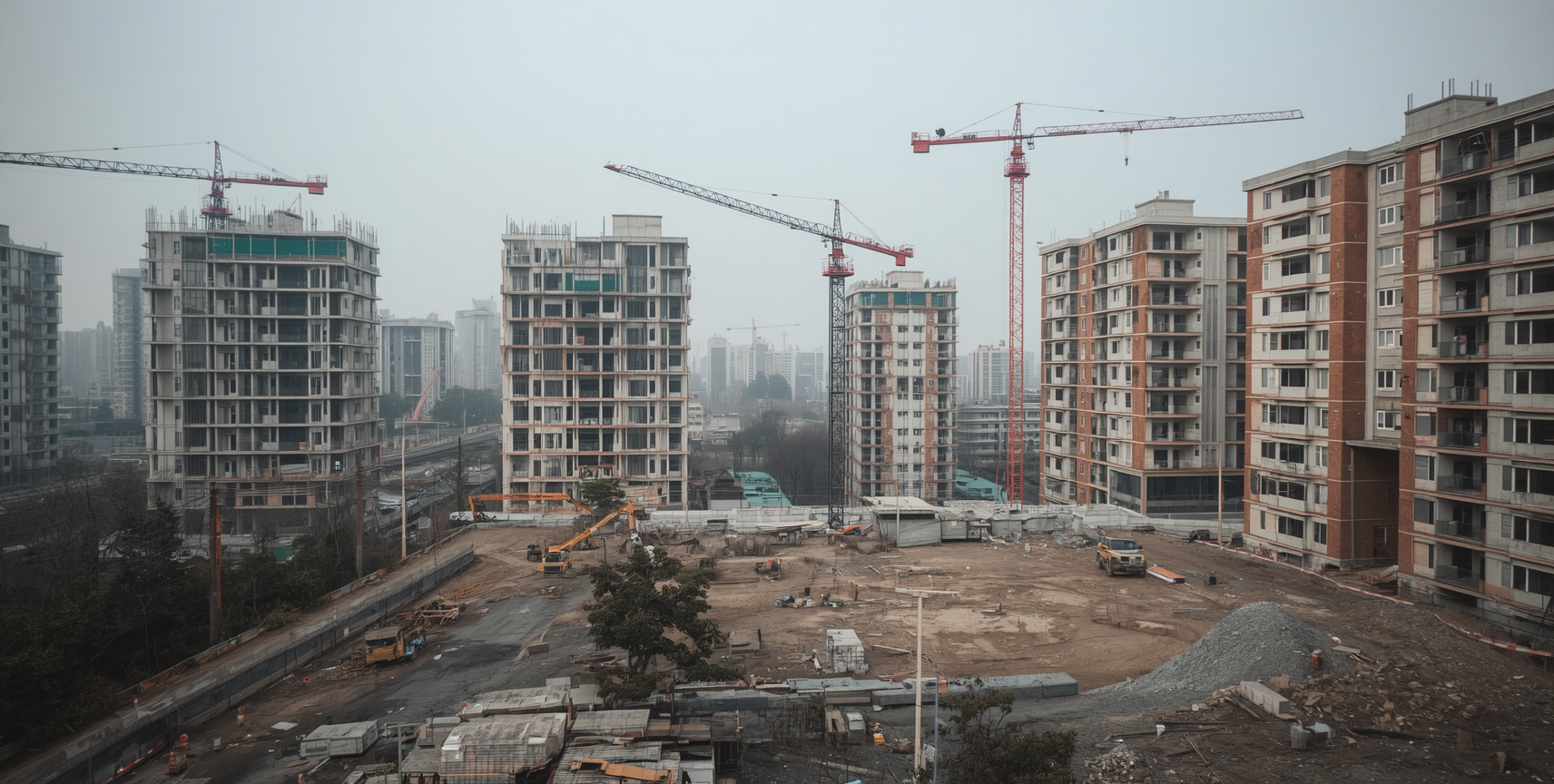

India’s commercial real estate sector sent mixed signals in the first quarter of 2026. While office demand remained strong, construction activity witnessed a sharp slowdown, highlighting growing caution among developers amid global uncertainties triggered by the West Asia crisis.
According to Vestian Research, new office completions across India fell drastically by 36% quarter-on-quarter to 9.7 million sq ft in Q1 2026—the lowest level seen in the past four quarters. The decline was led by major cities such as Bengaluru, Hyderabad, and Mumbai, where developers slowed down project deliveries due to supply chain disruptions and geopolitical concerns.
Hyderabad saw the steepest fall, with new completions plunging by a staggering 95%—from 6.0 million sq ft in Q4 2025 to just 0.3 million sq ft in Q1 2026. Mumbai and Bengaluru also reported notable declines in new supply on a quarterly basis, reflecting a broader trend of cautious project execution.
However, in stark contrast to the supply slowdown, office leasing activity remained robust. Total absorption rose 20% year-on-year to 21.53 million sq ft in Q1 2026, indicating sustained demand from occupiers despite global macroeconomic challenges.
This resilience has been largely driven by India’s growing appeal as a global business hub. Companies—especially Global Capability Centres (GCCs)—continue to expand operations in India due to cost efficiency, talent availability, and scalability. Stable macroeconomic factors such as steady GDP growth, controlled inflation, and relatively stable interest rates have further supported business expansion.
City-wise, Bengaluru continued to dominate the office market, recording 4.91 million sq ft of leasing activity, followed by Pune at 3.92 million sq ft—its highest-ever quarterly absorption. Hyderabad also showed strong demand with a 47% year-on-year growth in leasing.
Mumbai, despite a slight dip in absorption, retained its position as India’s most expensive office market, with rentals touching ₹152.6 per sq ft per month during the quarter.
The imbalance between strong demand and slowing supply has started tightening vacancy levels across major cities. Pan-India vacancy rates dropped to 9.5% from 10.8% in the previous quarter. As a result, rental values have continued to rise, especially in prime office locations, signaling a shift toward a landlord-driven market.
Industry experts believe this trend could continue in the near term. While supply constraints may persist due to global uncertainties, demand is expected to remain strong, fueled by rapid GCC expansion and increasing preference for sustainable and high-quality office spaces.
Looking ahead, India’s office real estate market appears poised for long-term growth, even as short-term supply-side challenges continue to shape the sector’s dynamics.
Also Read: Affordable Housing Crisis: Will Budget 2025-26 Turn the Tide?