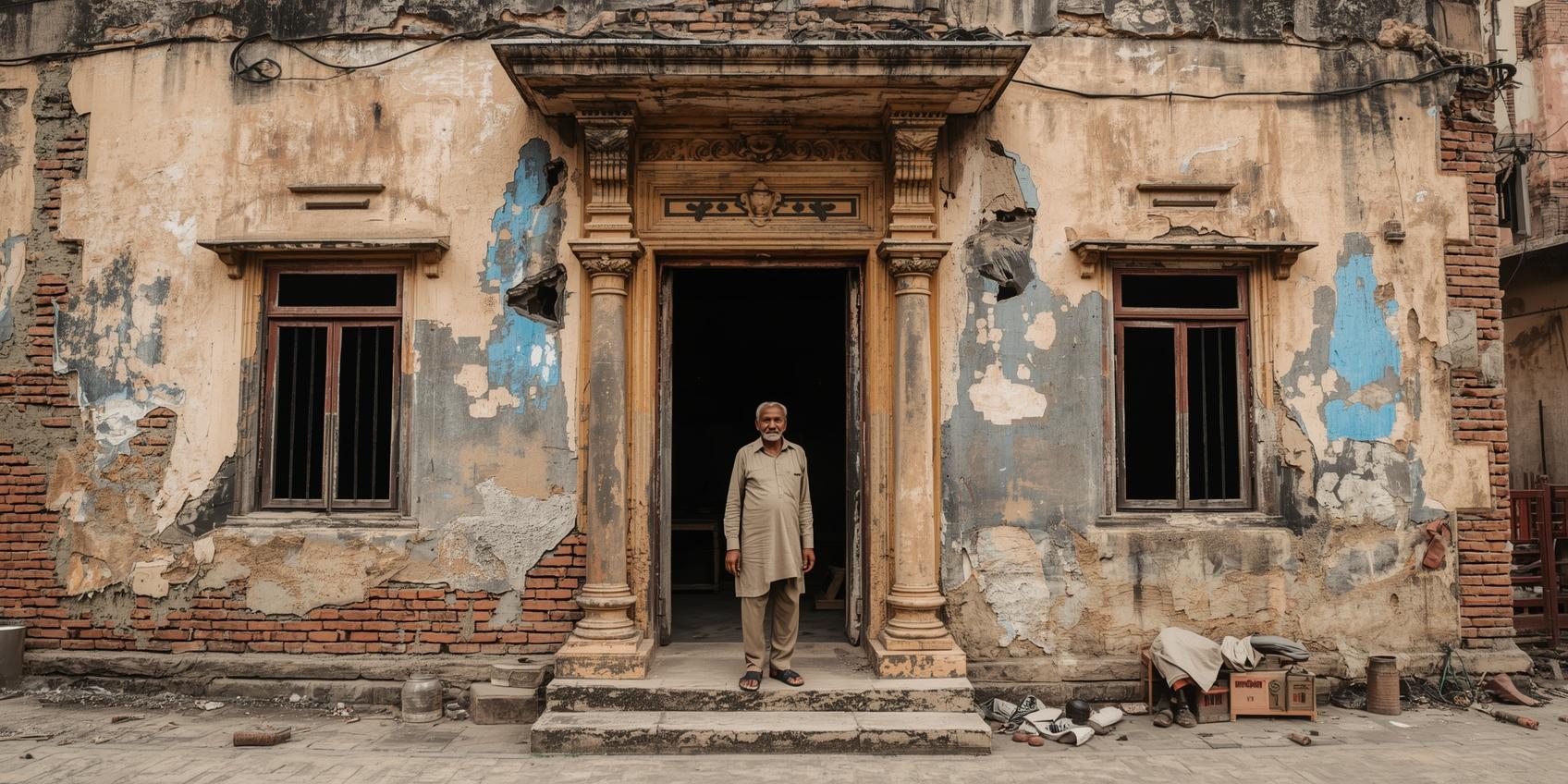

In a landmark ruling that balances tenant protections with landlords’ rights under rent control laws, the Bombay High Court (Kolhapur Bench) has restored an eviction decree in favour of a retired banker, declaring that even after a dilapidated building is pulled down, the underlying tenancy right survives on the land — yet the landlord can still win possession on grounds of genuine personal need and non-use.
The case, Civil Revision Application No. 4 of 2025 (Ajitnath Tatyasaheb Shetti vs. M/s. Govindram Shobharam and Company), decided on February 20, 2026 by Justice M.M. Sathaye, highlights a common dilemma in old rent-controlled properties across Maharashtra: what happens when municipal authorities demolish a dangerous structure?
The Backstory
Ajitnath Shetti, now 76–77 and a pensioner, inherited an 85-year-old stone-and-mud building in Sangli’s bustling Ganpati Peth market area. The ground floor — a modest godown measuring roughly 73 ft × 16 ft — had been rented to a partnership firm (Govindram Shobharam & Co.) as monthly storage space since his father’s time, at a controlled rent of just ₹104.25 per month (excluding taxes and electricity).
In 2010, Shetti filed a suit for eviction under the Maharashtra Rent Control Act, 1999, mainly on two grounds:
- Bona fide requirement (Section 16(1)(g)): After retiring from bank service in 2009, he genuinely needed the spot to start a small hardware store or hotel business in the prime market location.
- Non-user (Section 16(1)(n)): The tenant had allegedly kept the godown locked and unused for over six months (in fact, witnesses said 16–17 years) without reasonable cause.
The trial court (3rd Joint Civil Judge, Sangli) in 2018 sided with Shetti, ordering eviction after finding both grounds proved.
However, during the tenant’s appeal, the municipal corporation — acting on its 2010 notice declaring the structure dangerous — demolished the entire building. The District Judge (Sangli) in 2024 reversed the trial court, reasoning: “The premises no longer exist, so how can the landlord need or repair something that’s gone? Suit dismissed.”
High Court Steps In: Tenancy Survives Demolition — But Landlord Still Wins
Shetti challenged the reversal in the High Court. Justice Sathaye carefully unpacked the law:
- Does demolition end the tenancy? No — it survives on the land. The judge relied on a key Supreme Court precedent: Shaha Ratansi Khimji & Sons v. Kumbhar Sons Hotel Pvt. Ltd. (2014) 14 SCC 1. In simple terms: When you rent a building, you’re really renting both the building and the land underneath. Destroying only the building (superstructure) does not automatically kill the tenancy — the legal right continues over the vacant plot/site, as long as the land exists and can be used. This principle comes from Section 108 of the Transfer of Property Act, 1882, and was reaffirmed when the Supreme Court overruled an earlier contrary view. So in this case: Building gone (demolished per municipal order), but tenancy lives on over the empty land. The tenant’s protected status didn’t vanish.
- But rent control law still governs — and the landlord proves his case. Drawing from another Supreme Court ruling (Abdul Khuddus v. H.M. Chandiramani, 2021), Justice Sathaye clarified: This is a statutory protected tenancy under the Maharashtra Rent Control Act. General property laws can’t override it. Crucially, the court must judge bona fide requirement as on the date the suit was filed (2010), when the godown still stood (though dilapidated).
- Shetti personally testified to his genuine post-retirement business need; cross-examination didn’t shake it.
- Landlord is the “best judge” of his own needs (settled law).
- Subsequent demolition doesn’t “eclipse” the need unless it’s completely extinguished — here, it wasn’t. For non-user: Neighbours confirmed the place was locked for years; the tenant’s own witness admitted needing and using it as a convenient godown next to their property — undermining claims that “dilapidation” excused non-use. The tenant never sought court permission to repair.
- Hardship tilts against tenant Evidence showed the tenant was financially strong: They had licensed out 865 sq.ft. of their own modern space to a bank (earning fees for 5 years). Hardship was greater for the retired landlord.
Outcome
The High Court set aside the appellate reversal as “perverse” and restored the trial court’s eviction order (on bona fide requirement and non-user grounds only). No stay was granted — the building is already gone, but legal possession now belongs to Shetti.
This ruling sends a clear message: Demolition protects neither side automatically — tenancy survives, but landlords can still evict on proven statutory grounds if the original need was real.
Also Read: Bombay High Court Shocker: Builder Can’t Form Two Societies in One Building