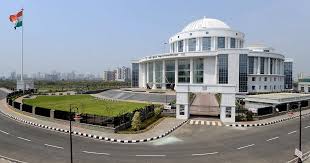

In a revelation that raises serious questions about administrative standards inside the Navi Mumbai Municipal Corporation (NMMC), a newly issued Maharashtra Government Resolution (GR) dated 4 December 2025 confirms that not a single Executive Engineer (Civil) in NMMC holds an engineering degree from a government-recognised university — a basic qualification required for promotion to the senior post of Additional City Engineer (Civil).
Faced with this embarrassing reality, the state government has been left with no option but to bend its own rules and grant a one-time relaxation to promote Shri Arvind B. Shinde, despite the GR itself stating clearly that Shinde does not possess a degree from a recognised university.
🔍 What the Government Resolution Reveals
The GR summarises the situation starkly:
- Under the NMMC Service Rules, 2021, the post of Additional City Engineer (Civil) is 100% promotion-based.
- Eligibility requires:
- A civil engineering degree from a recognised university, and
- Three years of service as Executive Engineer (Civil).
However, the GR explicitly says that none of NMMC’s Executive Engineers qualify because none of them hold a recognised engineering degree. This has caused a “long-standing vacancy” and a “functional bottleneck” in the Corporation.
🔧 Govt Forced to Break Its Own Rule
To keep work moving and avoid administrative paralysis, NMMC passed a resolution seeking special relaxation so that the seniormost Executive Engineer, Arvind Shinde, could be promoted despite missing the mandatory qualification.
The state government has now approved this exception, stating:
- The relaxation is granted only for Shinde,
- Only until he retires, and
- Only to ensure someone is available to handle the duties of Additional City Engineer.
This means the government is overriding the statutory qualification requirement, solely because NMMC does not have even one eligible engineer with the required degree.
🏛 A Major Blow to NMMC’s Claims of Professional Excellence
Navi Mumbai frequently projects itself as a planned, world-class city within the Mumbai Metropolitan Region (MMR). But the GR exposes a troubling contradiction:
A municipal corporation handling billions of rupees in infrastructure works does not have a single Executive Engineer with a degree from a government-recognised university.
The fact that Maharashtra had to officially amend rules just to fill one senior engineering post raises deeper concerns about:
- Recruitment standards
- Qualification verification
- Administrative oversight
- The long-term structural health of NMMC’s engineering departments
📌 The Larger Question
If the city’s engineering leadership itself lacks basic recognised qualifications, what does this mean for the quality, safety, and oversight of public works executed within Navi Mumbai?
This GR does not simply highlight a vacancy — it exposes a structural failure that deserves public scrutiny
Also Read: Maharashtra Government Revises Urban Tribal Settlement Improvement Scheme