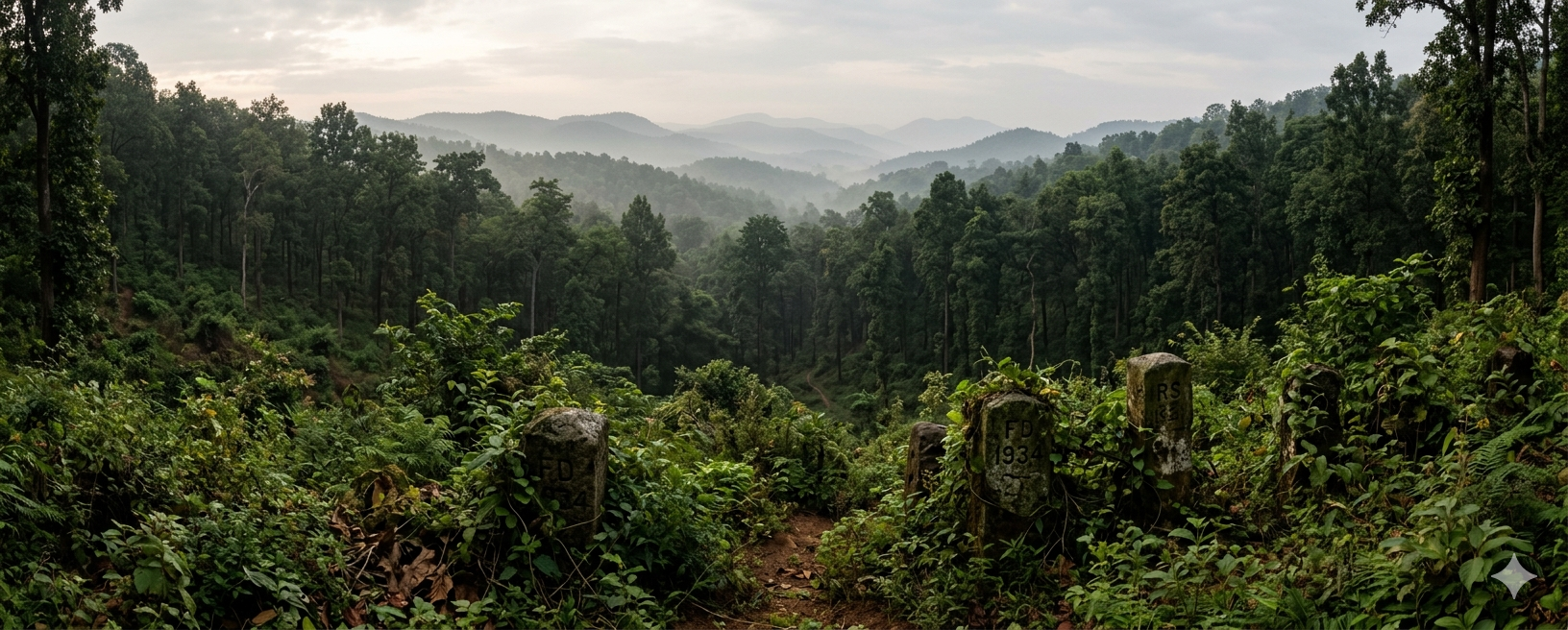

In a significant judgment delivered on May 6, 2026, the Supreme Court of India has firmly reiterated that entries in revenue records such as Pahanies, Faisal Patti, and Vasool Baqi do not constitute proof of title or ownership. The apex court dismissed the Civil Appeal filed by Vadiyala Prabhakar Rao & Ors. against The Government of Andhra Pradesh & Ors. (now representing the State of Telangana), bringing an end to a decades-old dispute over 600 acres of land in Survey No. 81, Kalvalanagaram Village (presently in Bhadradri Kothagudem District, Telangana).
The case originated from a 1950 Gazette Notification issued under the Hyderabad Forest Act proposing to declare 787 acres, including the disputed 600 acres, as reserve forest. The appellants claimed that the land was granted as patta by the Nizam of Hyderabad in the 1930s to their predecessors-in-interest. They relied heavily on old revenue entries, land ceiling declarations from the 1970s, and a 1990 Mandal Revenue Officer report to assert ownership and sought exclusion of the land from the proposed forest reservation.
The Joint Collector, Khammam, rejected their claim in 2003, holding that the appellants failed to produce the primary document — the actual patta certificate — and that mere revenue entries were insufficient to prove title. The appellants challenged this order before the High Court. A Single Judge allowed the writ petition in 2012, declaring the 1950 forest proceedings ultra vires. However, the Division Bench reversed the order, leading to the appeal before the Supreme Court.
A two-judge bench comprising Justices Pankaj Mithal and S.V.N. Bhatti delivered the verdict. The Supreme Court held that revenue records serve only a fiscal purpose — to facilitate collection of land revenue — and have no presumptive value for establishing ownership. Citing a long line of precedents, the Court observed that mutation entries do not create or extinguish title, and in the absence of the original patta or grant order, the appellants’ claim could not be sustained.
The bench further noted that the revenue records produced by the appellants were contradictory: while some columns showed private names, the land was simultaneously recorded as “Jungle” (forest). The Court emphasised that serious disputes involving title to property, especially government or forest land, cannot be adjudicated in writ proceedings under Article 226 of the Constitution. Such matters require a full-fledged civil suit where evidence can be properly tested.
The Supreme Court also upheld the validity of the 1950 forest notification, rejecting the technical argument that it was issued under a repealed enactment. Consequently, the 600 acres remain available for declaration as reserve forest. The Civil Appeal was dismissed with no order as to costs.
This judgment is being seen as a landmark clarification on the limited evidentiary value of revenue records in title disputes, particularly in cases involving forest land and claims based on pre-Independence princely state grants. It strengthens the Forest Department’s position in similar pending matters across the country and underscores that private claims over forest areas must be backed by unimpeachable primary documents, not secondary revenue entries.
Also Read: Guardians Real Estate Advisory Records Rs 262 Crore Revenue