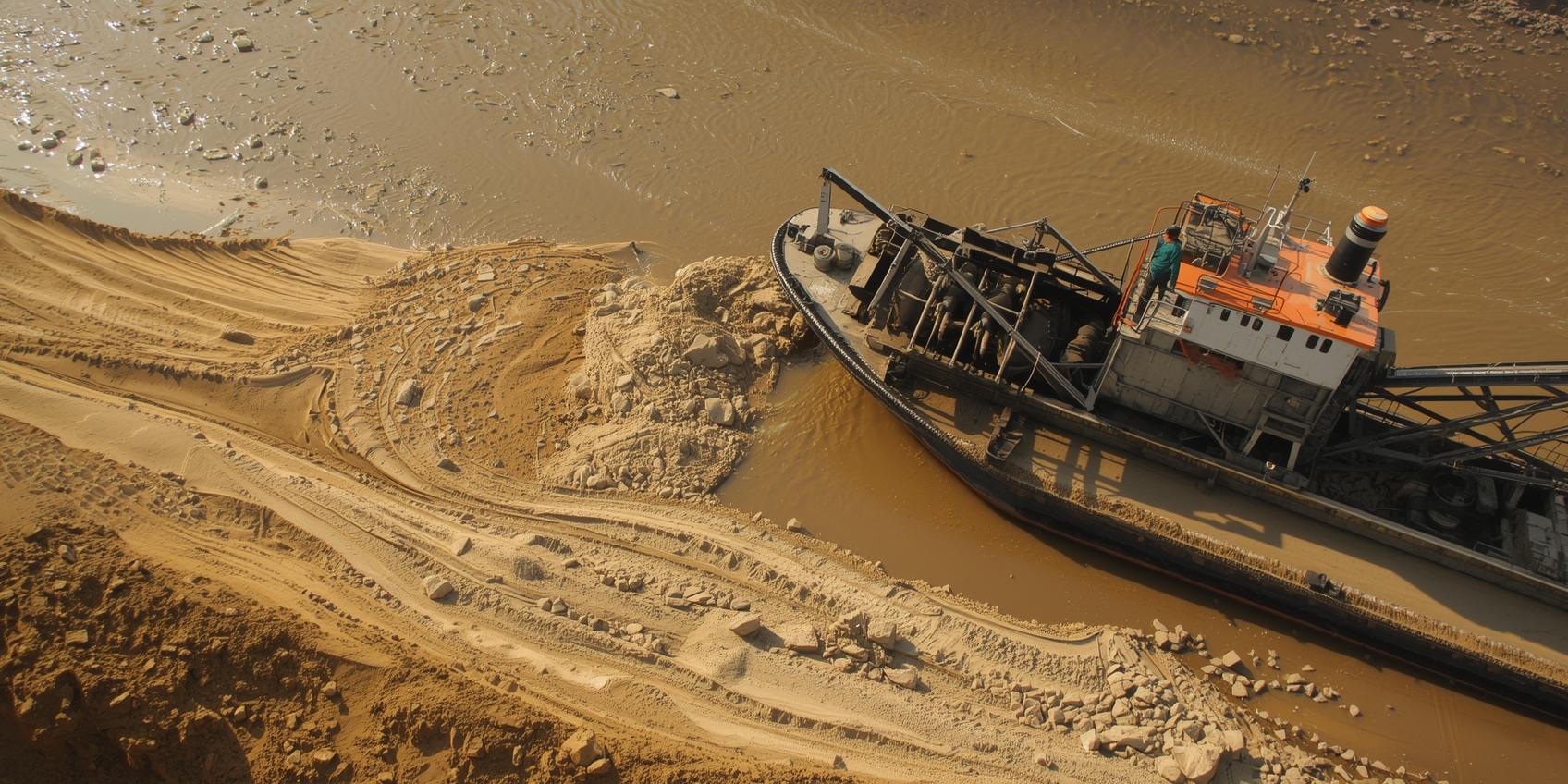

In a significant move aimed at supporting affordable housing and strengthening environmental safeguards, the Maharashtra government has unveiled major changes to its sand extraction policy. The revised rules—issued through a Government Resolution (GR) dated 9 October 2025—introduce shorter auction lease periods, a new pricing formula, and streamlined e-auctions, marking one of the most important sand policy overhauls in recent years.
🧱 Policy Tweak to Support Affordable Housing
The 10% discounted sand quota for Pradhan Mantri Awas Yojana (PMAY) and other government housing schemes will continue, ensuring that affordable housing projects receive sand at concessional rates.
Under the earlier system, contractors were required to supply 10% of their excavated sand at a nominal price to PMAY projects—often absorbing the cost themselves. This discouraged participation in auctions and led to supply bottlenecks.
The new policy changes this by revising the “upset price” calculation. Now, upset price will be determined as:
90% of total excavable sand × prevailing market price
This ensures the discounted quota is factored in upfront, protecting contractor margins while maintaining concessional supply for affordable housing. It’s expected to keep construction costs stable for government-backed projects, benefiting low- and middle-income homebuyers.
🌿 Shorter Lease Periods for Environmental Protection
One of the most notable reforms is the reduction of sand auction lease periods from 2–3 years to just 1 year for both river and creek sand blocks.
Earlier, contractors often over-extracted sand after the first year, leading to:
- Depletion of riverbeds,
- Illegal mining beyond approved limits, and
- Revenue loss for the state.
By capping leases at 1 year, the government aims to:
- Improve environmental monitoring,
- Prevent over-extraction and stockpiling,
- Reset auction prices annually to reflect market conditions.
💻 Centralized e-Auctions for Transparency
The policy introduces annual e-auctions to bring greater transparency and efficiency:
- For river sand, one combined e-auction per sub-division will be held annually.
- For creek sand, the Maharashtra Maritime Board will conduct block-wise e-auctions.
This centralized approach is expected to curb cartelisation, reduce manipulation, and ensure fair competition among bidders.
📊 Key Policy Changes at a Glance
| Parameter | Earlier Policy | New Policy (Oct 2025) |
|---|---|---|
| Auction Tenure | River: 2 yrs Creek: 3 yrs | Both reduced to 1 year |
| Upset Price | Market rate (variable) | 90% of total quantity × market price |
| PMAY Sand Quota | 10% discounted, cost borne by contractor | 10% continues, but built into pricing structure |
| e-Auction | Multiple, scattered | Centralized annual auctions |
🏘 Why It Matters for the Common Man
For homebuyers, especially those looking at PMAY or EWS housing, this policy ensures that project costs remain contained, as sand remains available at concessional rates.
For individual home builders, annual auctions and transparent pricing could mean more stable sand prices and less dependence on black-market sand, which often inflates construction costs.
Environmentally, shorter leases are expected to reduce over-mining pressure on river systems, aligning the policy with sustainable resource use.
Also Read: Why Are Thousands Rushing to Apply for the MHADA Konkan Lottery