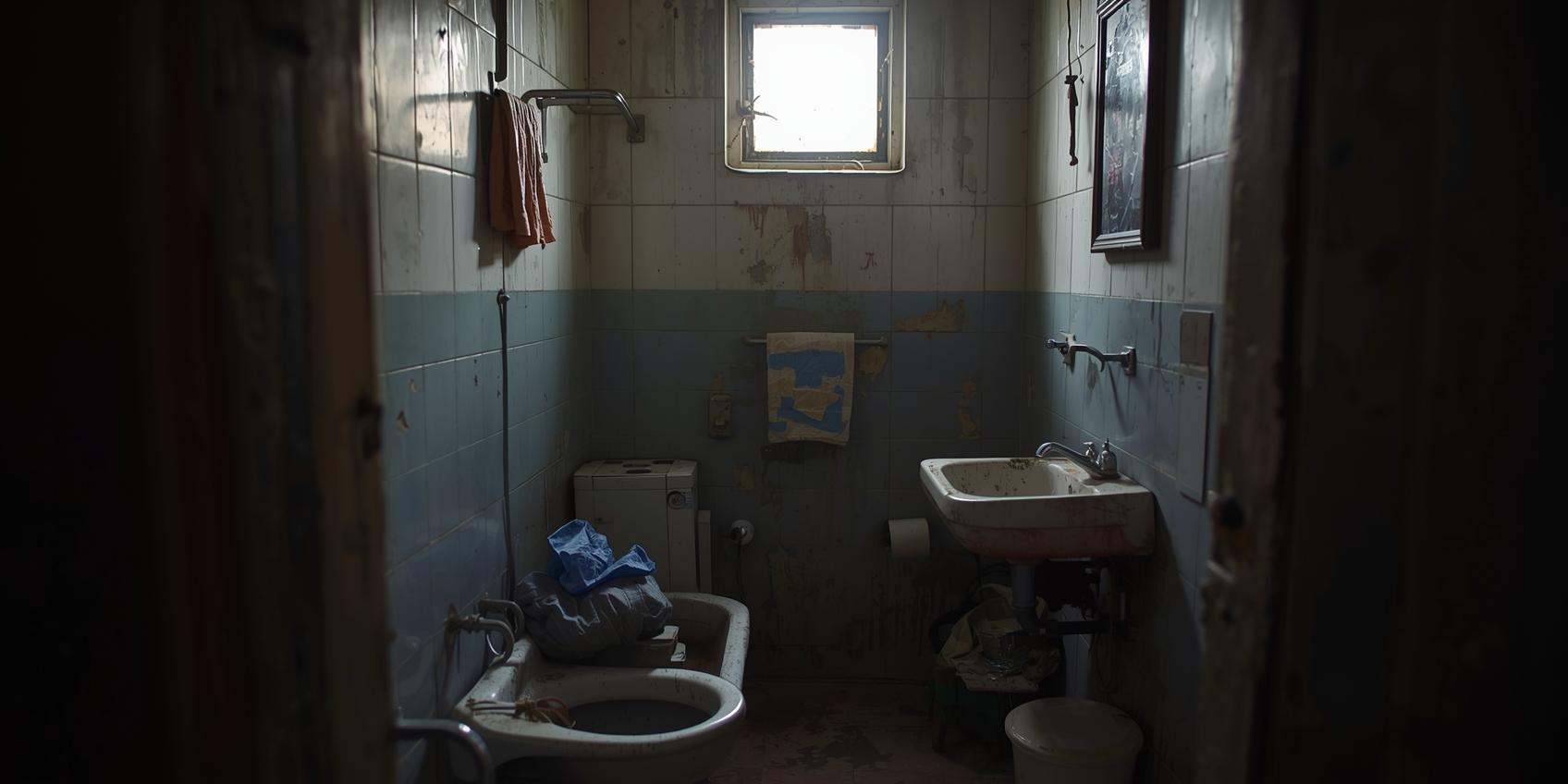

The Bombay High Court has granted interim protection to a Worli-based family living in Mumbai’s iconic BDD Chawl redevelopment precinct, after observing that a tenement recorded on paper as a “common bathroom” has, in reality, been used as a residential home for nearly four decades.
In an order passed on Wednesday, December 17, 2025, a Division Bench of Justice G.S. Kulkarni and Justice Aarti Sathe directed that no coercive action be taken against the petitioners until the matter is heard further, while also ordering a court-supervised site inspection to verify the actual nature of the premises.
The dispute: A ‘bathroom’ that became a home
The petition has been filed by Malan Baburao Beekar, widow of the late Baburao Beekar, along with another family member, who claim to be in occupation of Room No. 81, Chawl No. 18, BDD Chawl, NM Joshi Marg, Worli, since 1986.
According to the petitioners, although the room is shown in official records and redevelopment plans as a common bathroom, it has been used and recognised as a residential tenement for decades. The family argues that while other BDD Chawl occupants are being granted permanent alternate accommodation (PAA) under the ongoing redevelopment, they are being excluded solely because of this technical classification.
Their core grievance: long-standing occupation is being ignored in favour of outdated paper records.
High Court finds “prima facie substance”
After perusing the record, the Bench noted that there appears to be prima facie merit in the petitioners’ case.
The court made a strong observation, calling it a “sad reality” that even premises marked as common bathrooms were permitted to be used and recognised as homes for several years. It further remarked that if such long-term occupation is established, occupants of these premises cannot be treated differently from other residents during redevelopment.
Importantly, the court has not yet decided the issue finally, but has clearly indicated that the petitioners’ claim warrants serious examination.
Court orders site inspection, seeks MHADA’s stand
To ascertain the factual position, the High Court has directed a Court Officer, appointed by the Prothonotary and Senior Master, to visit the premises, verify whether it is being used as a residential unit and submit a report along with photographs.
The inspection is to take place in the presence of MHADA representatives, with the report to be filed before the court ahead of the next hearing on December 22, 2025.
The State government and MHADA have also been asked to file an affidavit clarifying their stand on whether occupants of such tenements are eligible for permanent alternate accommodation.
Till then, the court has categorically ordered that no eviction or coercive steps be taken against the petitioners.
Context: BDD Chawl redevelopment by MHADA
The order comes amid the massive BDD Chawl redevelopment project being undertaken by MHADA, covering three major clusters — Worli, Naigaon and NM Joshi Marg — together comprising over 200 chawl buildings.
The project, one of Mumbai’s largest redevelopment exercises, aims to rehouse thousands of old chawl residents into modern apartment buildings while freeing up valuable land parcels in central Mumbai.
However, the present case highlights a grey area in redevelopment policy: how authorities should treat non-standard or irregular tenements that evolved over decades but were never formally regularised in official layouts.
A brief history of BDD Chawls
Constructed in the 1920s by the Bombay Development Directorate (BDD) during the British era, the BDD Chawls were originally built to house mill workers and low-income residents close to Mumbai’s industrial hubs.
Over the decades, these chawls became deeply entrenched residential communities, often adapting informally to population pressures — including the conversion of storage spaces and common utilities into living quarters.
The current redevelopment is meant to modernise this ageing housing stock, but cases like this underline the social and legal complexities involved when lived reality clashes with planning records.
What lies ahead
While the High Court’s order does not grant permanent rehabilitation yet, it sends a strong signal that technical labels alone cannot override decades of occupation.
The outcome of the site inspection and MHADA’s response could have wider implications, potentially affecting how similar cases are treated across the BDD Chawl redevelopment and other large housing renewal projects in Mumbai.
For now, the petitioners have secured breathing space — and judicial attention — in a process where many fear being left behind.