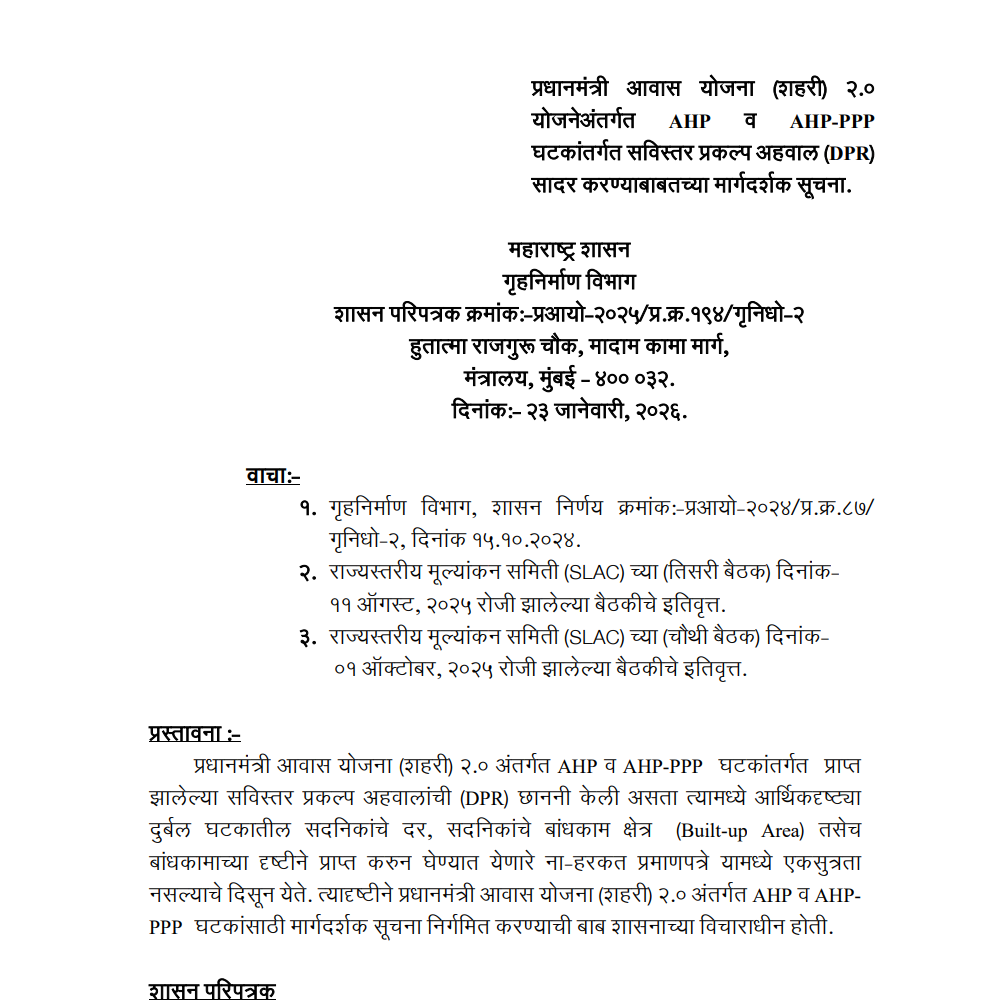
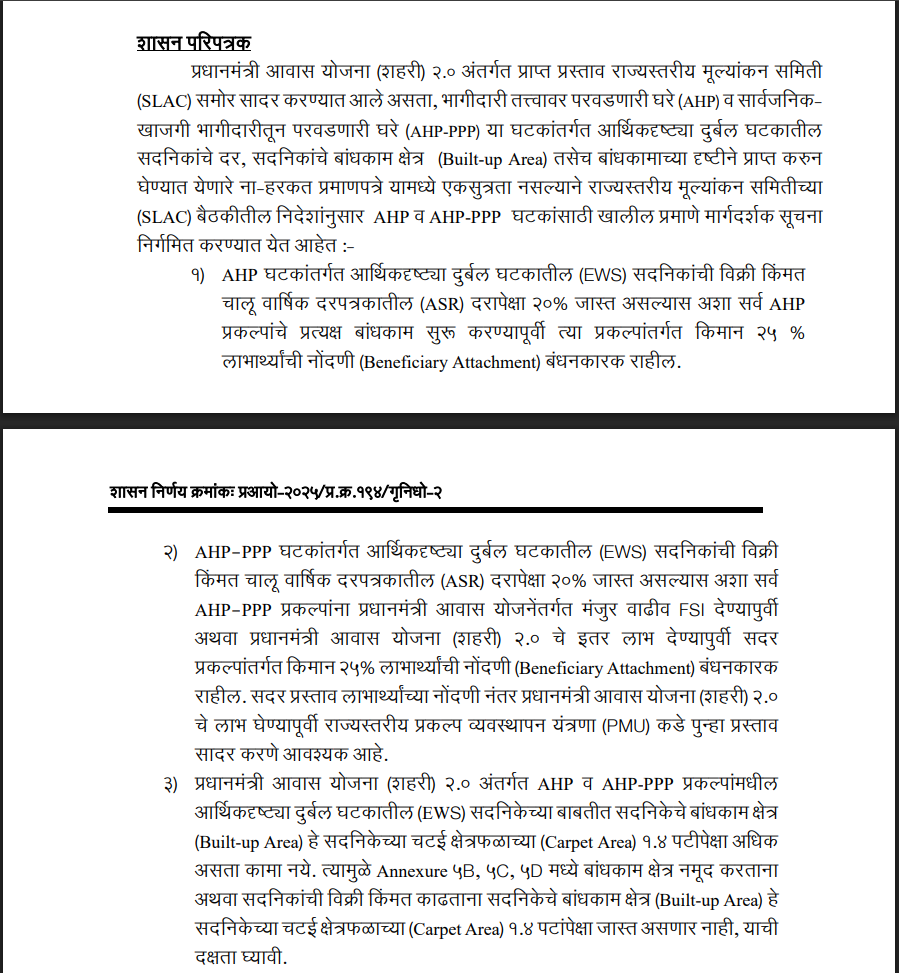
In a major policy shift aimed at ending speculative practices in affordable housing, the Maharashtra government has introduced tough new rules under Pradhan Mantri Awas Yojana (Urban) 2.0 (PMAY-U 2.0). Developers will no longer receive enhanced Floor Space Index (FSI) or other scheme benefits without first proving genuine demand — specifically, by registering at least 25% of Economically Weaker Section (EWS) buyers in projects where unit prices exceed Ready Reckoner rates by more than 20%.
The directive, issued via a Government Resolution (GR) dated January 23, 2026, comes after the State Level Appraisal Committee (SLAC) flagged widespread inconsistencies in Detailed Project Reports (DPRs) for Affordable Housing in Partnership (AHP) and AHP-Public Private Partnership (AHP-PPP) projects during reviews in August and October 2025.
Builders had previously been able to secure additional FSI (which translates to more saleable area and higher profits) early in the process, often without confirmed buyers for the mandatory affordable EWS component. Many projects ended up with unsold or unallotted low-cost units, defeating the scheme’s purpose of providing homes to the urban poor.
Core Changes: No Benefits Without Proof of Demand
- 25% Beneficiary Registration Now Mandatory for High-Priced EWS Units If the sale price of EWS dwellings exceeds the current Annual Statement of Rates (ASR / Ready Reckoner rates) by more than 20%, developers must:
- Achieve registration (beneficiary attachment) for at least 25% of the EWS units before construction begins (in pure AHP projects) or before any PMAY-U 2.0 benefits are granted (in AHP-PPP projects).
- Beneficiary attachment means identifying and formally registering eligible EWS families who have expressed intent to purchase, backed by necessary documentation. This ensures real demand exists and prevents builders from launching projects on paper alone.
- In AHP-PPP cases (where private developers partner with the government), enhanced FSI, central assistance, or other incentives will be withheld until this 25% threshold is met. After registration, the updated proposal must be resubmitted to the State Level Project Management Unit (PMU) for verification and final approval. This is a game-changer: Extra FSI — often the biggest incentive for builders — is now conditional on proven buyer interest.
- Built-up Area Capped at 1.4 Times Carpet Area To stop artificial inflation of unit sizes and prices, the government has mandated that the built-up area (super built-up/saleable area) of EWS units cannot exceed 1.4 times the carpet area (actual usable interior space). This rule applies across all AHP and AHP-PPP proposals and must be reflected in pricing calculations and annexures (5B, 5C, 5D). It directly tackles past practices where developers padded common areas to justify higher costs while still claiming “affordability.”
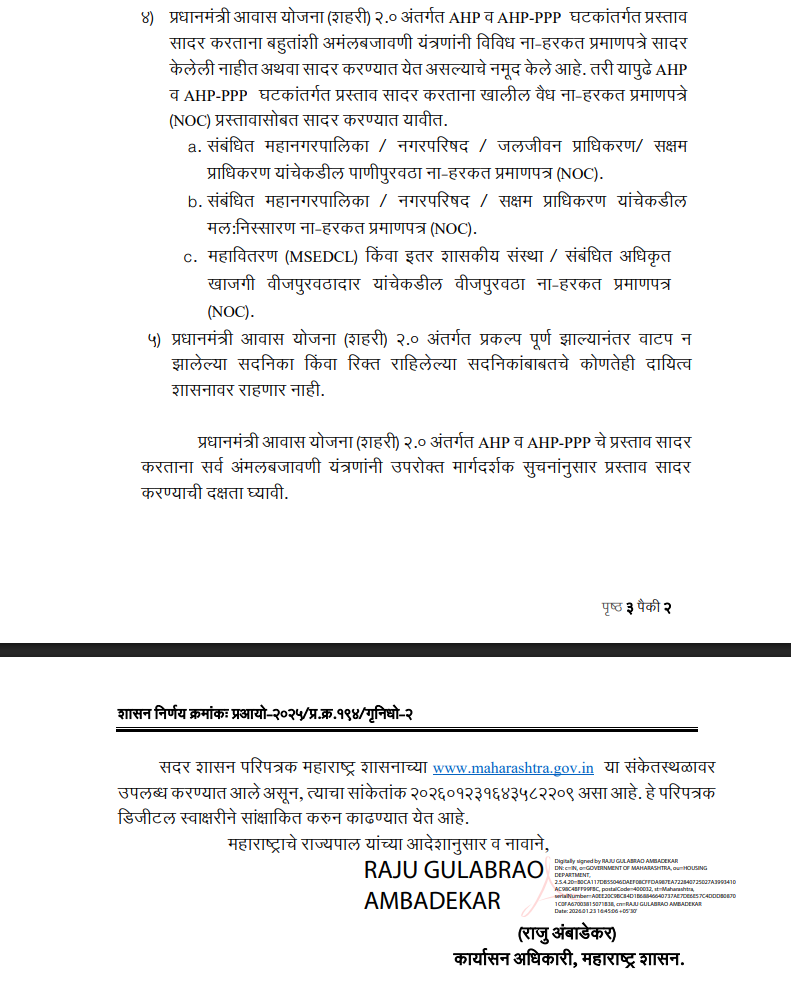
- Compulsory NOCs with Every Proposal DPRs submitted without the following valid No Objection Certificates (NOCs) will no longer be processed:
- Water supply NOC (from municipal corporation/council/Jal Jeevan Pradhikaran).
- Sewerage/drainage NOC.
- Electricity supply NOC (from MSEDCL or authorized provider). Earlier submissions often lacked these, leading to delays and compliance gaps.
- Government Washes Hands of Unsold Units Post-completion, any unallotted or vacant EWS units become the sole responsibility of the developer/implementing agency. The state will assume no liability for them.
Why This Matters: Ending the “Paper Promise” Era
These guidelines mark a clear departure from lax enforcement. Builders can no longer treat PMAY-U 2.0 as a tool for quick extra development rights without delivering on affordability. By linking the most lucrative benefit (additional FSI) to real buyer registrations, the government is prioritizing demand-driven, transparent projects that genuinely serve EWS families.
All implementing agencies — municipal corporations, development authorities, and private partners — have been instructed to comply fully.
Industry observers say this could slow down some speculative projects but will ultimately lead to healthier, more sustainable affordable housing development in Maharashtra’s urban areas.
Also Read: Maharashtra Implements ‘SNA-SPARSH’ System for Faster Fund Transfers under PMAY (Urban) and PMAY 2.0