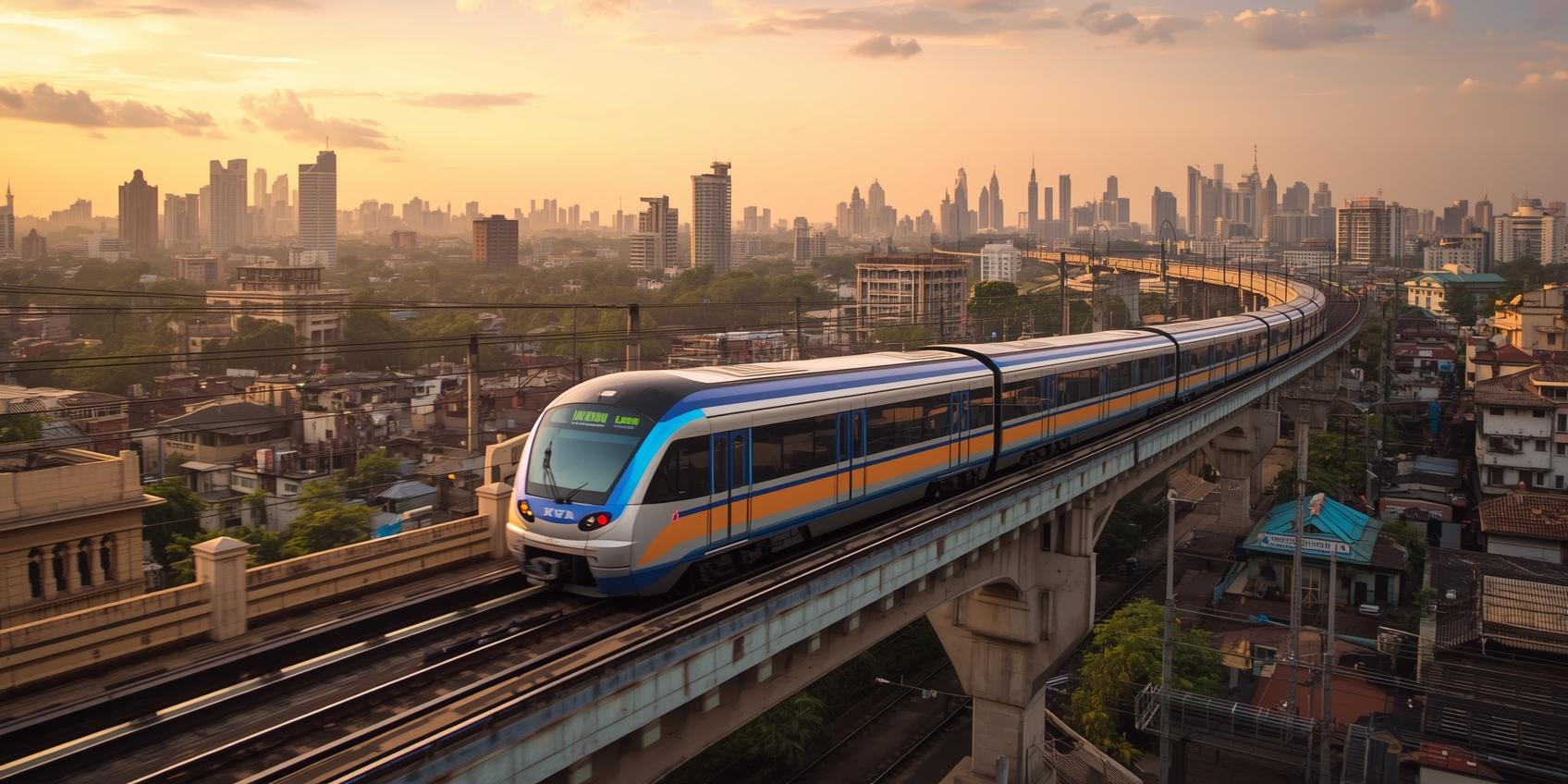

Mumbai Metro Line 9, a long-awaited infrastructure project aimed at extending rapid transit connectivity to the northern suburbs, is set to open its first operational stretch in the coming weeks, a development expected to significantly influence travel patterns and real estate demand across the Dahisar–Mira-Bhayandar belt.
According to official sources, the Commissioner of Metro Rail Safety (CMRS) has granted approval for Phase I of Metro Line 9, covering the 4.5-km stretch between Dahisar and Kashigaon. The corridor is likely to be opened to the public by the last week of January or the first week of February, marking the first instance of metro connectivity reaching the Mira-Bhayandar region.
Metro Line 9 is designed as an extension of Mumbai Metro Line 7 (Red Line) and will provide seamless integration with existing metro corridors, improving access to the Western Express Highway and Andheri. The initial phase will serve key stations including Dahisar East, Pandurang Wadi, Miragaon, and Kashigaon, with subsequent phases planned to extend services further into Bhayandar.
Once operational, even in a limited capacity, Metro Line 9 is expected to significantly reduce dependence on road-based transport and suburban rail, offering faster and more predictable commute options for daily commuters. The phased commissioning also represents a critical step towards building a comprehensive metro network for the northern suburbs, which have historically faced infrastructure constraints despite rapid population growth.
Real Estate Impact Already Visible
Industry stakeholders note that the impending launch has already begun to influence real estate sentiment in the surrounding micro-markets, particularly in areas located close to proposed metro stations.
Jayesh Rathod, Co-Founder & Director, The Guardians Real Estate Advisory, said infrastructure-led connectivity often acts as a catalyst for market transformation. He noted that Metro Line 9’s phased rollout is expected to unlock new micro-markets, ease pressure on congested road networks, and integrate Mira–Bhayandar more closely with Mumbai’s broader economic ecosystem. According to him, improved access to employment hubs via Metro Lines 7 and 2A is likely to attract both end-users and long-term investors, supporting steady residential demand and price appreciation along the corridor.
Echoing similar views, Prashant Sharma, President, NAREDCO Maharashtra, said the commissioning of Metro Line 9 marks a significant milestone in suburban connectivity. He added that even ahead of full operations, the project has generated heightened interest among homebuyers and investors across Dahisar, Mira Road, and Bhayandar. Sharma noted that rapid transit infrastructure enhances confidence in long-term residential and mixed-use development, particularly around station precincts where demand tends to concentrate.
Transit-Oriented Development Gains Momentum
Real estate analysts observe that localities such as Kashigaon and Miragaon are already witnessing increased enquiry volumes and developer activity. Properties located within walking distance of metro stations typically command a premium, and this trend is expected to strengthen as additional phases of Line 9 become operational.
Beyond residential demand, the metro corridor is likely to accelerate transit-oriented development (TOD), encouraging the growth of commercial, retail, and lifestyle infrastructure around key nodes. Such developments can create local employment opportunities and reduce the need for long-distance commuting, enhancing the overall liveability of the region.
While the immediate opening covers only a portion of the planned route, the full impact of Metro Line 9 will unfold as the corridor extends towards Subhash Chandra Bose Stadium and integrates further with Mumbai’s expanding metro network. Over time, the Dahisar–Mira–Bhayandar belt is expected to emerge as a preferred residential alternative, offering improved connectivity, modern infrastructure, and balanced urban growth.