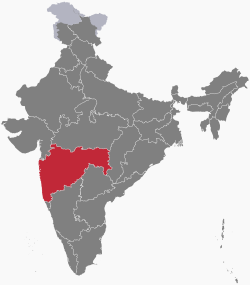

In a major relief for landowners affected by national highway projects, the Bombay High Court’s Aurangabad Bench has dismissed all 23 Arbitration Appeals filed by the National Highways Authority of India (NHAI). The Court upheld the arbitral awards granting a uniform compensation of ₹1,742 per square metre for lands acquired in village Gandheli for widening National Highway No. 211 (now part of NH-52).
Justice Arun R. Pednekar delivered the comprehensive judgment on March 18, 2026 (neutral citation 2026:BHC-AUG:11860 and connected matters), ruling that Section 29A of the Arbitration and Conciliation Act, 1996 — which sets strict time limits for arbitral awards — does not apply to statutory arbitrations under Section 3G(5) of the National Highways Act, 1956.
This decision is expected to benefit thousands of farmers and landowners nationwide whose lands are acquired for infrastructure projects, as it removes a common technical ground used by NHAI to challenge enhanced compensation awards.
Key Facts from the Case
- Acquisition Details: Lands in Gandheli village were notified under Section 3A on 18 September 2015 and finalised under Section 3D on 16 September 2016 for NH-211 expansion.
- Initial Award: The Competent Authority for Land Acquisition (CALA) awarded varying rates (₹486 to ₹1,500 per sq.m) based on land classification (bayagat/jirayat/hangami-bagayat).
- Arbitration: Landowners invoked Section 3G(5); the Arbitrator (Collector, Aurangabad) passed awards in January 2024 enhancing compensation to a uniform ₹1,742 per sq.m after considering 193 sale deeds from the village.
- NHAI Challenges: NHAI lost under Section 34 before the Principal District Judge (order dated 16 October 2025) and then under Section 37 before the High Court.
Court’s Landmark Holdings
- Section 29A Inapplicable The National Highways Act is a self-contained special code. Arbitrators are appointed by designation (office of Collector for the region), and proceedings continue seamlessly on transfer of officers. Applying Section 29A’s court extension/substitution mechanism would make the statutory scheme unworkable. The Court relied on NHAI v. Sayedabad Tea Company (2020) 15 SCC 161 and Girnar Traders v. State of Maharashtra (2011) 3 SCC 1.
- No Patent Illegality in Compensation The Arbitrator correctly applied Section 26 of the RFCTLARR Act, 2013: considered highest 50% of comparable sale deeds, excluded outliers with reasons, and moderated the rate to ₹1,742 for parity. Uniform rate justified due to similar location/potential near city and airport. Multiplier of 2.0 upheld for rural area. Court refused to re-appreciate evidence, citing narrow scope under Sections 34 & 37 (PSA Sical Terminals, 2023; MMTC v. Vedanta, 2019).
Practical Advice for Landowners
- Delays due to officer transfers do not invalidate awards under the NH Act.
- Produce certified local sale deeds aggressively in arbitration.
- Challenge low CALA awards promptly — arbitration offers genuine enhancement scope.
- Cite this judgment (2026:BHC-AUG:11860) when NHAI raises time-bar objections.
- For excessive arbitral delay, approach High Court under Article 226 (not Section 29A).
The judgment reinforces fair compensation under Article 300A and the protective intent of the 2013 Act. Landowners can now proceed for execution of the enhanced awards with interest and statutory benefits.
Also Read: Investments in Renewables, Roads, and Real Estate Set to Reach ₹17.5 Lakh Crore Over Two Years