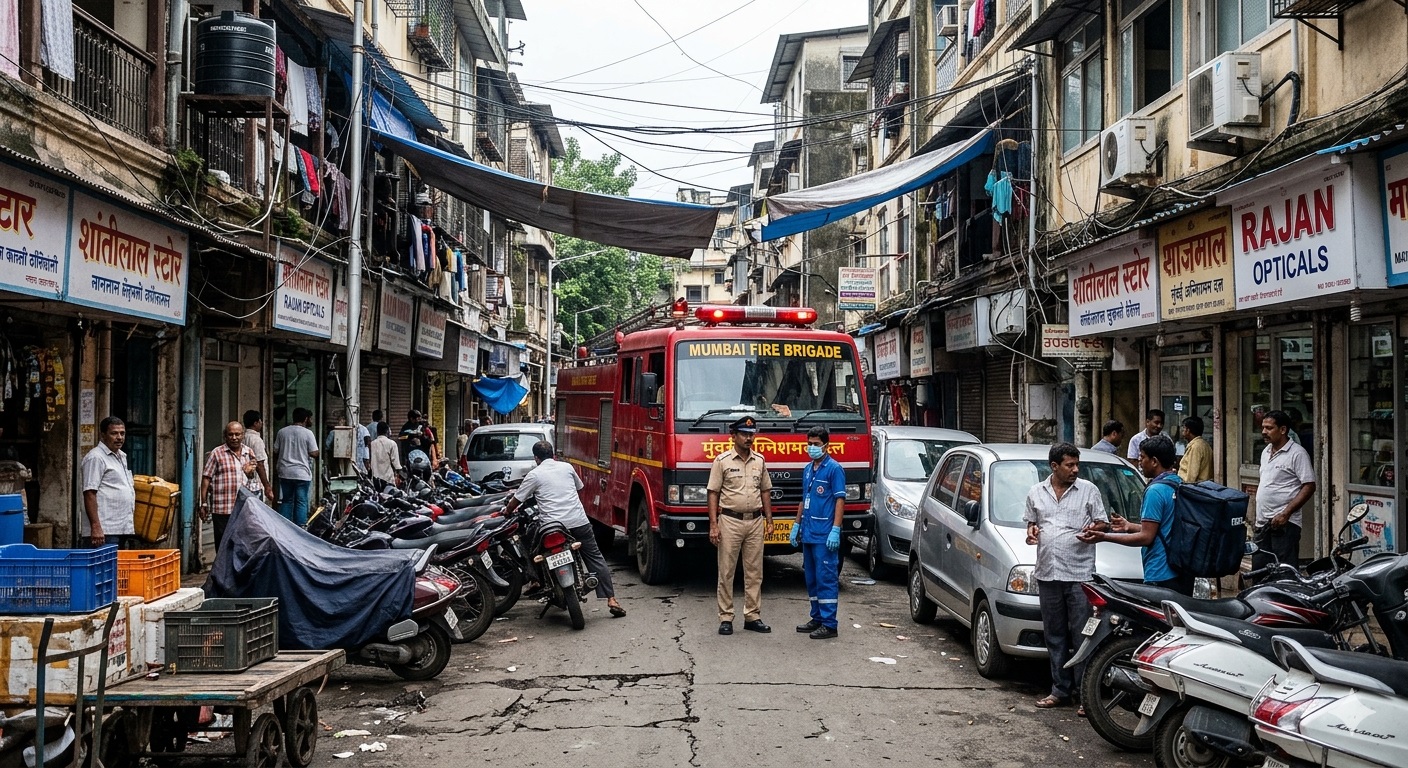

Mumbai is likely to introduce parking restrictions in narrow lanes across densely populated areas to ensure smoother movement for emergency services such as fire engines and ambulances.
According to media reports, the Brihanmumbai Municipal Corporation (BMC) is preparing to regulate parking in congested localities where vehicles parked on both sides of narrow roads are creating serious access issues. The move is expected to be implemented soon.
Why the Move is Being Considered
The decision comes amid rising concerns that illegal and unregulated parking is severely impacting emergency response times, particularly in high-density residential and commercial areas.
Several parts of South and Central Mumbai—including Chandanwadi, Girgaon, Kalbadevi, Gaondevi, Tardeo, Mumbai Central, Nagpada, Agripada, and Byculla—have been identified as critical zones.
These areas collectively have over 240 narrow lanes, out of which 35–40 lanes are so constricted that only one vehicle can pass at a time. Vehicles parked on both sides further reduce accessibility, creating major bottlenecks during emergencies.
Commercial Areas Face Higher Risk
The situation is particularly severe in commercial hubs like Kalbadevi and Zaveri Bazaar, where heavy vehicular movement due to wholesale markets adds to congestion.
Authorities have raised concerns that in case of fire or medical emergencies, delayed access could lead to significant loss of life and property.
Proposed Measures by Authorities
Civic officials are considering multiple steps to address the issue:
- Odd-even parking rules in select narrow lanes
- Complete no-parking zones in highly congested stretches
- Strict enforcement and penalties for violations
However, the proposed restrictions have also raised concerns among residents and businesses due to the lack of alternative parking infrastructure.
Experts Call for Long-Term Solutions
While regulatory action may offer immediate relief, industry experts believe the issue requires structural and long-term interventions.
Prashant Sharma, President of NAREDCO Maharashtra, highlighted that the problem goes beyond compliance:
“Illegal parking reflects the gap between rapid vehicle growth and limited parking infrastructure. There is a need to integrate planned and technology-enabled parking solutions into urban planning and real estate development.”
Similarly, Ashish Majithia, Founder & CEO of Nextkraft Parking Technologies, stressed the importance of innovation:
“Automated and multi-level parking systems can significantly increase parking capacity and reduce dependency on on-street parking. Vertical parking infrastructure will be key to ensuring unobstructed access and safer cities.”
Balancing Enforcement with Infrastructure
As Mumbai continues to face rising vehicle ownership and limited urban space, the success of these measures will depend on a balanced approach—combining strict enforcement with the development of modern, scalable parking infrastructure.
Without parallel investments in parking solutions, experts warn that restrictions alone may lead to inconvenience without fully resolving the underlying issue.
Also Read: Can Developers Sell Parking to Homebuyers?