
In a significant ruling for property owners and developers, the Bombay High Court has clarified how property tax should be applied when a building is demolished and redevelopment is underway.
The judgment came in the case of Municipal Corporation of Greater Mumbai vs Tahir Properties Ltd, decided by Justice Firdosh P. Pooniwalla on June 9, 2026. The dispute involved the Municipal Corporation of Greater Mumbai (MCGM) and Tahir Properties Ltd over a steep increase in property tax after a building was demolished for redevelopment.
Background of the case
The property, located in Worli, Mumbai, originally had a modest rateable value of ₹6,460 per year. After the building was demolished and redevelopment began, MCGM reassessed the land and increased its rateable value to approximately ₹8.99 lakh per year.
Tahir Properties challenged this sharp increase before the Small Causes Court, which ruled in its favour. The lower court held that the rateable value could not exceed the earlier assessment and restored it to ₹6,460.
High Court’s key ruling
The High Court overturned this reasoning and provided crucial clarity on how such properties should be taxed.
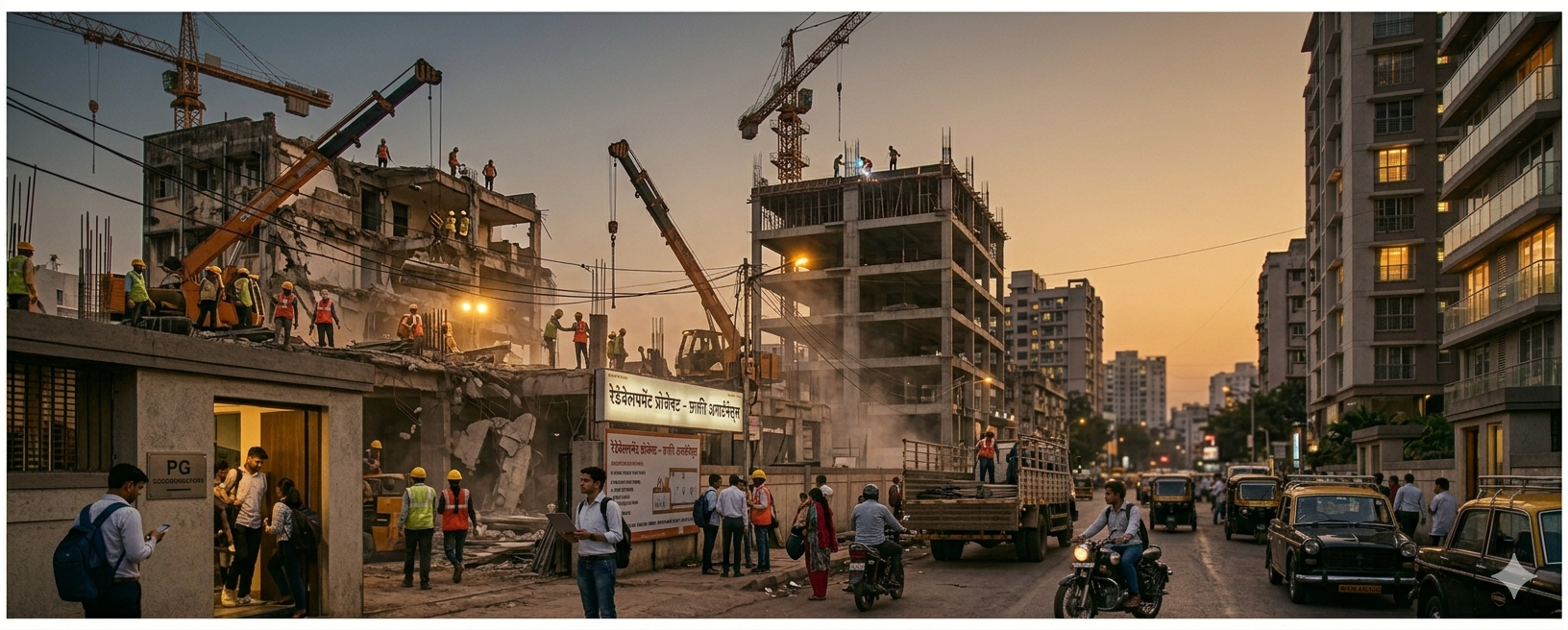
It held that when a building is demolished and construction is ongoing, the property must be treated as vacant land for the purpose of taxation. This is because the structure is not complete and cannot be occupied or generate rental value.
However, the Court also made it clear that the earlier tax cannot simply continue.
The previous assessment was based on a developed property with a building. Once the building is demolished, the nature of the property changes, and the valuation must be recalculated accordingly.
Matter sent back for fresh assessment
Instead of fixing a new rateable value, the Court remanded the matter back to MCGM authorities. It directed them to reassess the property by treating it as vacant land and applying the correct legal principles.
This means that while the tax may increase, it must be determined through a proper and legally consistent method.
Relief on water and sewerage charges
The Court also addressed related charges:
- Water Charges: If a water connection exists, the property owner is liable to pay water charges based on consumption. However, water tax and water benefit tax cannot be levied in addition.
- Sewerage Charges: Since the property is an open plot without a constructed building or drainage connection, sewerage charges are not applicable.
Why this ruling matters
This decision is particularly important in a city like Mumbai, where redevelopment projects are widespread. It clarifies a long-standing grey area in property taxation during the transition phase between demolition and completion.
The ruling establishes that redevelopment sites are neither exempt from tax nor liable to be taxed as completed buildings. Instead, they must be assessed as vacant land based on their potential value.
For developers, housing societies, and landowners, the judgment provides much-needed clarity and is likely to influence similar disputes in the future.
Also Read: RERA Not for Redevelopment: Tribunal Warns Housing Society Members