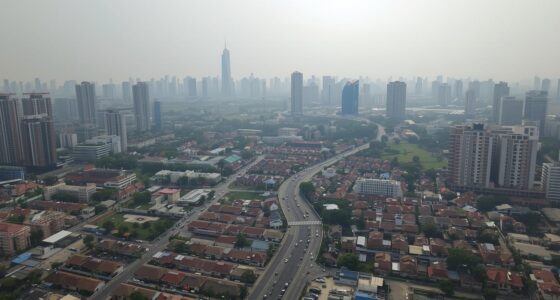

The Maharashtra Housing and Area Development Authority (MHADA) is moving forward with the significant redevelopment of Punjabi Colony in Sion’s Guru Tegh Bahadur Nagar (GTB Nagar), Mumbai, a project recently cleared by the Bombay High Court and further affirmed by the Supreme Court. Sources state Rustomjee has been awarded the tender, confirming MHADA’s authority to proceed with a bidding process for developers.
Bombay High Court and Supreme Court Orders
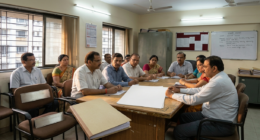
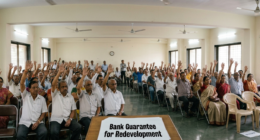
The Bombay High Court dismissed a petition filed by Lakhani Housing Developers, which had challenged MHADA’s decision to redevelop the GTB Nagar land. Lakhani Housing Developers had claimed vested rights due to prior agreements with individual residents. However, the High Court ruled that these individual agreements became irrelevant once cooperative societies were formed and a majority of residents supported MHADA’s redevelopment plan. The court prioritized public interest and the welfare of the displaced residents, many of whom have been awaiting rehabilitation since their dilapidated buildings were demolished between 2019 and 2022.
Subsequently, the Supreme Court also dismissed an appeal by Lakhani Housing Corporation, reinforcing the High Court’s decision. The Supreme Court affirmed that a writ petition could not be maintained against the e-tender issued by MHADA, especially when the cooperative societies supported the development initiative. This legal clearance paves the way for MHADA to proceed with the tender process for the redevelopment project.
Project Details
The redevelopment project in Sion Koliwada spans approximately 11.20 acres (45,308.58 square meters) and involves 25 buildings that previously housed around 1,200 families. MHADA has been appointed as the special planning authority and plans to provide larger homes for existing residents, with each receiving a 635 sq ft unit free of cost. Additionally, MHADA aims to acquire over 1,000 extra homes for sale through a lottery system. The estimated cost of the project is ₹2,930.77 crore.
History of Punjabi Colony as a Refugee Camp
Originally known as Koliwada, the area now called Guru Tegh Bahadur Nagar (GTB Nagar) in Sion, Mumbai, has a poignant history rooted in the Partition of India in 1947. It became a settlement for Sikh and Hindu refugees primarily from the North West Frontier Province of Pakistan. These displaced individuals initially found shelter in the Sion-Koliwada military camp.
In the 1950s, the state government constructed 25 chawl-like four-story buildings in the camp, offering flats to these refugee families for sale under the Displaced Persons (Compensation and Rehabilitation) Act, 1954. The area soon earned the moniker “Mini Punjab” due to the large Punjabi population and was officially renamed Guru Tegh Bahadur Nagar in the 1970s. Over the decades, these buildings deteriorated and were eventually declared dilapidated, leading to the current comprehensive redevelopment initiative by MHADA.
Also Read: MHADA Mumbai lottery for 2,683 homes