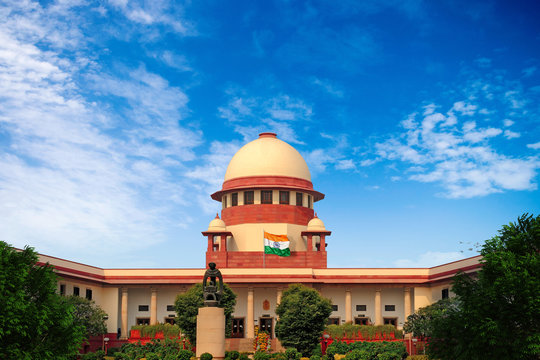

The Supreme Court has underscored that courts cannot lightly condone extraordinary delays in restoring dismissed cases, especially when long gaps have allowed third-party rights to arise.
The ruling came in a decades-old property dispute, where an appeal dismissed in 2008 for non-prosecution was restored by the Bombay High Court in 2023—after an extraordinary 14-year delay (5,250 days). The developer, Sethia Infrastructure Pvt. Ltd., who had since launched a major project on the land, challenged the restoration in the Supreme Court.
Case Background
The eviction suit dates back to 1967. The trial court dismissed the suit in 1988, and a first appeal was admitted in 1989. In 2008, the High Court made it clear that if the appellants failed to file pleadings within three months, the appeal would be dismissed. Since they did not comply, the appeal stood dismissed on May 20, 2008.
It was only in 2022 that the plaintiffs sought to restore the appeal. The Bombay High Court, in October 2023, condoned the 14-year delay and restored the case based merely on the applicants’ affidavit of service—without hearing the developer, who by then had acquired and redeveloped the property.
Supreme Court’s Observations
Setting aside the restoration, the bench observed:
- Time does not stand still. After such long gaps, courts must presume that third-party interests are likely to have been created.
- Delay condonation requires strong justification, and in this case, the High Court gave no reasons for allowing such an extraordinary delay.
- The applicants had “woken up from their alleged slumber only when a developer had entered the picture and started construction.”
The Court stressed that condoning such long delays without considering third-party rights could cause serious injustice.
The Order
- The Supreme Court quashed the High Court’s order of October 2023.
- Directed the High Court to rehear the restoration plea, this time with Sethia Infrastructure impleaded as a party.
- The case will now return to the Bombay High Court on September 2, 2025.
Significance
This ruling reinforces judicial caution in condoning extraordinary delays. It also emphasizes protecting third-party rights, particularly in real estate disputes where long-pending litigation intersects with redevelopment projects.
Also Read: Supreme Court Clears Redevelopment of Bharat Nagar Slum in Bandra