
Pre vs. Post DeMo – Black Money Deals Down 75-80%, Housing Sales Outstrip New Supply.
By Varun Singh
Post demonetization, Indian housing sales have outstripped new supply, reveals ANAROCK Research. Confusion and uncertainty immediately after demonetization notwithstanding, the negative impact has receded after a major market derailment within the first year of its announcement.
Anuj Puri, Chairman – ANAROCK Group, says, “A notable impact of the triple whammy of DeMo, RERA, and GST was a significant deceleration in new property launches. ANAROCK data shows that in the pre-DeMo period between 2013 till Q3 2016, the top 7 cities saw approx. 16.15 lakh new units launched while the post-DeMo period (Q4 2016-Q3 2021) saw 9.04 lakh units launched in the top 7 cities – a drop of nearly 44% between the two periods.”
“In the pre-DeMo period, new supply outstripped housing sales – whereas, in the post-DeMo period, housing sales overtook new supply in the top 7 cities”, says Puri. “In the pre-DeMo period (2013-Q3 2016), the top 7 cities saw approx. 16.15 lakh units launched while housing sales in this period stood at approx. 11.78 lakh units. After DeMo, between Q4 2016 and Q3 2021, these cities saw cumulative new launches of approx. 9.04 lakh units and housing sales clocked in at approx. 10.37 lakh units.”
With major lessons learned and a huge market realignment following this period of upheaval, the ongoing trend of sales exceeding supply will continue as developers keep a sharp eye on the demand-supply gap.
‘What does not kill us makes us stronger’
In his book ‘Twilight of the Idols’, the German philosopher Friedrich Nietzsche’s words – ‘what does not kill us makes us stronger’ aptly sum up the long-term effects of demonetization on the real estate sector. The housing market has emerged stronger, with speculative buying and selling now done away with and end-users firmly in the driver’s seat. Even luxury housing, which took a major hit after DeMo, has seen a significant resurgence after the COVID-19 pandemic caused latent demand to surface strongly.
Impact on cash transactions in real estate
Predictably, the secondary sales or resale housing market proved far more vulnerable to demonetization than the primary market. This segment, along with luxury housing, historically drew the bulk of ‘cash components’. While the resale housing sector continues to reel from the aftereffects of DeMo, affordable and mid-segment housing demand in primary sales (sales by developers) increased.
Has the once-ubiquitous cash component been fully eradicated from Indian housing?
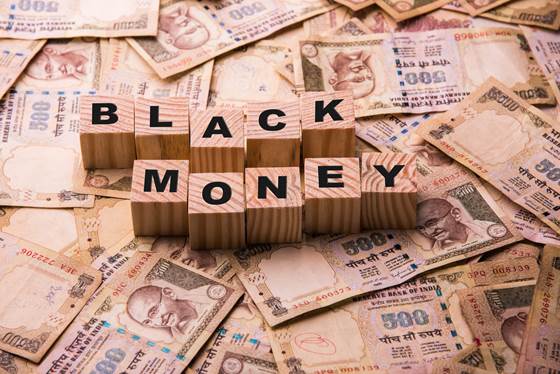
“Not completely,” says Puri. “However, unlike earlier, people no longer buy homes primarily to get rid of black money – they now buy them because they want to own homes. Most of the end-users now majorly driving housing sales expect their property transactions to be transparent and above-board. Nevertheless, black money is still finding its way into property transactions in smaller towns and peri-urban areas. Overall, the use of black money in Indian housing has reduced by at least 75-80%.”
One major driving factor behind this is that branded, listed players – who now attract a significant majority of housing demand to their projects – play by the book and avoid unaccounted monies in their transactions. After DeMo and the roll-out of RERA and GST, homebuyer demand gravitates towards branded products. Leading developers shifted their previous focus on luxury projects to the new demand for affordable and mid-segment housing.
This demand-supply equilibrium has helped keep the sales momentum going, especially when housing demand rose significantly during the pandemic. As per ANAROCK Research, of the total sales from April to December 2020, the top 8 listed realty players’ share in overall housing sales rose to 22% from the modest 6% in FY 2017. Even strong non-listed developers ramped up their sales share – from 11% in FY 2017 to 18% in the first three quarters of FY21.
Today, the housing sector’s rough ride due to demonetization has smoothened. Still, DeMo has changed the very fundamentals of why and how residential real estate is bought and sold in India. Today, housing sales happen because of actual demand, not as a means to launder black money.
This is a major evolutionary step that would have taken decades to bring about under any other circumstances.
Also Read: Bhushan Kumar Of T-Series Paid Rs 167 Crore For Juhu Bungalow