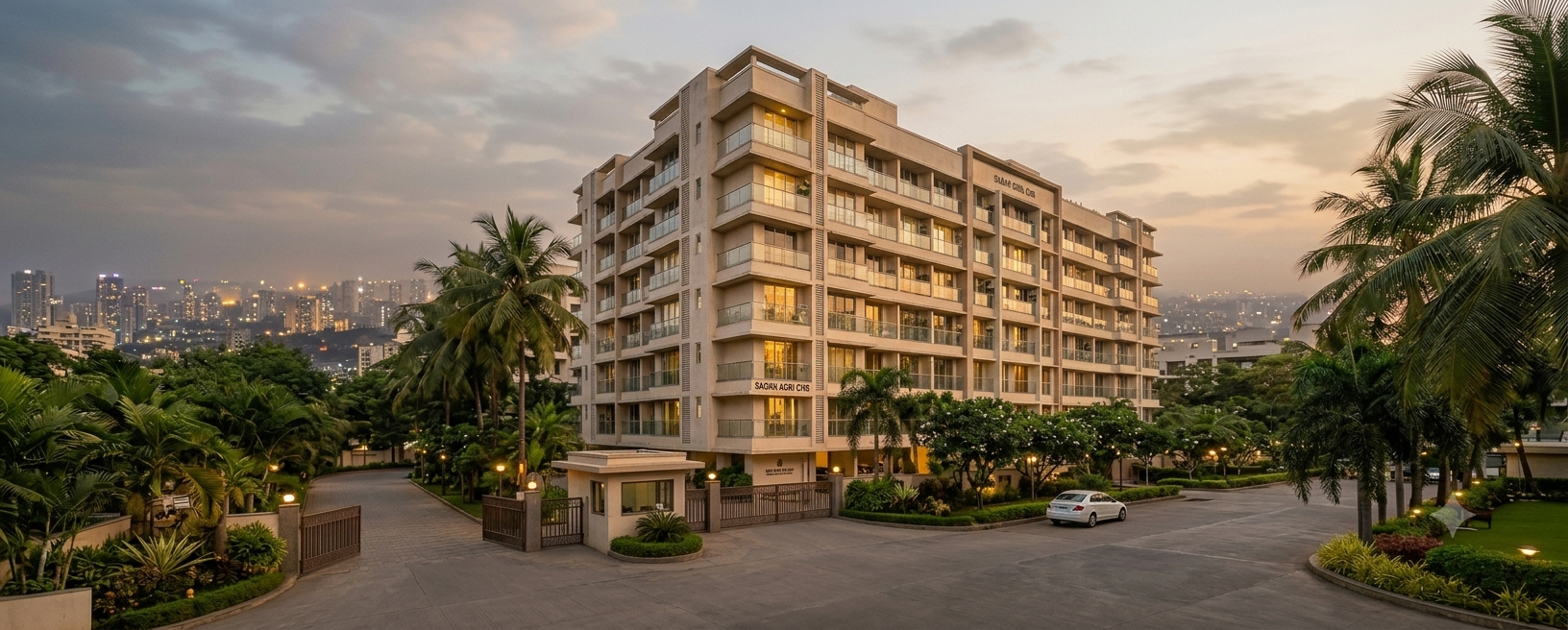

Bombay High Court upholds deemed conveyance of ownership for Queens Park Society built on 98-year lease
The Bombay High Court has upheld a unilateral deemed conveyance that transfers ownership of land — not merely the remaining lease — to a Juhu cooperative housing society whose building was constructed on land given on a 98-year lease in 1975.
Justice Sandeep V. Marne dismissed Writ Petition No. 5991 of 2026 filed by Rohini Gupta and another, legal heirs of the original landowner, and refused to interfere with the 23 June 2025 certificate issued by the District Deputy Registrar, Co-operative Societies, Mumbai City-3. The certificate conveys 3,901.70 sq.m. of land at Survey No. 71, CTS No. 1049/D of Juhu Village in favour of Respondent No. 3, the Queens Park Co-operative Housing Society.
The judgment, reserved on 25 August 2026 and pronounced on 8 September 2026, is significant for hundreds of Mumbai societies standing on private, collector or institutional leased land. It holds that a landowner who actively participates in causing a building of flats to be constructed can be treated as a “promoter” under Section 2(c) of the Maharashtra Ownership Flats Act, 1963 (MOFA). Once that happens, Section 11 obliges him to convey his right, title and interest in both the land and the building.
How a 1975 lease became a housing project
Late Kundanlal Laxmichand Gupta was granted a larger plot of 4,460.37 sq.m. at Juhu. By an Indenture of Lease dated 4 February 1975 he leased the land to Deepak B. Raheja and another for 98 years, expiring on 14 October 2072.
The lessees constructed the building known as Queens Park on 3,901.70 sq.m. of that land and sold flats under agreements executed under Section 4 of MOFA. Flat purchasers formed the society. On 17 March 1978 the developers assigned their leasehold rights in the said property to the society for the remainder of the 98-year term.
On paper, therefore, the society already held what the developers possessed: a lease ending in 2072. Ownership of the land remained with the Gupta family.
Society seeks ownership, not just the leftover lease
In 2008 the society applied to the Competent Authority under Section 11 of MOFA for unilateral deemed conveyance of the land itself. The original landowner was impleaded. After notice was issued in his name, the petitioners informed the authority that he had died in 1981. They did not appear to contest the application.
The Competent Authority allowed the application on 23 June 2025 and issued a certificate of unilateral deemed conveyance of the 3,901.70 sq.m. plot in favour of the society.
The landowners say they first learnt of that order when they were served in another writ petition filed by two society members (WP 15689 of 2025), which was dismissed on 1 December 2025 because it had been filed by members rather than by the society. They then filed the present petition.
What the landowners argued
Counsel for the petitioners submitted that:
- There was no “failure” by the promoter under Section 11(1) or 11(3) because the developers had already assigned the lease in 1978.
- A society cannot obtain rights higher than those the promoter possessed. The promoter had only leasehold rights; therefore only a lease could be conveyed.
- The landowners were never promoters. There was no privity of contract between them and the flat purchasers.
- Covenants in the lease that the building would vest in the lessor at the end of the term did not mean the lessors lost title to the land.
- Flat purchasers had paid ₹10 per sq.ft. towards purchase of the right of reversion, but that private arrangement did not bind the landowners, who were never paid the agreed premium.
- Having accepted assignment of the lease in 1978, the society was estopped from claiming ownership.
- The order was a nullity because it was passed against a dead person and in violation of natural justice.
They relied on Vaidehi Akash Housing, Grand Paradi CHSL, A.H. Wadia Trust and other decisions that restrict what a society can obtain in deemed conveyance to whatever title the promoter actually holds.
Court: landowner can also be a “promoter”
The Court framed the core issue as whether the petitioners could be treated as promoters under Section 2(c) of MOFA.
Section 2(c) defines a promoter as a person who “constructs or causes to be constructed” a building of flats for sale. The phrase “causes to be constructed,” the Court held, is deliberately wide. A landowner who merely hands over vacant land and stays out of the project remains only a lessor. A landowner who participates in the construction — deciding timelines, materials, plans, insurance and, crucially, taking back the building itself — wears two hats: owner and promoter.
The 1975 lease was not an ordinary lease. Justice Marne examined its clauses and found active participation:
- The lessor fixed a three-year period for completing the building.
- He could insist on sound materials and require correction of any deviation from municipal sanctioned plans.
- Insurance of the building had to be in the joint names of lessor and lessees; if the lessees failed, the lessor could insure it at their cost.
- On expiry or earlier determination of the lease, the lessees had to deliver up not only the land but the buildings, fixtures and fittings.
- The lessor had a right of re-entry for breach or non-payment of rent.
- During the term the buildings belonged to the lessees; on determination they would “automatically vest in the Lessor without payment of any compensation.”
The Court said this arrangement showed the construction was “caused” by the landowner through the lessees. It relied on its earlier decision in Haroon Hussain Khatri (WP 7627 of 2026, decided 19 June 2026), where a similar vesting-of-building clause was enough to treat the lessor as a promoter. The Juhu lease, the Court observed, showed even clearer participation.
Once the landowners are promoters, Section 11(1) attaches to them. They must complete their title and convey their right, title and interest in the land and the building to the organisation of flat purchasers.
₹10 per sq.ft. collected for the “right of reversion”
The Court also examined Clause 40 of the original agreements for sale. It recorded that the plot was leasehold, that the vendors had negotiated with the lessor to purchase the right of reversion, and that each purchaser would contribute ₹10 per sq.ft. of saleable built-up area for that purchase. The amount was to be deposited and later transferred to the society.
That clause, the Court said, showed a specific representation to buyers that ownership of the land would be perfected and passed on. Clause 34, which spoke of assigning only leasehold rights, had to be read with Clause 40. The project was never intended to remain only a lease in perpetuity.
Even independently of that clause, the Court held that the main right of the society flowed from the landowners’ status as promoters.
Why the 1978 assignment did not close the case
The landowners’ second objection was jurisdictional: because the lease had already been assigned, there was no “failure” under Section 11(3) and the Competent Authority could not act.
The Court rejected this. There can be more than one promoter. The developers fulfilled only part of the statutory obligation by assigning the lease. The landowners had still not conveyed their ownership interest in the land. Qua them, failure continued. The Competent Authority therefore had jurisdiction.
The Court also held that there can be no estoppel against a statutory right under MOFA. Execution of the 1978 assignment did not bar the society from seeking the landowners’ title. It cited Prestige Garden A-1 CHSL on this point.
On the argument that an agreement cannot be stretched beyond a lease, the Court relied on Haresh Vijaysinh Bhatia (2025). That decision holds that if the promoter is the owner of the land, Section 11 does not permit him to convey only a lease. The words “in accordance with the agreement executed under Section 4” cannot defeat the mandate to convey “his right, title and interest in the land and building.” A contractual covenant for mere lease cannot wipe out the statutory right of the society.
Natural justice and the dead-person objection
The petitioners admitted they received the notice issued in their father’s name and wrote to the authority. They chose not to appear. The Court held they took a calculated chance and cannot now complain of violation of natural justice. Prejudice was also not made out, the Court said, because on the view it took they had already been divested of the title they were illegally retaining.
The Court added a caution that matters for both sides: a deemed conveyance certificate under Section 11 is not a final determination of title. The Supreme Court in Arunkumar H. Shah HUF v. Avon Arcade has held that the remedy of a civil suit remains open. The landowners can still sue to establish their rights.
Why the Court called the result “just and fair”
Justice Marne observed that the order places the society in ownership of the land on which its building stands and will allow it to go in for redevelopment without the landowners creating a hindrance. If the landowners’ case were accepted, they would become owners even of a redeveloped building when the original lease expires in October 2072 — an outcome the Court considered contrary to the object of MOFA.
The writ petition was dismissed. No order as to costs.
What this means for other societies on leased land
The judgment does not say that every society on leased land automatically gets ownership.
The usual rule remains: the society gets what the promoter has. If the promoter is only a lessee and the landowner stayed out of the project, deemed conveyance will ordinarily be of the lease, not of the freehold.
The exception confirmed here applies when:
- the lease itself shows the landowner caused the construction (control over plans, materials, timelines, insurance, re-entry); and/or
- the building is to vest in the lessor at the end of the term, so that without roping in the lessor the society can never get ownership of the structure; and/or
- the sale agreements contemplated purchase of the reversionary rights.
Societies on BMC, MHADA, collector, port trust or private leased land will now examine their lease deeds and old MOFA agreements against these tests. Landowners who structured 1970s and 1980s projects as “lease plus building-back” arrangements face a clearer statutory obligation.
The decision also underlines that assignment of lease by the developer is not the end of the Section 11 story if another person who fits the definition of promoter still holds the underlying title.
For Queens Park, the immediate effect is a registered deemed conveyance of 3,901.70 sq.m. in Juhu. For the rest of Mumbai’s older leasehold societies, the judgment is a new template — fact-specific, but no longer easy to dismiss as impossible.
Also Read: Bombay HC upholds stamp duty on 1987 development deals as conveyance