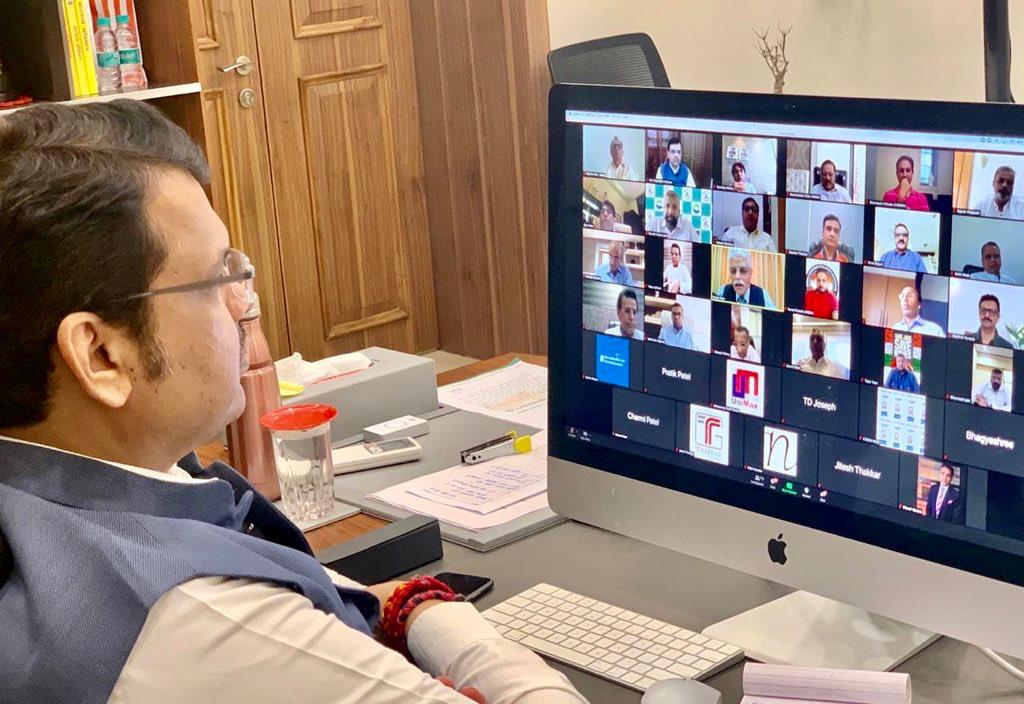

Developers on Tuesday held a webinar with former chief minister of Maharashtra Devendra Fadnavis. They are hopeful that their demands will reach Central government via Fadanvis.
By Varun Singh
Devendra Fadnavis has promised to take up the various demands of the developer community with the centre and even assured them help.
He spoke to the builders via a webinar which was held on Tuesday and attended by over a 1,000 developers from the Mumbai Metropolitan Region.
The MMR Action Committee of CREDAI MCHI, has launched an online petition and sought close to 35,000 signatures. Fadnavis at the webinar told the developer community that their “logical, genuine and reasonable” demand for a one time debt restructuring will be taken up with the Finance Minister.
Fadnavis even tweeted the same and tagged FM Nirmala Sitharaman, who even responded to the tweet.
Fadnavis in his tweet said, “Received online petition from CREDAI-MCHI, signed by almost 35,000 developers. The real estate industry requires many interventions from State & Central Government. I have assured them to take their petition to Hon FM @nsitharaman ji ! “
To which the FM replied, “Thanks Devendra ji. Will receive the petition that you shall send. Assure you that we’ll give it a fresh and open-minded look.”
The main issues of builder community is that of restructuring of loans, pushing banks, and other financial institutions like NBFCs to pass on benefits of repo rate cuts to the consumers, input tax credit to be given under GST.
Fadnavis during the webinar even expressed his stated that banks, but for SBI, have not yet passed on the benefit of the repo rate cut to the end consumer.
According to MMR action committee spokesperson Ajay Ashar, banks are in a very comfortable position when they deal with real estate developers. “They get an ROE of 22%-25% which is the highest in the world. Banks also enjoy very high net interest margins on lending to real estate, yet the developer community gets a step-motherly treatment,” he said.
CREDAI MCHI, President Nayan Shah pointed out that nothing from the Rs 20 lakh-crore package announced by the centre benefits the real estate developers. “The economy as a whole will revive itself if real estate survives as every paisa given to the developer goes into the economy straight,” said Shah
Only last week when another developer body NAREDCO held a webinar with Union Minister Piyush Goyal he asked builders to reduce price to survive the downturn.
Also Read: Reduce prices to survive or suffer: Goyal to builders
The developer bodies have made various representations to state and central government, and are hoping that their demands are met.
Developers in the past have also asked for ready reckoner rates to be slashed and amend the Income Tax Act that penalizes seller and buyer for buying below 10 per cent of the ready reckoner rates.