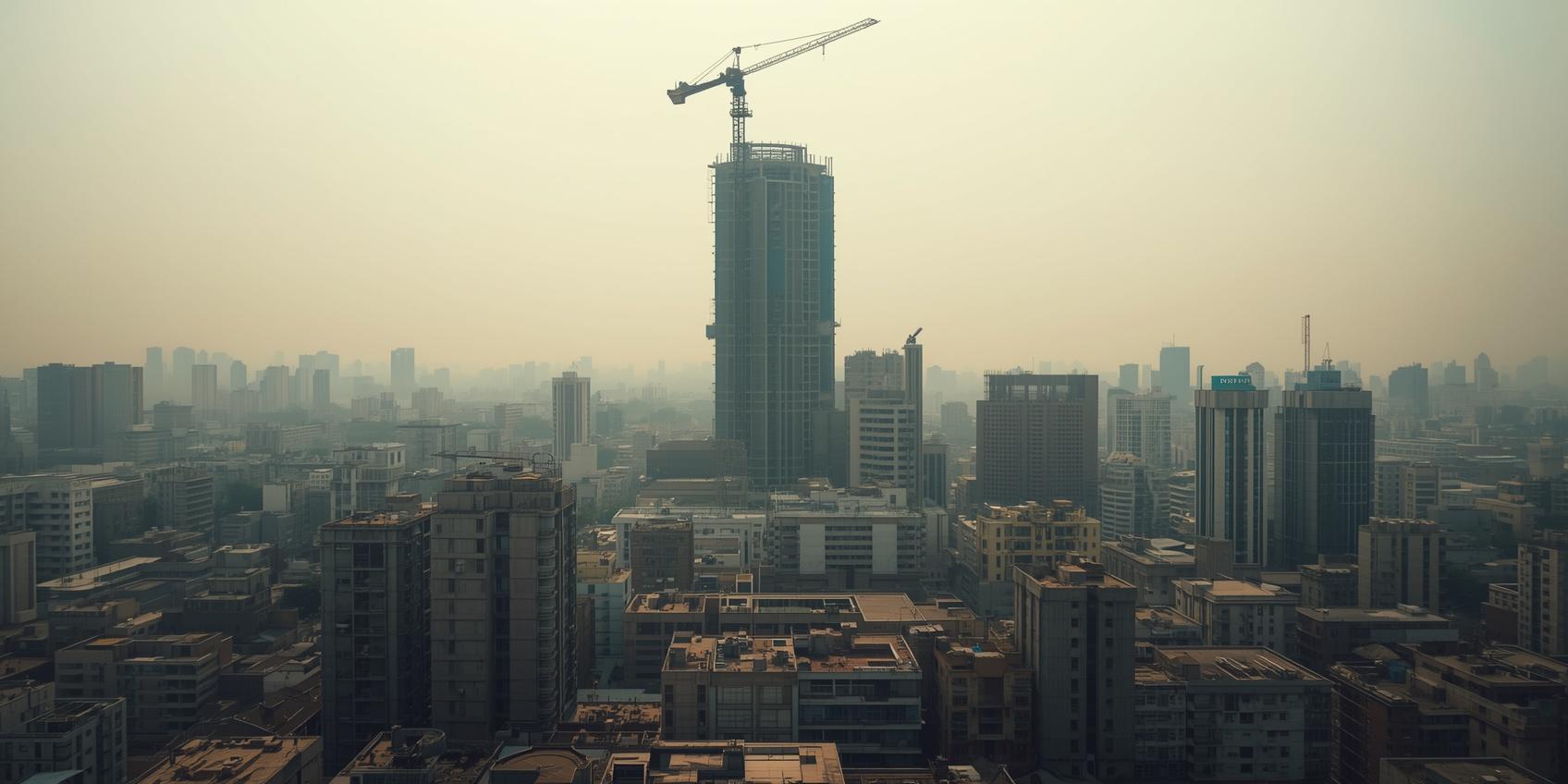

India’s commercial office market is witnessing a sharp divide, with premium Grade A office spaces surging to record highs while mid-tier and older buildings struggle to stay relevant. According to data from ANAROCK Group, 2025 marked the strongest year ever for India’s office sector, driven largely by multinational occupiers and Global Capability Centres (GCCs).
Record-Breaking Leasing Led by Southern Cities
Net Grade A office absorption across India’s top seven cities reached 58.2 million sq. ft. in 2025, registering a 17% year-on-year growth. This momentum has continued into 2026, with 13.5 million sq. ft. absorbed in Q1 2026, up 5% annually.
Southern markets—Bengaluru, Hyderabad, and Chennai—have emerged as the growth engines, contributing nearly 50% of total absorption in 2025.
- Bengaluru led with 14.95 million sq. ft. (26% share)
- Hyderabad followed with 8.5 million sq. ft.
- Chennai recorded 5.9 million sq. ft.
The trend intensified in Q1 2026, where southern cities collectively recorded a 64% jump in absorption, even as markets like MMR, NCR, and Pune saw declines.
GCCs Reshape Office Demand
A major structural shift is the rise of Global Capability Centres (GCCs), which are increasingly dominating India’s office market.
- GCC share in leasing rose from 36% in 2024 to 41% in 2025
- Further increased to 47% in Q1 2026
In fact, Bengaluru alone accounted for 40% of total GCC leasing in early 2026.
India is expected to host 2,200–2,300 GCCs by 2030, representing a market size of USD 100–110 billion, with most of this demand targeting Grade A office spaces.
Vacancy Gap Widens: Grade A vs Mid-Tier
Vacancy levels highlight the growing divide:
- Grade A vacancy declined from 16.5% (2024) to 15.5% (Q1 2026)
- Mid-tier buildings continue to face 20–25% vacancy
Cities like Chennai have seen vacancy fall below 9%, while Hyderabad—despite higher vacancy—has shown stable absorption due to strong new supply.
The structural challenge for mid-tier buildings is clear: once tenants upgrade to Grade A, they rarely move back, leaving older assets with persistent vacancies.
Rentals Rising as Occupiers Pay Premium
Grade A office rentals are strengthening across cities:
- Average rents rose to ₹92/sq. ft. in 2025
- Increased further to ₹93/sq. ft. in Q1 2026
Tenants are willing to pay a 20% premium over mid-tier properties due to:
- Modern amenities (F&B, wellness, retail)
- Smart building technologies
- High-grade security systems
- Sustainability certifications (LEED, IGBC)
- Reliable power and IT infrastructure
Bengaluru led rental growth, recording:
- 9% YoY growth in 2025
- 11% QoQ growth in Q1 2026
Developers Double Down on Grade A Supply
Developers are aligning with demand trends:
- 52 million sq. ft. of new Grade A supply added in 2025 (+8% YoY)
- Southern cities accounted for over 50% of new supply
However, new completions slowed in Q1 2026:
- Down 18% YoY to 8.6 million sq. ft.
This moderation is partly attributed to global uncertainties, including geopolitical tensions.
Meanwhile, mid-tier developments are losing investor interest as:
- REITs and institutional capital prefer Grade A assets
- Demand remains concentrated in premium buildings
Outlook: A Two-Speed Office Market
India’s office market is clearly evolving into a two-speed system:
- Grade A assets: High demand, rising rents, falling vacancy
- Mid-tier assets: Weak demand, high vacancy, limited pricing power
Experts suggest that mid-tier property owners will need to:
- Upgrade assets to Grade A standards
- Or target niche segments like SMEs and flexible workspace operators
Conclusion
With GCC expansion, global occupier demand, and institutional investments driving momentum, Grade A office spaces are set to dominate India’s commercial real estate landscape. Meanwhile, the future of mid-tier office stock will depend on adaptation, repositioning, or risk long-term obsolescence.
Also Read: 65% Growth in Grade A Green Office Stock Across Top 7 Cities Since 2019