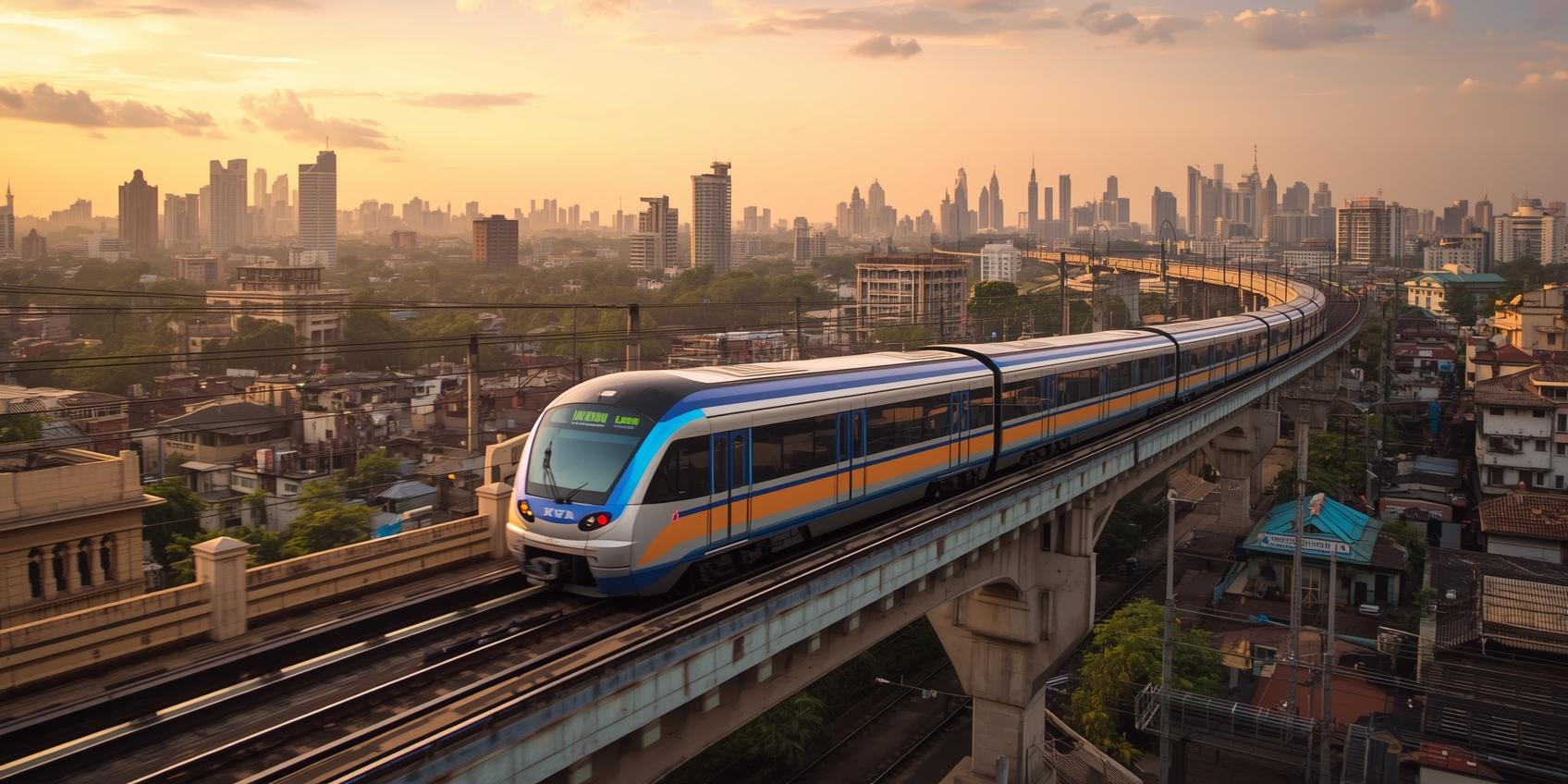
The Maharashtra government on June 22, 2026 granted formal approval to two new metro rail projects in Navi Mumbai — Metro Line 1A (Belapur to Sagar Sangam, 3.02 km) and Metro Line 2 (Pendhar to Navi Mumbai International Airport Terminal-4, 14.07 km) — at a total project completion cost of ₹5,575 crore. The government order, issued under GR No. MRD-3326/PR.No.18/NV-7 and signed by Joint Secretary Vijay Chaudhary, follows a decision taken at the Cabinet Infrastructure Committee meeting chaired by the Chief Minister on June 9, 2026.
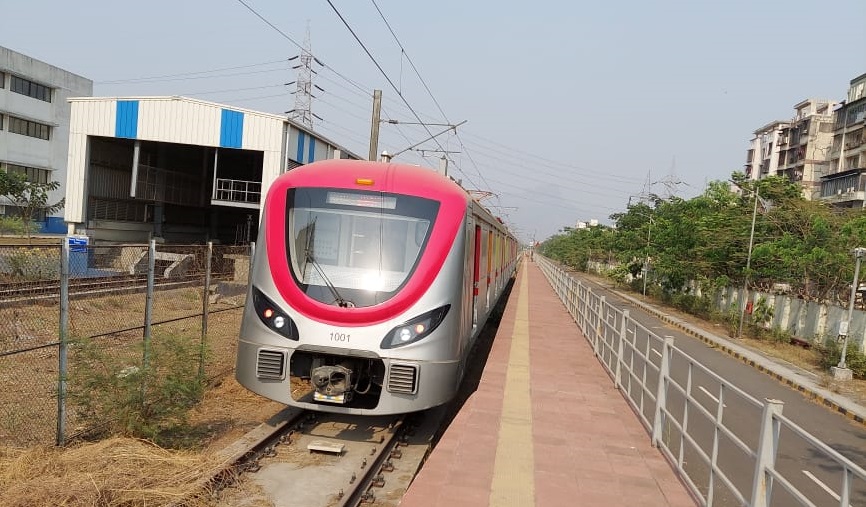
The two lines together span 17.09 km and will have 12 elevated stations — one on Line 1A and eleven on Line 2. Implementation will be carried out through Mumbai Metro Rail Corporation Limited (MMRCL), working from the Detailed Project Report (DPR) prepared by CIDCO. The existing Navi Mumbai Metro Line 1 (Belapur to Pendhar, 11 km), which has been operational since November 2023, will be integrated with the two new lines to create a seamless extended network.
Project Cost and Funding Structure
The ₹5,575 crore project completion cost includes base civil and systems cost of ₹3,809 crore, land acquisition of ₹408 crore, state taxes of ₹297.97 crore, central taxes of ₹337.07 crore, station property development of ₹24 crore, price escalation of ₹669 crore, and interest during construction of ₹438 crore.
The funding structure is split across multiple sources. The central and state governments will each contribute ₹713 crore as equity — 13.82% each. Both will also provide ₹318 crore each as interest-free subordinate debt to cover 50% of central taxes each, adding another 6.16% each. The largest share — ₹2,721 crore, or 52.74% — will come from bilateral and multilateral financial institutions as external debt. The Navi Mumbai International Airport Ltd (NMIAL) will contribute ₹376 crore for the 1.3 km stretch falling within airport boundaries. CIDCO will separately provide ₹416 crore for land acquisition, rehabilitation and resettlement, and multi-modal integration studies — an amount outside the sanctioned project cost. MMRCL has been authorised to raise the bilateral and multilateral loan and to engage with the central government for its share of equity and subordinate debt.
What This Means for Residents and Commuters
The project directly addresses a gap that has long constrained Navi Mumbai’s growth — the absence of reliable, high-frequency metro rail access to the upcoming Navi Mumbai International Airport (NMIA), which is set to become one of India’s busiest aviation hubs.
Metro Line 2, running 14.07 km from Pendhar to NMIA Terminal-4 with 11 elevated stations, will for the first time give lakhs of Navi Mumbai residents a direct rail link to the airport. Commuters from Kharghar, Taloja, Kalamboli, Kamothe, Pendhar, Roadpali, and Padgha — areas currently underserved by rapid transit — will be able to reach the airport without depending on road transport, which is routinely congested on the Sion-Panvel Highway and surrounding roads.
Metro Line 1A, the shorter 3.02 km link from Belapur to Sagar Sangam, serves as an important bridging connector. It will provide interchange with the proposed Gold Line (Metro Line 8) that plans to connect Mumbai’s Chhatrapati Shivaji Maharaj International Airport with NMIA, making Sagar Sangam a critical multi-modal node. Residents of CBD Belapur, Seawoods, and surrounding areas will gain direct rail access westward to this interchange.
The government order notes that the project’s catchment area covers approximately 196.7 square kilometres, spanning Navi Mumbai Municipal Corporation, Panvel Municipal Corporation, Uran Nagar Panchayat, and the Navi Mumbai New Town area. According to the government’s own projections, the population in this region is approximately 19.30 lakh today and is expected to grow to around 52.10 lakh by 2061 — making investment in this metro infrastructure both timely and essential.
Areas that will see the most direct benefit include Seawoods, CBD Belapur, Kharghar, Navde station (suburban rail interchange on the Panvel-Diva line), Pendhar, Taloja, Padgha, Roadpali, Kalamboli, and Kamothe. The project also incorporates an interchange point at Khandeshwar station on the CSMT-Panvel line, and connections with the proposed Metro Line M24 serving the International Corporate Park and the NAINA (Navi Mumbai Airport Influence Notified Area) region.
The project is expected to be completed over four years, from 2027-28 to 2030-31. The Economic Internal Rate of Return (EIRR) has been assessed at 17.82%, and the financial IRR including property development stands at 14.39% — figures that indicate the project is commercially and economically viable.
Revenue and Sustainability
The government has approved a dedicated urban transport fund mechanism to sustain the project financially. Revenue will be generated through premium FSI (Floor Space Index) charges on properties within 500 metres of the metro corridor, development charges of up to 100% over existing rates in the metro influence zone, a 1% stamp duty surcharge on property transactions, commercial development at depots and station land parcels, advertising income from station branding, co-branding and naming rights, kiosk income, ATM centres, and parking fees. Non-fare revenue is estimated at approximately 10% of total ticket revenue during operations.
Fares for the new lines will be based on the existing Navi Mumbai Metro Line 1 structure — currently ranging from ₹10 to ₹40 depending on distance — with a 5% annual revision factor applied. The Fare Fixation Committee will retain authority over future fare revisions as per the Metro Railway Act.
For the millions of residents of Navi Mumbai’s rapidly expanding southern and eastern nodes, this project is transformative — turning the airport from a distant destination accessible only by road into a station on their daily metro network.
Also Read: Mumbai Unveils Its First Double-Decker Flyover Featuring an Integrated Metro Line