
Rent decided by government for slum dwellers has sparked a political controversy. On Thursday housing minister announced rent that developers should pay to slum dwellers, on Friday BJP termed it unacceptable.
By Varun Singh
On Thursday the minister for housing, Jitendra Awhad announced rent for slum dwellers payable by developers, while carrying out a SRA project.
He gave three demographic categories under which rent shall be paid to slum dwellers by developers.
In Mumbai up to Bandra, the rent will be Rs 12,000 per month. It will be Rs 10,000 per month from Bandra to Andheri/Ghatkopar and Rs 8,000 per month beyond it.
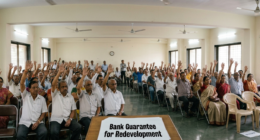
BJP MLA Atul Bhatklakar has said, that the Rs 8,000 rent in suburbs is a move that wrongs slum dwellers. “This will benefit builders not slum dwellers and I request Chief Minister to hold this decision. If he doesn’t then the BJP will carry out a strong agitation against the move,” said Bhatkalkar, MLA from Kandivali.
Square Feat India checked with three different realtors from South Mumbai, Bandra and Andheri to know what one can expect at government decided rent.
Rajiv Jain of Ruchika Shelters, for South Mumbai says, “For Rs 12,000 one can get a chawl or a shanty. In areas like Worli’s Siddharth nagar slum, here rents range from Rs 5000 to 7500 per month.”
In Bandra too where the government decided rent is Rs 10,000 per month there’s not much of hope.
Yashika Rohira, of Karma Realtors says, “For Rs 10,000 one can best get a shanty somewhere in Bandra. Rents in slums ranges from Rs 6,000-8,000 per month.”
Beyond Andheri, the scene remains the same like Worli and Bandra. Here the per month rent decided by government for slum dwellers payable by developers is Rs 8,000 per month.
Siddhant Gupta of Brickhouse says, “A flat definitely not possible, a chawl that too in select locations but for Rs 10,000. Meanwhile, one if travels to Dahisar and beyond then may be a 1 Room Kitchen flat.”
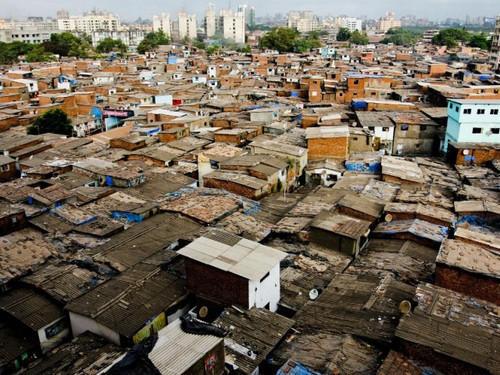
So on ground, slum dwellers may find a house in their areas at the government decided rent. But then in most likelihood it would be again a shanty.
The aim of slum rehabilitation is to get slum dwellers a home with an attached toilet. The homes are suppose to be hygienic and well built, keeping in mind ventilation and other aspects.
During the construction of the rehab component, the slum dwellers are vacated from the slums and are provided rents or a transit accommodation.
The rent now decided by government will mostly allow them to stay in other slums nearby. The stay becomes longer in many cases. As per records available there are 370 SRA projects which are stuck in Mumbai.
All the SRA projects that are issued an LOI, are expected to generate 5.07 lakh homes. Sadly of this 3.80 lakh homes are still under construction.
Also Read: Government stress fund to revive stuck SRA projects