
Startups to lease 29 million sq ft of space during 2022-24; amongst the fastest growing occupier sectors: Colliers – CRE Matrix
By Varun Singh
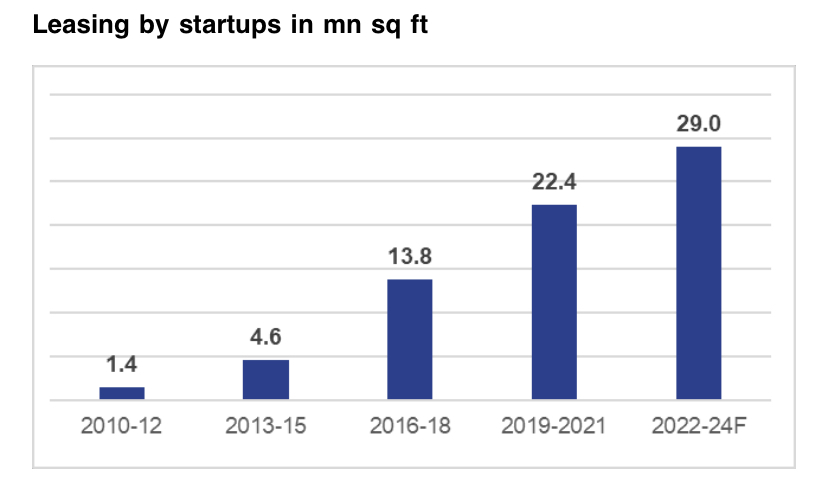
Leading diversified professional services and investment management company Colliers (NASDAQ and TSX: CIGI) released its joint report with CRE Matrix, ‘Startups Scale Up’, stating that startups are expected to lease about 29 million sq feet between 2022 to 2024, a 1.3 times increase from the 2019-2021 period.
The demand will be led by fintech and logistics startups as they have gained momentum post pandemic due to increased digital adoption and e-commerce boom, and hold a healthy pipeline in potential unicorns list. Additionally, increased digital adoption, availability of a deep talent pool, favourable government policies and funding options from venture capitalists are steering growth of startups.
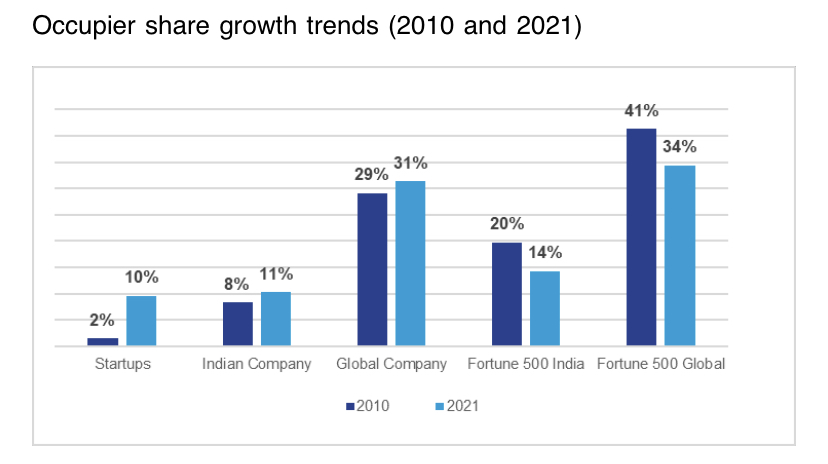
“Increased entrepreneurship and rapid growth of startups has been one of the most remarkable trends in Indian office space. Startups are the fastest growing occupier group among other occupier groups, and currently occupy 10% of the office space. This has created numerous opportunities for office space providers to rethink and reposition their workplace offerings to attract diverse set of occupiers. As startups pick up pace, landlords need to consider the business life cycle and work preferences of the startups to capture the real estate demand from startups to drive more value.” Said, Ramesh Nair, CEO, India & Managing Director, Market Development, Asia, Colliers.
“About 30 mn sq ft office space in India is occupied by co-working or flex players. We believe a large share of this is occupied by start-ups. Therefore, anecdotally, start-ups currently occupy more than 49.7 mn sq ft. Our internal forecasts peg the start-ups occupancy to be about 78 mn sq ft of office space + 20-22 mn sq ft in flex spaces by 2024, totalling to about 100 mn sq ft by 2024. Within this start-ups segment, the Fintech niche aces all others as the leader in terms of number of start-ups, occupied office spaces and growth. We anticipate other sectors such as Ed-tech, Logistics, Healthtech, Proptech to catch-up soon.” said, Abhishek Kiran Gupta, CEO & Co-founder, CRE Matrix.
Bengaluru top startup hub, followed by Delhi-NCR
Bengaluru remains the top startup hub with a 34% leasing share during 2019-21, with Koramangala, HSR and Indiranagar being the preferred locations for startups. A well-developed ecosystem, deep technology talent, and a culture of entrepreneurship are major factors attracting startups here.
Delhi-NCR is amongst the fastest-growing market in terms of leasing by startups. Delhi-NCR witnessed a three-fold increase in leasing by startups during 2021 on a YoY basis. The region benefits from being a catchment for education institutions in the North and East India, and strong infrastructure.
Mumbai has seen certain pockets of startup activity over the years. However, relatively higher rentals, and high cost of living are often seen as deterrents by early-stage companies.
While metro cities remain the core hubs for startups, non metro cities are seeing growth in startup leasing as well as flex space take up due to low cost of living, reduced CAPEX and work from anywhere trend. Emerging hubs such as Jaipur, Ahmedabad, Indore, Coimbatore are likely to witness rise in flex space and startup occupancy as entrepreneurs are increasingly leveraging these locations to launch operations.
Plug and play office providers to benefit as startups eye on NextGen office spaces with flexible lease terms
Office space providers need to adapt to cater to the needs of start-ups and their workplace preferences. As startups focus on creating collaborative culture, demand for well designed, fully managed spaces will increase. Flexible lease terms, minimal lock-ins and security deposits will also be an important parameter for startups while leasing space. This will create ample opportunities for flex space providers in metro and non metro cities. Affordable locations close to city centres with expansion options are likely to be preferred by startups.
“Government’s push towards digitization and ease of doing business has provided a big boost to the startup ecosystem. The sector has also piqued the interest of investors that has helped the segment scale up creating numerous opportunities in office space. In the years to come, we will see a lot of changes in workplace designs with more focus on space design, amenities, technologies and customization.” says Vimal Nadar, Senior Director and Head of Research, Colliers India.
Last three years have seen significant activity in leasing by startups. Continuing this momentum, startups are likely to occupy 78 million sq feet of office space by 2024, accounting for 13% share from a mere 2% share in 2010. As of 2021, while global companies continue to dominate Indian office space occupying more than 60%, growth of startups has been highest, currently occupying a sizeable share of 10%.
Also Read: CIDCO lottery date for 5,730 homes in Taloja changed