As global uncertainty and moderating growth expectations temper broader market sentiment, India’s wealthy homebuyers are showing little inclination to retreat from luxury real estate. According to the Luxury Residential Outlook Survey 2026 by India Sotheby’s International Realty (ISIR), high-net-worth individuals (HNIs) and ultra-high-net-worth individuals (UHNIs) continue to commit capital to premium homes, viewing property as a long-term store of value rather than a short-term trade.
The survey suggests that while expectations have become more measured, confidence remains intact. Nearly 67% of HNIs and UHNIs remain bullish on India’s economic growth over the next 12–24 months, even as global headwinds persist. Reflecting this realism, 72% of respondents expect India’s GDP growth to stabilise at 6–7% in FY27, signalling moderation—but not pessimism.
Real Estate Seen as a Safe, Long-Term Bet
Amid volatile equity markets and currency concerns, luxury housing continues to stand out as a dependable asset. About 67% of wealthy investors expect annualised real estate returns of up to 15%, reinforcing property’s appeal as a combination of capital appreciation, rental income, and lifestyle security.
Importantly, demand is not driven purely by speculation. The survey reveals a balanced buyer profile, with 53% purchasing luxury homes for capital appreciation and 47% buying for self-use, underlining a growing preference for ownership rooted in permanence and personal consumption.
City-based luxury homes remain the top choice. 31% of respondents prioritised primary residences, while 30% focused on residential investment assets within cities, reflecting continued faith in premium urban micro-markets despite higher entry prices.
Selective Buying Replaces Frenetic Demand
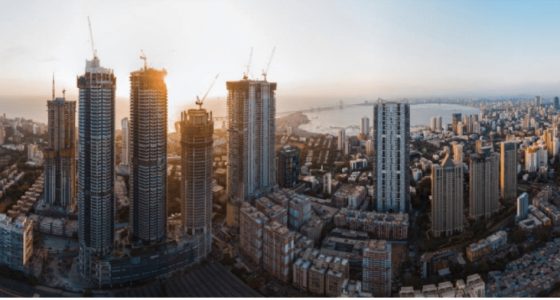
While appetite remains strong, buyers are no longer indiscriminate. The report highlights that the red-hot momentum of 2025—marked by record sales from listed developers and marquee transactions across Mumbai, Delhi-NCR, Goa, and Alibaug—has carried into 2026 with greater selectivity.
Tightening inventory of high-quality projects and rising prices have softened interest in second homes. Among those still exploring the segment, 46% prefer farmhouses near city peripheries, while 33% favour hill or mountain destinations, pointing to lifestyle-led purchases rather than aggressive yield chasing.
Luxury buyers today are prioritising privacy, design excellence, wellness features, and service-led living, forcing developers to recalibrate offerings toward fewer, more differentiated projects in proven locations.
Wealth Creation Continues to Fuel Demand
The survey underscores that India’s luxury housing demand is structurally supported by wealth creation. The rise of startup founders, next-generation entrepreneurs, and senior professionals, alongside traditional business families, has broadened the luxury buyer base.
In 2025, 103 Indian companies raised ₹1.76 lakh crore through IPOs, significantly boosting liquidity among affluent investors.
Commenting on the findings, Amit Goyal, Managing Director, India Sotheby’s International Realty, said,
“Even as markets show signs of moderation, luxury homebuyers continue to take a long-term view. For many, real estate represents permanence—an asset that blends capital efficiency, lifestyle value, and generational continuity. Demand has clearly shifted from scale to substance.”
Prime Assets to Outperform as Prices Cool
While overall optimism remains high, expectations around price growth have cooled. More than half of the respondents expect luxury residential prices to moderate in FY 2026–27, reflecting a maturing market rather than a slowdown.
Currency volatility has also emerged as a concern, with many HNIs and UHNIs monitoring the rupee’s depreciation against the dollar and selectively exploring overseas or dollar-linked assets. Despite this, real estate continues to hold its ground as a preferred physical asset.
Ashwin Chadha, CEO, India Sotheby’s International Realty, noted,
“India’s wealth creation and real estate growth have moved in tandem. While buying decisions are now more cautious, prime urban luxury homes will continue to outperform due to scarcity, defensibility, and long-term relevance.”
A More Professional, Disciplined Market
The survey points to a growing trend of portfolio consolidation and professionalisation. Over half of respondents are considering streamlining their property holdings, and an increasing number are relying on professional advisors rather than informal networks or local brokers.
Overall, the findings indicate that India’s luxury housing market is not immune to moderation—but it is far from losing momentum. For the country’s wealthiest buyers, luxury homes remain a strategic bet in uncertain times, anchored in quality, location, and long-term confidence in India’s growth story.
Also Read: Luxury Homes Appreciate 24%