
Mumbai’s long-stalled PMGP Colony redevelopment in Jogeshwari (East) has finally moved into execution mode, marking a significant breakthrough in one of the city’s pending cluster redevelopment projects. The Maharashtra Housing and Area Development Authority (MHADA) has officially commenced the process of signing Permanent Alternate Accommodation Agreements (PAAA) with residents, a critical step that signals the transition from planning to on-ground implementation.
The agreement signing process began on April 30, 2026, at MHADA’s headquarters in Bandra (East), in the presence of Vice President and CEO Sanjeev Jaiswal (IAS), along with senior officials and residents of the colony. This development brings renewed momentum to a project that had remained stuck for nearly 15 years.
Located in the Poonam Nagar area of Jogeshwari (East), the PMGP Colony spans approximately 7 acres in Mumbai’s western suburbs. The site comprises 17 buildings constructed in the 1990s, all of which are currently in a highly dilapidated and unsafe condition. The colony houses 942 residential units of just 180 sq ft each, along with 42 non-residential units, making redevelopment both a necessity and an urgency.
The project gained traction after residents approached MHADA to take charge, especially due to the lack of interest from private developers. In response, MHADA proposed the project to the state government and eventually decided to execute it independently under the EPC (Engineering, Procurement and Construction) model—a route increasingly being seen as a solution for stalled redevelopment projects where private participation is limited.
Following the tendering process, B. G. Shirke Construction Technology Pvt. Ltd. has been appointed as the EPC contractor with government approval. The redevelopment will be carried out by the Mumbai Board of MHADA on a total built-up area of 1,21,889 sq m. This includes a rehabilitation component of 45,708 sq m and a sale component of 76,181 sq m, making it a financially viable model.
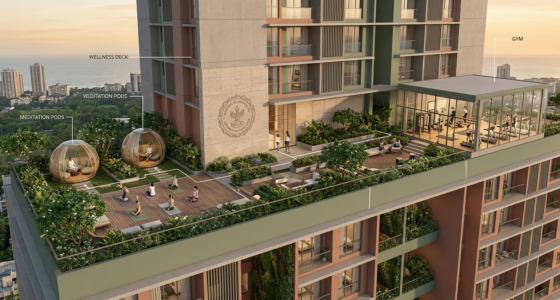
One of the most significant benefits for residents is the substantial increase in housing size. Existing 180 sq ft units will be redeveloped into modern 450 sq ft homes, aligning with current urban housing standards and significantly improving living conditions.
The total project cost is estimated at approximately ₹893 crore, and it is being implemented under Regulation 33(5) of the Development Control and Promotion Regulations (DCPR) 2034, which governs cluster redevelopment in Mumbai.
To ensure a smooth transition during the redevelopment phase, MHADA has offered a comprehensive rehabilitation package to residents. This includes a monthly rent of ₹20,000, advance rent for three years, brokerage support, and shifting charges of ₹20,000. These provisions are aimed at minimizing disruption and encouraging residents to vacate the unsafe structures at the earliest.
Importantly, MHADA officials have emphasized the urgency of the situation. With buildings in a dangerous condition, timely cooperation from residents is critical. The commencement of PAAA agreements is not just a procedural step—it is a signal that the project is finally moving forward after years of delay and uncertainty.
From a broader perspective, this project could serve as a template for other stalled redevelopment projects across Mumbai, particularly where private developers have been reluctant to participate. The EPC model, combined with state-led execution, may emerge as a key strategy to unlock similar projects in the future.
As Mumbai continues to grapple with aging housing stock and increasing pressure on urban land, the successful execution of the PMGP Colony redevelopment will be closely watched by policymakers, developers, and residents alike.
Also Read: MHADA Receives Over 50,000 Applications for 2030 Homes in Mumbai Lottery; Deadline Extended