
In a significant ruling protecting homebuyers, the Bombay High Court has directed real estate developer Lotus Logistics and Developers Pvt. Ltd. to urgently obtain the Occupation Certificate (OC) for the rehabilitation (rehab) wing of Evertop Apartments in Andheri West — failing which the company will be liable to pay ₹128.98 crore in damages to the housing society.
Justice Sandeep V. Marne, while dismissing the developer’s challenge to the Arbitral Award dated 16 August 2024, upheld the award almost entirely and extended the timeline for compliance by six months (total 9 months from today).
Background of the Long-Running Dispute
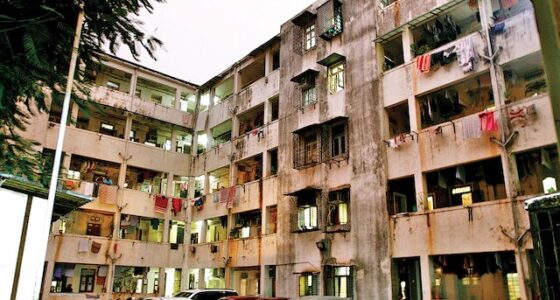
Evertop Apartments Co-operative Housing Society (58 old flats on Plot No. 9/10/11, CTS No. 834/1, 834/2 & 822/1, J.P. Road, Andheri West) entered into a redevelopment agreement with Lotus Logistics in 2008.
- The developer promised 52% additional carpet area to each member, amenities, monthly rent during construction, and OC within 30 months (maximum).
- The first sanctioned plan dated 17 September 2008 showed no “open-to-sky ducts” in living rooms or bedrooms of rehab flats (Wing A).
- Wing A was physically constructed as per this 2008 plan (with covered slabs, no ducts).
- However, the developer secretly obtained two revised plans:
- 9 May 2009
- 25 March 2011
- These plans showed large “open-to-sky ducts” (FSI-exempt voids) in living rooms and bedrooms of Wing A flats.
- By creating these fictitious ducts on paper, the developer shifted built-up area (FSI) from rehab Wing A to the free-sale commercial Wing B — effectively reducing the area available to society members while loading more saleable area in Wing B.
- MCGM refuses OC for Wing A because the as-built construction does not match the last sanctioned plan (2011), which shows non-existent ducts.
The society terminated the Development Agreement and Power of Attorney on 15 October 2015 due to multiple breaches, including non-payment of rent from February 2014.
Key Events Leading to Arbitration & High Court
- In October 2015, during the Society’s Section 9 petition, the developer made a solemn statement before the High Court (recorded in the order dt. 20 Oct 2015) that it would obtain OC expeditiously in consultation with the society.
- This statement effectively revived the obligation to obtain OC.
- The matter was referred to a sole Arbitrator.
- The society’s claim primarily sought directions to obtain OC as per the original 2008 plan (or regularise ducts) + heavy damages if impossible.
- The Arbitrator passed the award directing:
- Developer to amend plans to match 2008 sanctioned plan & obtain OC for Wing A within 6 months.
- If OC refused → regularise fictitious ducts (by bringing external FSI) within 3 months.
- If both fail → pay ₹128.98 crore (market value of land + building) + 8% interest.
- Pay rent arrears (Feb 2014 – Oct 2015) @ ₹80/sq.ft./month/member + interest.
- Pay ₹45.82 lakh for shortfall area (195 sq.ft. total) @ ₹23,500/sq.ft. + interest.
- Pay property taxes (Nov 2008 – Oct 2015).
- Declared 2009 & 2011 plans + 2010 Rectification Deed void & non-binding.
Developer’s Challenge & Bombay HC’s Verdict
The developer challenged the award under Section 34, arguing:
- Specific performance cannot be granted after termination of the agreement.
- ₹128.98 crore represents market value — not permissible; damages should be limited to demolition + reconstruction cost.
Justice Marne rejected both contentions:
- Specific Performance After Termination – Allowed
- Normal rule: Termination bars specific performance.
- Exception created by developer’s conduct:
- Solemn undertaking in Court (20 Oct 2015) to obtain OC.
- This statement revived the obligation.
- Developer never demanded reinstatement of PoA; repeatedly said it is “ready & willing”.
- Developer cannot approbate & reprobate.
- Court held the undertaking + correspondence + defence pleading made specific performance maintainable.
- Damages of ₹128.98 Crore – Upheld
- Payable only if OC refused and regularisation fails.
- Primary direction is to obtain OC or regularise → damages are in terrorem to compel performance.
- Developer can easily avoid payment by complying (DCPR allows “pick & choose” FSI).
- Tribunal chose lowest valuation (₹128.98 cr market value vs. ₹169 cr reconstruction cost) → no perversity.
Extended Timeline & Final Directions
The court extended the original 6-month timeline by 6 more months (total 9 months from today) for the developer to obtain OC/regularise the building.
If the developer fails even within the extended period, the full damages liability (₹128.98 crore + 8% interest) kicks in from the original award date.
What This Means
For the 58 families of Evertop Apartments, the judgment brings hope after over a decade of living in a building without OC — unable to legally occupy, sell or mortgage their flats.
The ruling sends a strong message: Developers cannot manipulate plans to steal rehab FSI for sale components and escape liability by citing termination.
The developer now has 9 months to rectify the issue — or face massive financial consequences.
The full judgment is available on the Bombay High Court website.
Also Read: Bombay High Court Rules BMC Permission Not Required for Tenantable Repairs