
In a significant ruling favoring residents of dilapidated municipal tenanted structures, the Bombay High Court has held that the right of tenants to safe and timely housing through redevelopment takes precedence over a developer’s interest in earning profits. Justice Sandeep V. Marne dismissed a petition by developer ISON Builders LLP seeking to freeze the termination of its 2014 Development Agreement and block the appointment of a new developer, allowing the proposed cooperative housing society to proceed with redevelopment.
The judgment reinforces a long-standing judicial principle in Mumbai redevelopment matters: courts will not halt reconstruction of unsafe buildings merely to preserve a developer’s contractual position when massive delays are attributable to the developer.
Case Background: 11-Year Stalled Redevelopment on MCGM Land
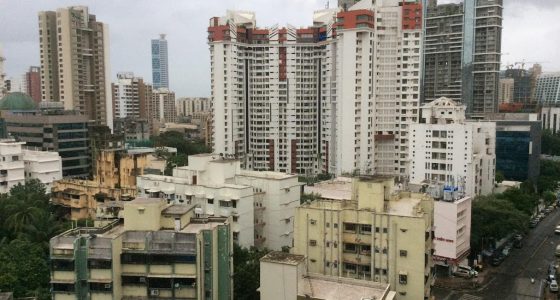
The dispute centers on land bearing C.S. No. 109 (Part) at D/8, Gandhi Nagar, Dainik Shivneri Junction and Majrekar Lane, Lower Parel (West), Mumbai — owned by the Municipal Corporation of Greater Mumbai (MCGM). The property hosts 28 old structures (dating back to around 1951) occupied by municipal tenants, many now operating as residential, commercial, or mixed-use units.
In March 2014, the tenants formed the proposed Om Sai Ram Cooperative Housing Society (Respondent No. 1) and passed a resolution appointing ISON Builders LLP as developer. A Development Agreement was executed on 22 December 2014, along with a Power of Attorney in favor of the developer’s partners. The project aimed at redevelopment under Regulation 33(7) of the Development Control Regulations, 1991 (later aligned with DCPR 2034).
The developer submitted a proposal in 2015, but progress stalled over the next decade due to multiple issues:
- Inventory and tenancy verification delays (partly blamed on MCGM errors, such as misclassification of 8 structures as non-residential instead of residential-cum-commercial).
- Failure to submit financial capacity documents (Annexure-3) from March 2021 to February 2023, leading MCGM to close the proposal in May 2022.
- Consent verification of 28 principal tenants finally occurred on 6 April 2023 (with irrevocable consents obtained), but Annexure-2 (a key pre-approval document) was never issued.
- Show-cause notice from MCGM in May 2024 for delays; society supported the developer initially but lost faith over time.
By September 2025, the society passed a resolution terminating the agreement, citing lack of progress and loss of confidence. Termination notice was issued on 25 October 2025, and a new developer (Aethon Developers Pvt. Ltd.) was appointed. MCGM accepted the termination and refused NOC/Annexure-2 to ISON Builders on 30 October 2025.
Developer’s Challenge: Seeking Interim Stay Under Section 9
ISON Builders approached the Bombay High Court under Section 9 of the Arbitration and Conciliation Act, 1996, praying for:
- Stay on the termination notice.
- Injunction restraining the society and its 20+ tenant-members from implementing termination, appointing a new developer, creating third-party rights, or proceeding with redevelopment.
- Preservation of status quo pending arbitration.
The developer argued that delays were not solely its fault (attributing them to MCGM processes and tenancy issues), that the termination was malafide, and that the Development Agreement was capable of specific performance.
Court’s Key Reasoning: Tenants’ Safety Trumps Developer’s Profits
Justice Marne dismissed the Section 9 petition, holding that the developer failed to make out a prima facie case for interim relief.
The court heavily relied on precedents, particularly the Division Bench judgment in Huges Real Estate Developers LLP v. Khernagar Adarsh Co-operative Housing Society Limited (Commercial Appeal No. 45 of 2025, decided 19 August 2025). In paragraph 36 of the present judgment, the court quoted and applied the following principle from that case:
“When rights of residents of dilapidated buildings to reside in safe houses is pitted against the rights of the developer to earn profits through redevelopment contracts, the latter must yield to the former at least when it comes to consideration of grant of temporary injunction. This is because developer’s loss of opportunity to earn profits can always be made good by awarding monetary decree in his favour. However, if redevelopment project of buildings is halted till decision of suit filed by the developer, the loss caused to the residents of the building cannot be undone. This is particularly true where the old buildings are not in habitable condition.”
The court emphasized (paras 33–37):
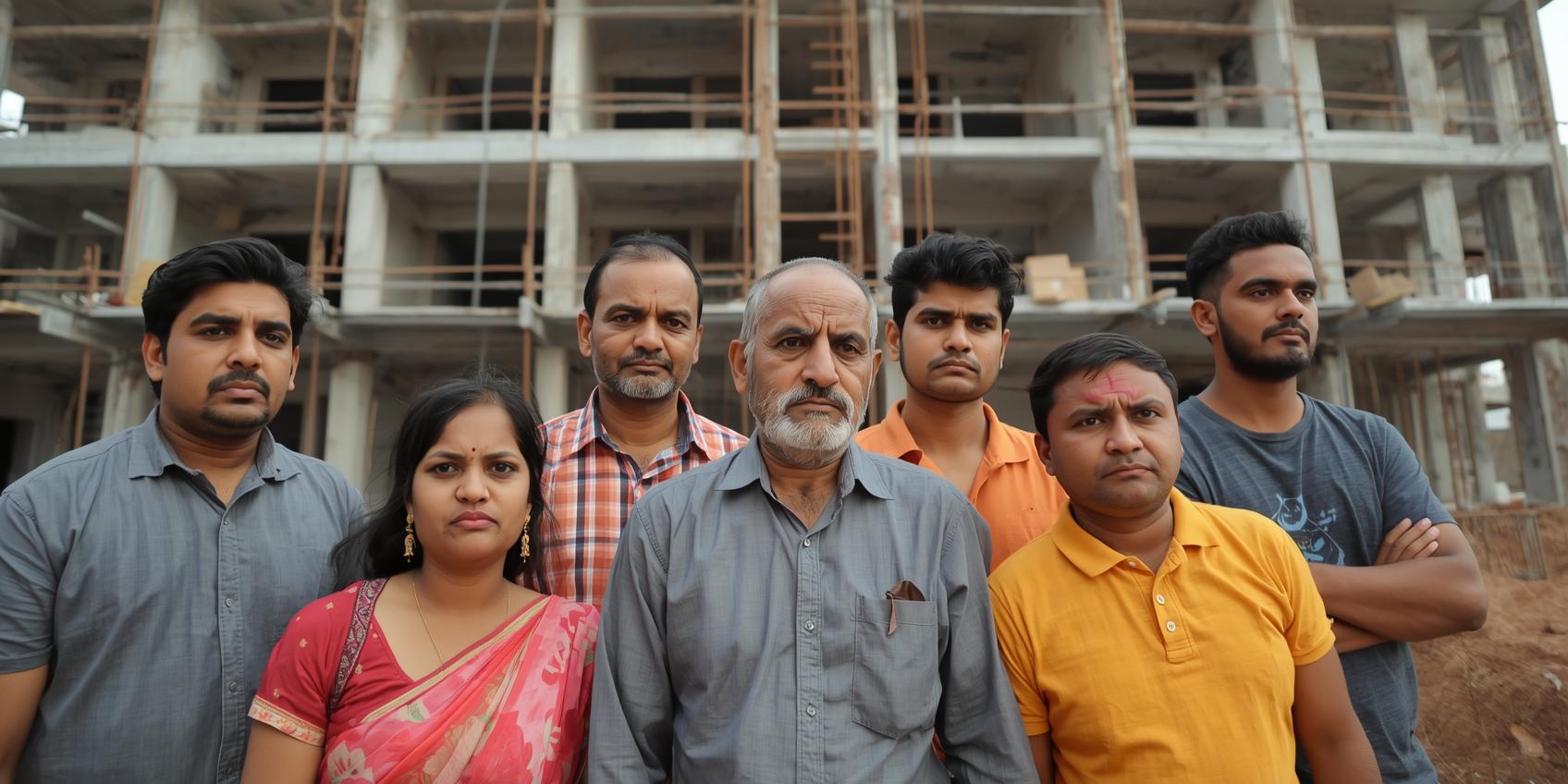
- The tenants have endured 75-year-old dilapidated structures for over a decade with no demolition or commencement.
- The developer was primarily responsible for key delays (e.g., 2-year lapse in submitting financial documents, stalling consent verification and Annexure-2 issuance).
- Residents cannot wait indefinitely; redevelopment must not be frozen.
- Damages in arbitration can compensate any proven wrongful termination, but unsafe living conditions cannot be reversed.
Additional adverse findings included the developer’s attempts to negotiate transfer of the project to another developer (evident from society meeting minutes in August 2025) and perceived profit-driven motives over genuine redevelopment.
Arbitration Appointed: Merits to Be Decided
While denying interim relief, the court allowed the developer’s Section 11 application and appointed retired Bombay High Court Judge Smt. Justice Anuja Prabhudesai as sole Arbitrator to adjudicate the full disputes, including validity of termination and any damages.
All findings remain prima facie and do not bind the arbitral tribunal on merits.
This ruling aligns with Bombay High Court’s consistent approach in redevelopment disputes involving delayed or defaulting developers — prioritizing tenant safety and timely reconstruction over interim freezes that prolong hardship.
Also Read: In 150 Slum Redevelopment Projects tenants are waiting for rent worth ₹525 crore