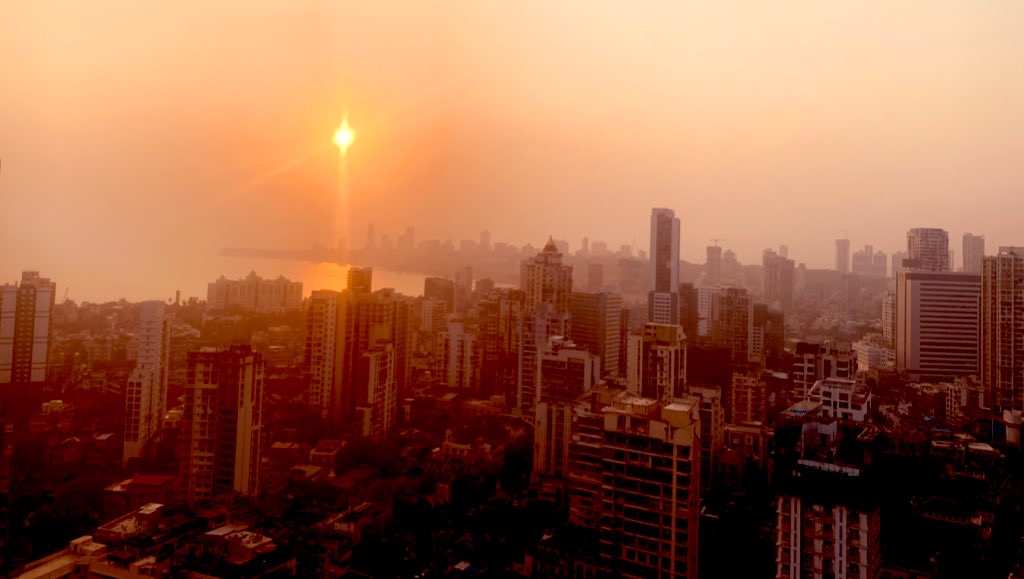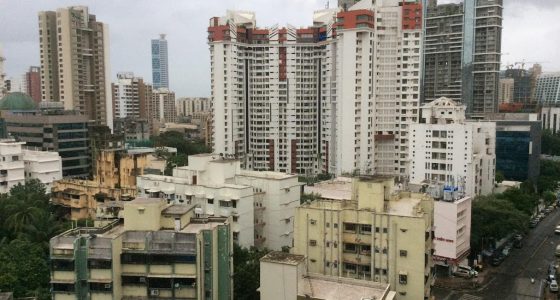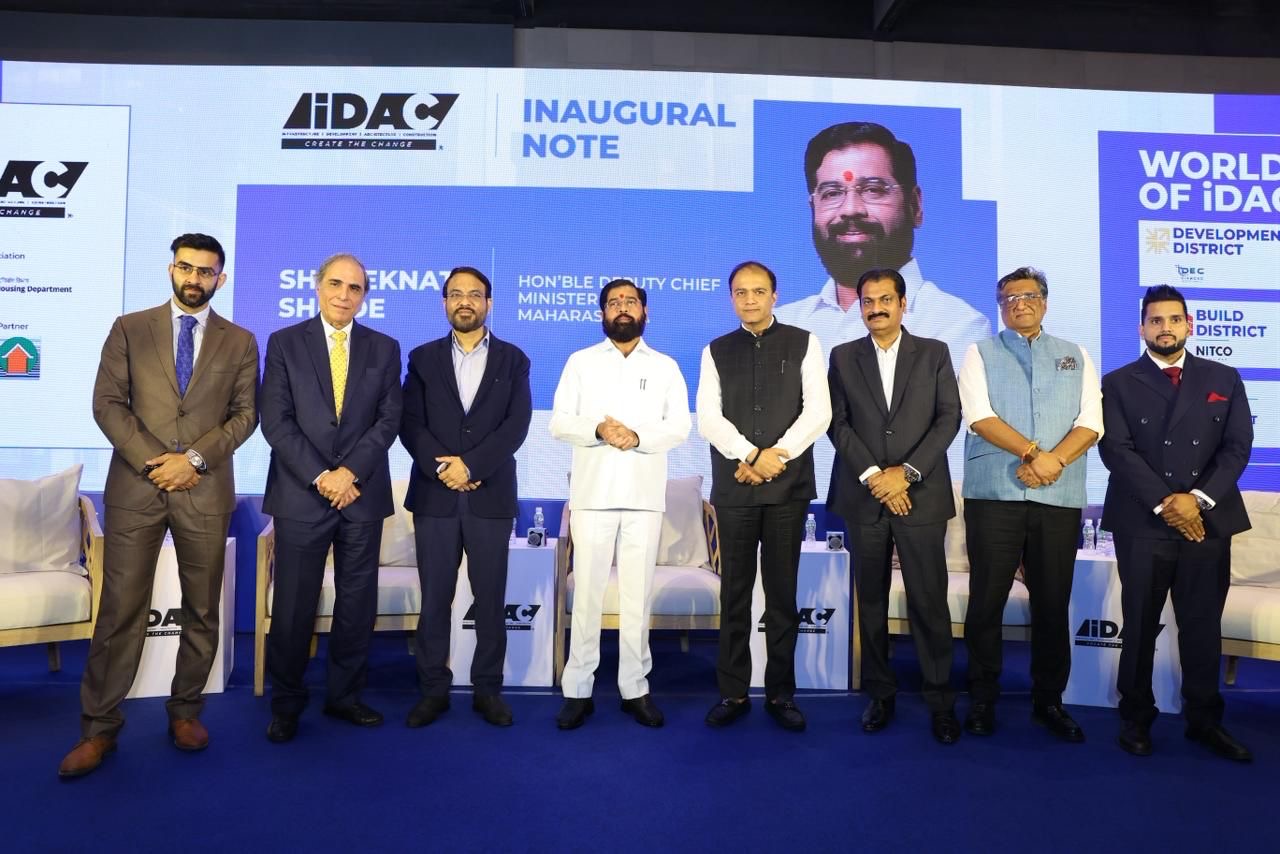

iDAC Expo in Mumbai brought together policymakers, developers, architects and urban planners to discuss the future of infrastructure, housing and urban development in Maharashtra. The event highlighted the growing importance of policy reforms, infrastructure expansion and sustainable development in shaping the next phase of urban growth across the state.
Speaking at the expo, Maharashtra Deputy Chief Minister Eknath Shinde emphasized that the state will play a central role in India’s economic expansion while continuing to invest heavily in infrastructure that supports real estate and urban development.
He noted that Maharashtra is expected to contribute nearly $1.5 trillion to India’s $5 trillion economy target by 2027, provided global economic conditions remain stable.
Infrastructure Projects Driving Urban Growth
According to Shinde, large-scale infrastructure projects are transforming the economic and real estate landscape of the state. Major initiatives such as the Mumbai Coastal Road, Atal Setu, Navi Mumbai International Airport, and Samruddhi Mahamarg are strengthening connectivity and creating new investment corridors across the state.
The government is also pushing forward with an extensive metro network across the Mumbai Metropolitan Region, which is expected to significantly improve mobility and support new residential and commercial developments.
Shinde added that ₹2.96 lakh crore worth of investments expected in 2026 could generate nearly three lakh jobs, further strengthening the state’s role as one of India’s most dynamic economic hubs.
Housing Policy and Redevelopment Focus
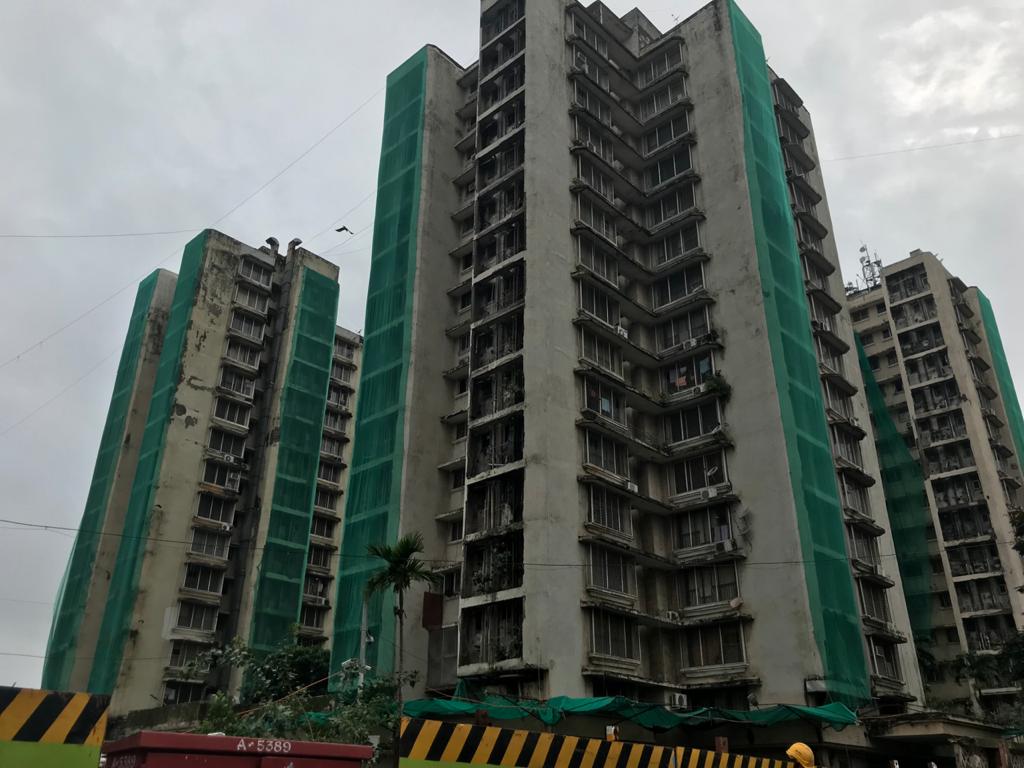
Housing reforms and redevelopment initiatives were another key theme at the event. Pankaj Bhoyar highlighted the government’s focus on creating an inclusive housing ecosystem that balances rapid urbanisation with affordability and sustainability.
He noted that redevelopment, policy reforms and collaboration with institutions such as the Maharashtra Housing and Area Development Authority will play a crucial role in improving housing access across the state’s cities.
“Housing is not merely about constructing buildings; it is about providing dignity, security and opportunity to families,” Bhoyar said, adding that the state aims to create future-ready cities through integrated planning and housing reforms.
Improving Housing Affordability
Sanjeev Jaiswal stressed that rationalising premiums, development charges and other costs associated with housing development could significantly improve affordability in cities like Mumbai.
He said policy reforms combined with faster approvals could accelerate housing supply and make homes more accessible to citizens.
Industry Calls for Collaboration
Industry leaders at the expo also highlighted the need for stronger collaboration between policymakers, developers and urban planners.
Dhaval Thakur noted that the expo was created as a platform to bring together the architecture, construction and real estate industries to exchange ideas and shape the built environment of the future.
Satish Kumar emphasized that transforming a complex city like Mumbai requires coordinated partnerships between government, industry, communities and research institutions.
Similarly, Amit Sinha said developers must increasingly integrate sustainability, design innovation and long-term value creation as cities continue to grow.
Urban Planning and Policy Reforms
Renowned architect Hafeez Contractor highlighted the importance of policy reforms in shaping urban development. He noted that streamlined approval processes and progressive planning regulations could help cities like Mumbai achieve higher density while improving quality of life.
Deben Moza added that infrastructure development and policy initiatives are positioning Mumbai for a new phase of urban transformation.
Platform for the Future of Urban Development
The three-day iDAC Expo is expected to attract 15,000–20,000 visitors and bring together more than 150 experts, architects, developers and urban planners.
The event aims to facilitate dialogue around sustainable infrastructure, housing policies and design innovation, helping shape the future of India’s built environment as cities continue to expand.
Also Read: Infrastructure upgrade to fuel realty in MMR