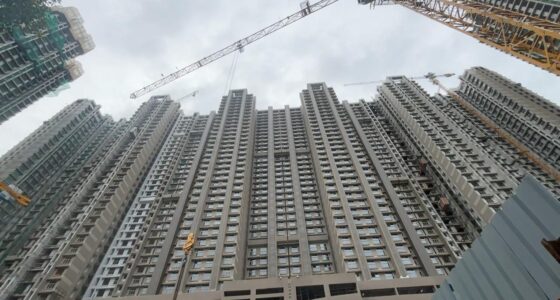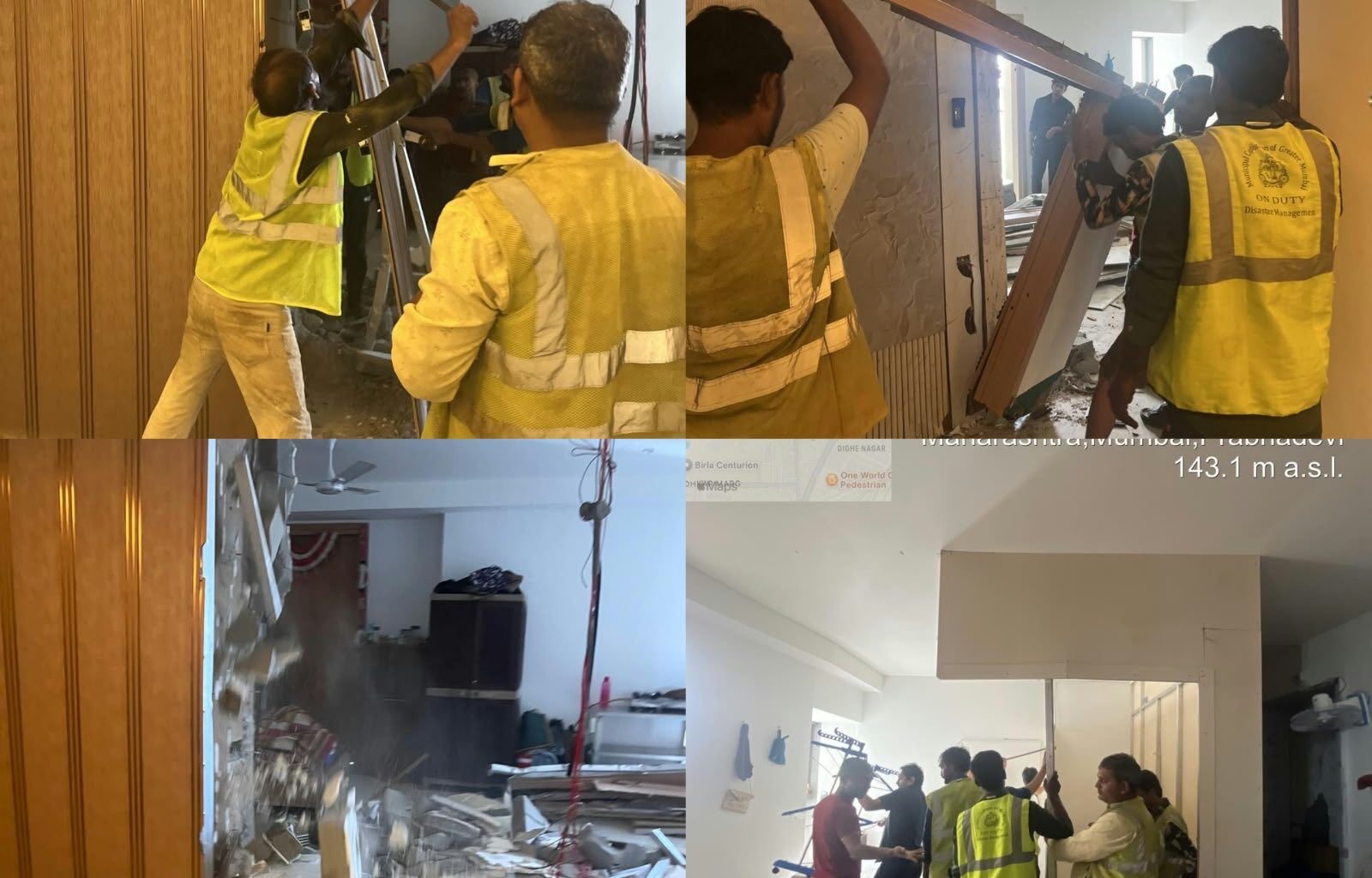

The Brihanmumbai Municipal Corporation (BMC) has carried out demolition action against unauthorised alterations in flats at Rustomjee Crown, a luxury residential development in Prabhadevi, Mumbai, after complaints of unauthorised construction and alleged violations of sanctioned plans.
The civic action follows a series of notices issued to occupants of Wings A and B of the project. According to a BMC notice dated August 19, 2026, issued by the Assistant Commissioner of the G-South Ward, the civic body invoked Section 488 of the Mumbai Municipal Corporation Act to enter the premises with assistants and workmen for inspection, measurement and photography.
The notice was addressed to the owner, occupier, chairman, secretary and developer of Rustomjee Crown, located at F.P. No. 1043, T.P. Scheme IV of Mahim Division, Gokhale Road, Prabhadevi. It directed the concerned parties to remain present with relevant documents, updated amended plans and permissions obtained from the competent BMC authority. The inspection was scheduled for August 24 at around 11 am or thereafter on another working day.
The notice is significant because Section 488 empowers the civic authorities, subject to the provisions of the Act, to enter premises for carrying out inspections and other municipal functions.
The BMC subsequently said that the building comprises three basements, a ground floor and 63 upper floors. Wings A, B and C contain residential premises from the 14th to the 63rd floors. Wings A and B each comprise 186 flats and have received Occupation Certificates.
According to the civic body’s statement, complaints were received alleging unauthorised constructions and FSI violations in Wings A and B. In all, 138 notices were issued under the relevant provisions of the Mumbai Municipal Corporation Act, 1888 and the Maharashtra Regional and Town Planning Act, 1966.
The complaints were not limited to ordinary internal alterations. The alleged violations included enclosure and incorporation of common lobby areas into individual flats, as well as the merging of kitchen ducts and ventilation shaft areas with the habitable portions of apartments.
After issuing notices, following the prescribed legal procedure and providing the concerned parties an opportunity of hearing, the BMC said it passed Speaking Orders in the applicable cases. The demolition action was subsequently undertaken in three to four flats, with the unauthorised alterations removed in accordance with the respective Speaking Orders.
The action had its origins in complaints alleging unauthorised additions and alterations, amalgamation of flats, misuse of areas not forming part of permissible FSI and conversion of common spaces into private habitable areas. Media reports have identified RTI activist Santosh Daundkar as the complainant whose representations prompted scrutiny of the alleged violations.
Reports have also stated that the BMC’s notices covered owners in Wings A and B and that the civic action initially focused on a small number of flats where the alleged violations had proceeded through the statutory process and resulted in Speaking Orders.
The controversy has attracted particular attention because Rustomjee Crown is one of the prominent luxury residential developments in Mumbai and some flats in the project have reportedly been associated with politicians, government officials and prominent businesspersons. However, the BMC’s stated basis for the demolition action is the alleged deviation from sanctioned plans and encroachment or incorporation of common areas into private premises, rather than the identity of individual occupants.
The case also highlights an important distinction for apartment owners: receiving an Occupation Certificate for a building does not necessarily mean that every subsequent alteration inside an individual flat is automatically authorised. Internal changes that affect sanctioned areas, common spaces, ducts, shafts, lobbies or other portions of the approved building plan can still become subject to municipal scrutiny and enforcement.
In the Rustomjee Crown case, the BMC has maintained that the action was taken only after notices were issued, the concerned parties were given an opportunity of hearing, Speaking Orders were passed where applicable, and the demolition was carried out in accordance with those orders.
The immediate demolition has therefore involved only a limited number of flats, despite the larger number of notices issued in Wings A and B. The 138 notices represent the broader enforcement proceedings arising from complaints, while the demolition carried out so far relates to cases in which the BMC says the prescribed legal process had been completed.
The action puts the spotlight on the legal and practical limits of alterations within high-value apartment projects, particularly where common areas or building services are incorporated into private residential spaces. It also underlines the importance for flat owners to verify whether any proposed alteration is covered by the sanctioned plan and approvals before carrying it out.