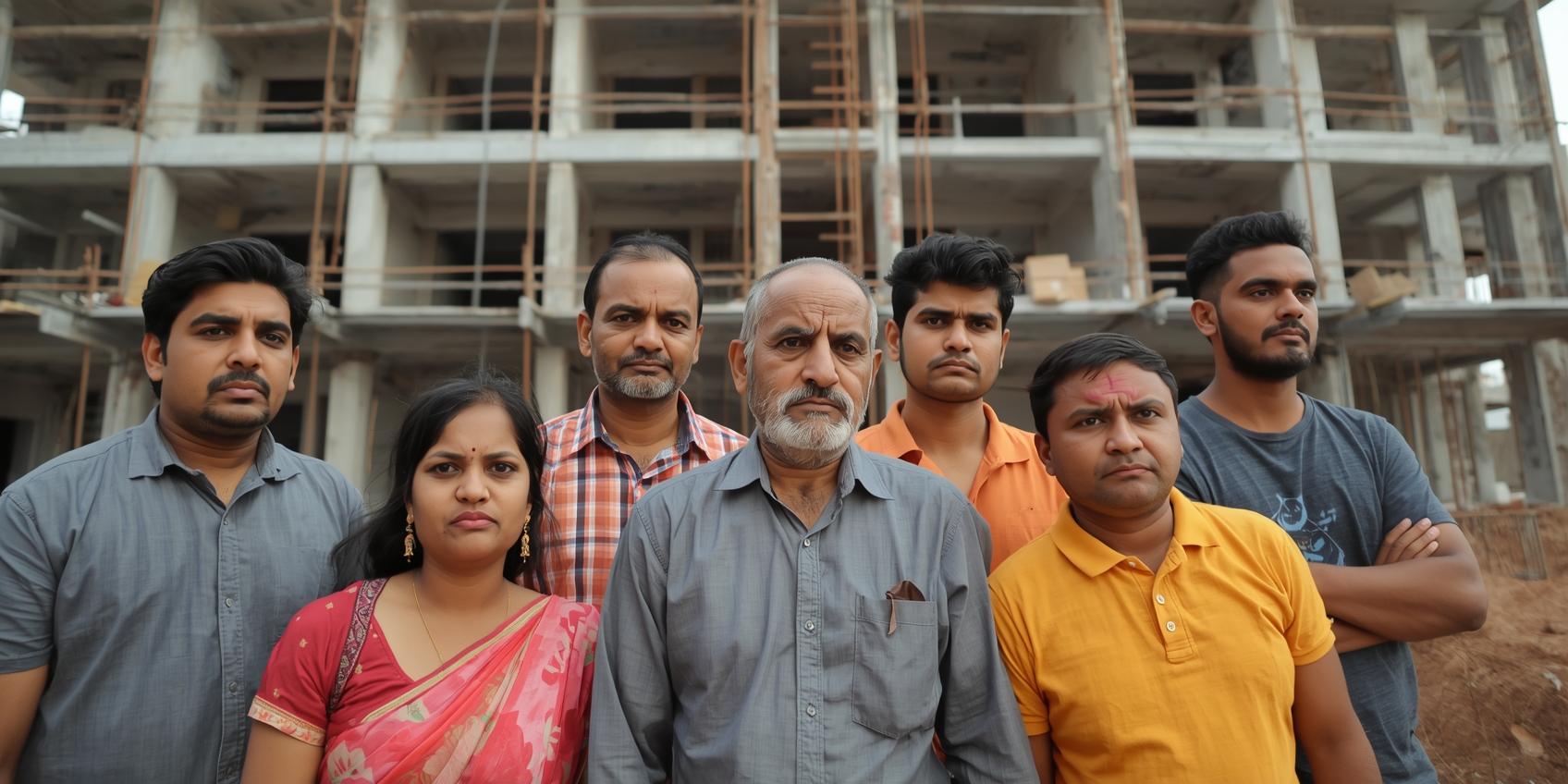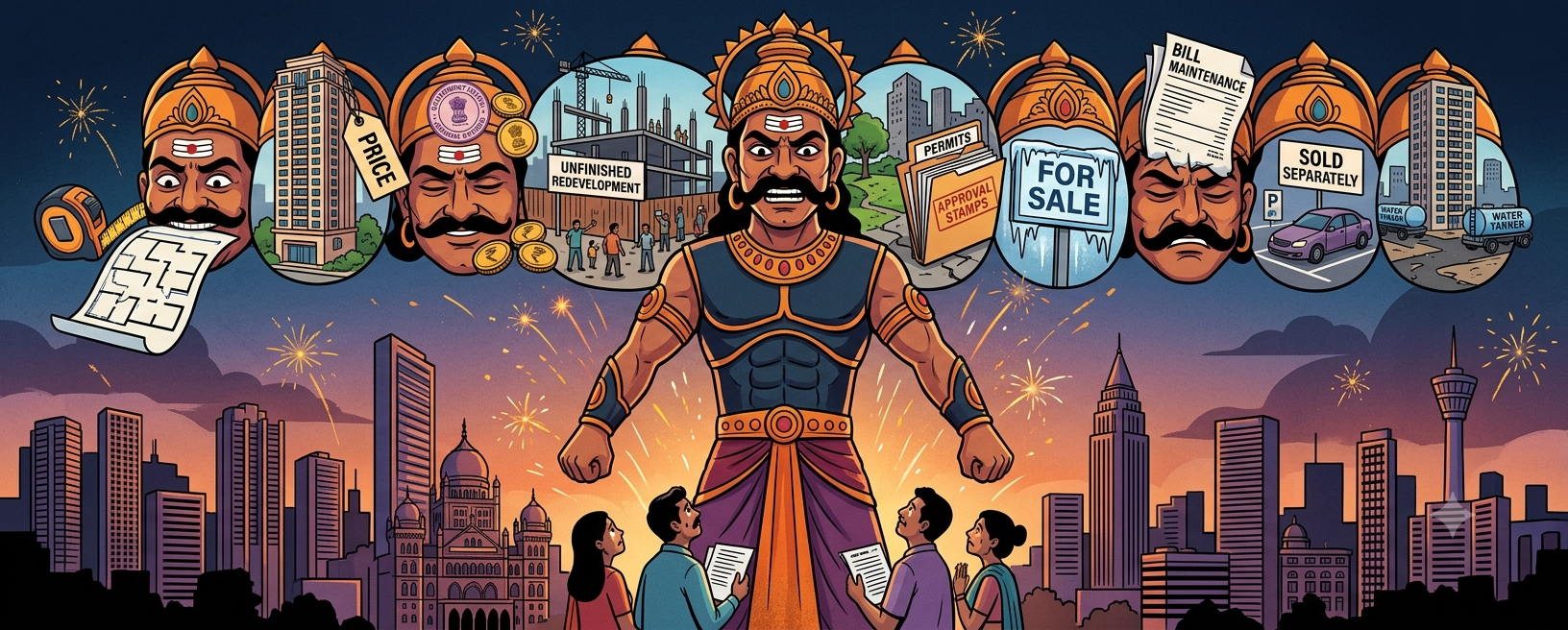
As effigies of Raavan go up in flames across Mumbai’s grounds this Dussehra, the city would do well to burn another effigy: the one made of broken housing promises. For every homebuyer who has drained savings, waited for possession, or paid for space they cannot use, Mumbai’s real estate market has its own ten-headed demon. Each head represents an evil that must be confronted, not merely celebrated away for one evening.
The first head is the super built-up illusion. Despite RERA requiring disclosure of carpet area, the net usable area within a home, many buyers still encounter confusing terminology that obscures what they can actually walk on. A buyer must insist on carpet-area pricing and demand a clear breakdown of every square foot before signing.
The second is the over-luxurisation of mid-segment housing. In a city where ordinary professionals struggle to buy a modest home, “luxury” has become a marketing default. True affordable housing within Mumbai’s limits is shrinking, while even compact configurations are packaged as premium products.
The third head is unreasonable premiums and charges. Development premiums, fungible FSI costs, open-space deficiency payments and stamp duty add heavily to the final price. These costs may not appear in a brochure, but they eventually enter every EMI.
Fourth is the infinite redevelopment delay. Residents of ageing chawls and societies surrender their homes for a promised tower, then remain in transit accommodation for years. Delayed or unpaid transit rent has repeatedly reached courts, showing how redevelopment can become a prolonged social injustice rather than renewal.
The fifth head is open-space deficiency. Mumbai cannot keep trading breathing room for towers. When buildings press against plot boundaries and public amenities shrink, the city gains height but loses livability.
Sixth is the approvals maze. Developers still move through multiple no-objection certificates and clearances. Every delay increases holding costs, and those costs rarely remain with the developer; they travel smoothly into the buyer’s price.
The seventh head is stagnant resale liquidity. Primary launches dominate headlines, but the resale market often tells a quieter story. Sellers anchored to peak-era valuations keep properties off the market, while genuine buyers wait for realistic prices.
Eighth is the high-amenity, high-maintenance trap. Infinity pools, clubhouses and automated parking look impressive on launch day. Five years later, monthly maintenance bills can feel like a second EMI, especially for middle-income families.
The ninth head is parking premium extortion. Open and stilt parking spaces are common areas of a housing society and cannot be sold separately as independent units. Buyers should scrutinise agreements rather than accept parking charges as an unquestioned add-on.
The tenth head is the infrastructure latency gap. Towers rise quickly, but metro links, roads, sewage lines and water connections arrive late. New residents then discover that a gleaming address may still depend on tankers and traffic jams.
Dussehra teaches that evil is defeated not by symbolism alone but by sustained action. Mumbai needs carpet-area transparency, realistic affordable housing, faster approvals, time-bound redevelopment, protected open spaces and honest parking practices. Regulators must enforce accountability, and buyers must ask harder questions before paying.
Let the paper Raavan burn tonight. But let the ten evils of Mumbai real estate be challenged every day after, until owning a decent home in this city stops feeling like a festive miracle and becomes an ordinary right.
Also Read: Developers Unveil Special Offers to Boost Housing Demand During Navratri