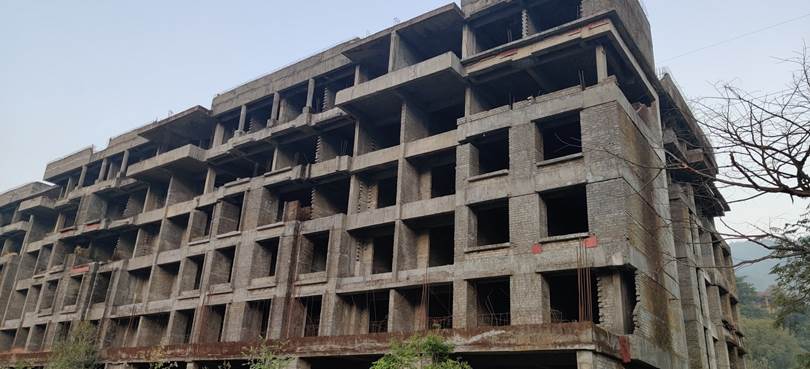

The Bombay High Court (Nagpur Bench) has delivered a judgment that sheds light on a common property dispute across India — when someone builds a house on land belonging to a relative or another person, can they later claim ownership?
In this case, Justice Rohit W. Joshi ruled that simply constructing a house on someone else’s land, even with their permission, does not make the licence permanent or give ownership rights, unless the builder can prove that the construction was made acting upon a valid licence.
The case involved a property dispute between two real brothers from Akola — Madhukar Hatwalne and Yeshwant Hatwalne — which escalated into a decades-long legal battle over a shared plot and a house built upon it.
⚖️ Background: When Permission Turned Into Possession
- The property in question was Plot No. 7, admeasuring 5040 sq. ft., in Malkapur, Akola.
- The elder brother (plaintiff) had purchased the plot in his own name in 1981.
- The younger brother (defendant) was allowed to construct a house on half of the plot, allegedly as a licensee.
- The arrangement was meant to be temporary — the plaintiff claimed the brother had agreed to vacate when asked.
- But years later, the younger brother refused to vacate, claiming that he was co-owner, or alternatively, that his possession had become ownership by “adverse possession.”
The elder brother filed a civil suit for possession in 1998, leading to a chain of appeals that ultimately reached the High Court in 2025.
📆 Decades of Litigation: Both Brothers Gone, Dispute Remains
- The suit began in 1998, decades after the land purchase in 1981.
- Both brothers died during the case, leaving sons and daughters as legal heirs to continue the litigation.
- The High Court delivered its final order on 9 October 2025, bringing closure to a 44-year-old property conflict that began as a matter of family trust.
📜 What the High Court Held
Justice Rohit W. Joshi dismissed the appeal filed by the defendant’s legal heirs and reaffirmed the lower court’s decision in favour of the plaintiff.
The Court made it clear that:
- Permission does not equal ownership. Even if someone builds a permanent house with the owner’s consent, it doesn’t make the licence irrevocable unless it’s proven that the construction was made acting upon the licence.
- No dual claim possible. One cannot simultaneously claim ownership by adverse possession and also argue for irrevocable licence protection.
- Licence ends with life. A licence is a personal right — it ends upon the death of the licensee unless expressly made permanent by agreement.
- No compensation claim. Since the construction was not proven to be made under licence, the defendant’s family wasn’t entitled to compensation under the Easements Act either.
📘 Key Legal Provisions Explained
The Court relied on Section 60(b) of the Indian Easements Act, 1882, which says:
A licence becomes irrevocable only if the licensee, acting upon the licence, executes a work of permanent character and incurs expenses in doing so.
Justice Joshi emphasised that the phrase “acting upon the licence” is critical — simply living on or building with informal consent doesn’t qualify. There must be clear evidence that the construction was made based on the owner’s licence and with their formal permission.
🔍 Why This Matters for Homeowners and Families
The ruling has broader implications beyond this family dispute.
- For homeowners: If you allow relatives or friends to build on your land without formal terms, you retain ownership — but document the licence to avoid long-term disputes.
- For occupants: Building on someone else’s land does not create ownership rights, even after decades of possession, unless legally transferred.
- For lawyers and buyers: Always verify title and occupancy before purchase; unrecorded “permissions” can lead to costly litigation.
🧩 Bottom Line
This judgment reinforces that informal family permissions don’t create property rights.
Even permanent construction doesn’t make a licence irrevocable unless it’s proven that the work was done acting upon the owner’s licence — not under a mistaken belief of ownership.
For families, it’s a timely reminder to formalize such arrangements to prevent decades-long legal battles.
Also Read: Bombay HC: Maintenance Charges Must Match Your Flat Size