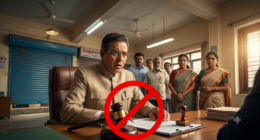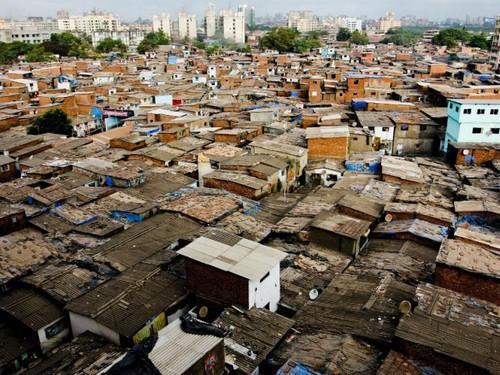

In a significant legal development, the Bombay High Court on Friday dismissed a petition filed by UAE-based Seclink Technologies, challenging the Maharashtra government’s decision to cancel its 2019 bid for the redevelopment of Dharavi slums. The Court upheld the government’s move to issue a fresh tender in 2022, which ultimately resulted in the award of the project to Adani Properties.
The bench, led by Chief Justice DK Upadhyaya and Justice Amit Borkar, had earlier reserved its verdict after hearing arguments from both sides. The case revolved around Seclink’s attempt to reverse the state’s decision to annul its ₹7,200 crore bid and introduce a new bidding process, which saw Adani emerge as the winning bidder.
Seclink had initially secured the Dharavi redevelopment contract in 2019, surpassing Adani’s bid of ₹4,539 crore. However, the Maharashtra government, under Chief Minister Eknath Shinde, decided in 2022 to include 45 acres of railway land in the redevelopment project for slum rehabilitation. This change was not part of the original plan, prompting the state to seek legal advice.
Following the legal consultation, the then Advocate General Ashutosh Kumbhakoni recommended canceling the original 2019 tender and launching a fresh bidding process to accommodate the costs associated with acquiring the railway land. Consequently, the government scrapped Seclink’s winning bid and introduced a revised bidding framework, which ultimately favored Adani Properties.
Seclink contested the move, arguing that the inclusion of railway land had already been factored into the original 2019 bid, as the bid map included nearly 90 acres of railway land. The company claimed that the government’s decision to cancel the contract was unjustified and that the new tender conditions were designed to disadvantage them and favor Adani. Seclink further alleged that it suffered a financial loss of ₹8,424 crore due to the cancellation of its bid.
Defending its position, the Maharashtra government asserted that the revised tender conditions were necessary given the changed economic circumstances between 2019 and 2022. Factors such as the COVID-19 pandemic, the Russia-Ukraine war, fluctuations in the Rupee-USD exchange rate, rising interest rates, and the overall high-risk environment for investors were cited as reasons for the changes in project terms. The government emphasized that these adjustments were made to ensure the project’s financial viability and protect the public interest.
Seclink was represented by Senior Advocate Virendra Tulzapurkar, along with a team of advocates, while Senior Advocate Milind Sathe, assisted by Additional Government Pleaders Jyoti Chavan and Atul Vanarse, appeared for the State. Senior Advocate Ravindra Kadam, along with Senior Advocates Vikram Nankani, Zal Andhyarujina, and others, represented Adani Properties in the case.
This ruling paves the way for the continuation of the Dharavi redevelopment project, a crucial initiative aimed at transforming one of Asia’s largest slums into a modern urban hub.
Also Read: Dharavi Redevelopment Tender Cancelled