
Migrants and urban poor will get government funded homes on rent in cities now. Cabinet has approved Affordable Rental Housing Development for migrants and urban poor.
By Varun Singh
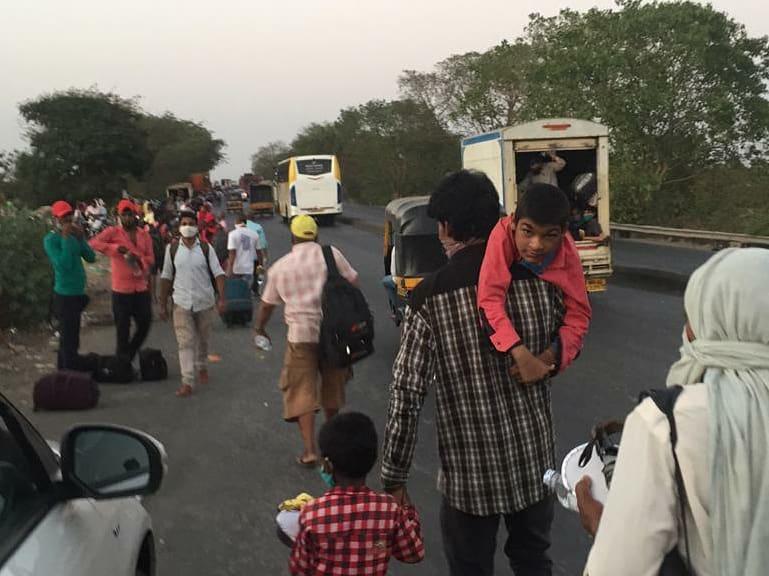
One image of COVID 19 pandemic that will stay for long with all of us is that of the migrants walking back to their homes from cities.
Many of them left cities for various reasons, one being lack of affordable rental housing in the cities where they worked.
On Wednesday the central Cabinet approved developing of Affordable Rental Housing Complexes (AHRCs) for urban migrants and poor as a sub-scheme under Pradhan Mantri Awas Yojana – Urban (PMAY – U).
Anuj Puri, Chairman, Anarock Property Consultants says, “The Cabinet approval for development of ARHC for urban migrants and poor is indeed a praiseworthy move which will significantly help fulfil the government’s ambitious ‘Housing for All by 2022’ initiative.”
Under this scheme, vacant government-funded housing in urban cities will be converted into ARHC via the PPP model and be rented out to migrants at concessional rates.
How will this move help the migrants?
Puri says, “This initiative basically emanated from the plight and migration of workers during the COVID-19-infused lockdown. Absence of affordable rental housing in major cities led to mass exodus of migrants that had zero income during the lockdown. Thus, the government had to shift gears of their Housing for All initiative and include affordable rental housing as part of it.”
To attract private participation from developers, the government has also rolled out special incentives such as, 50% additional FAR/FSI, concessional loan at priority sector lending rate, tax reliefs at par with affordable housing, etc. to develop ARHCs on their own available vacant land for 25 years.
PM Narendra Modi’s this scheme is clearly an attempt to bridge the shortfall of dwelling units across the country.
Many developers have significant land parcels both within the cities as well as their peripheries these can be used for affordable housing, including rental housing.
Dr. Niranjan Hiranandani, President (National) NAREDCO, says, “In light of the challenges that urban poor and migrant labour faced during the lockdown, this will provide a long-term solution. This will create an urban ecosystem providing affordable rental housing.”
The advantage from this will be proper habitat and living facilities for migrant labour. Something that is much needed to restart the urban economy, be it manufacturing or service providers.
“The biggest plus point is that this will make housing available at affordable rent, at locations close to place of work. This will reduce unnecessary travel, congestion and help control pollution,” said Hiranandani
While it is a welcome move some developers feel the hurdle could be that of land availability in metros.
“This, if implemented, will create affordable housing for many who are not in a position to buy. Moreover, it will solve the problem of affordable housing shortage in cities. The only challenge we see is availability of land and necessary infrastructure to create such a supply,” Ankush Kaul, President (sales & marketing) – Ambience Group said.
Also Read: Residential rentals see a downward slide in Mumbai