
“We don’t oppose redevelopment. We don’t even mind if it’s done by MHADA or a private player like Adani. But the 2021 GR issued by the MVA government took away our rightful share of land and gave everything in favour of the builder. That’s what we are fighting against.”
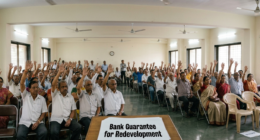
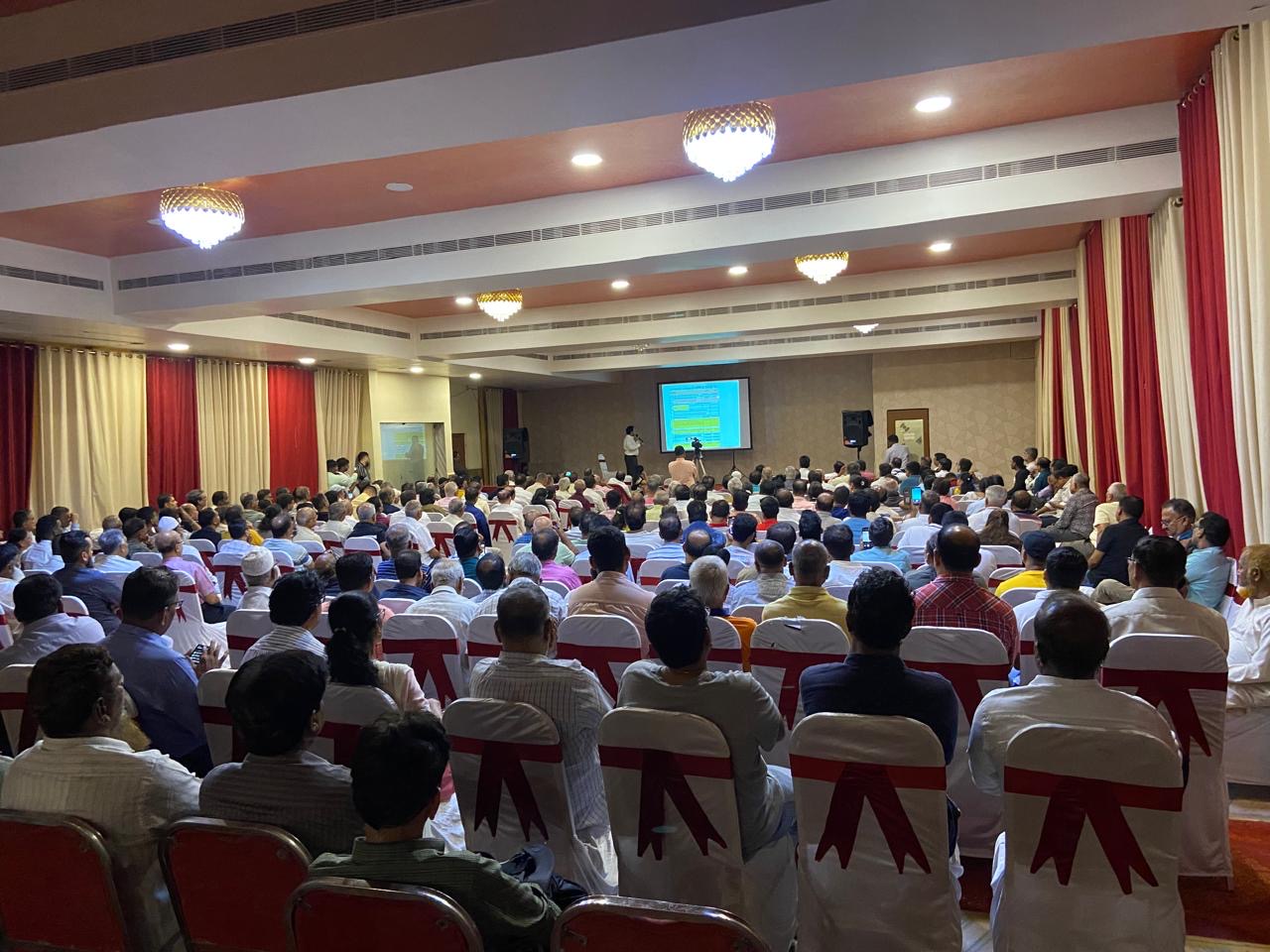
These were the strong words from hundreds of agitated residents of Motilal Nagar who gathered at Picasso Hall, Goregaon (West) on Saturday evening to voice their opposition to what they call an “unjust and one-sided redevelopment plan.” The meeting, organised by the Motilal Nagar Vikas Samiti, saw participation from over 3,700 commercial and residential unit holders, demanding that the state government revoke or amend the controversial GR issued during the MVA regime.
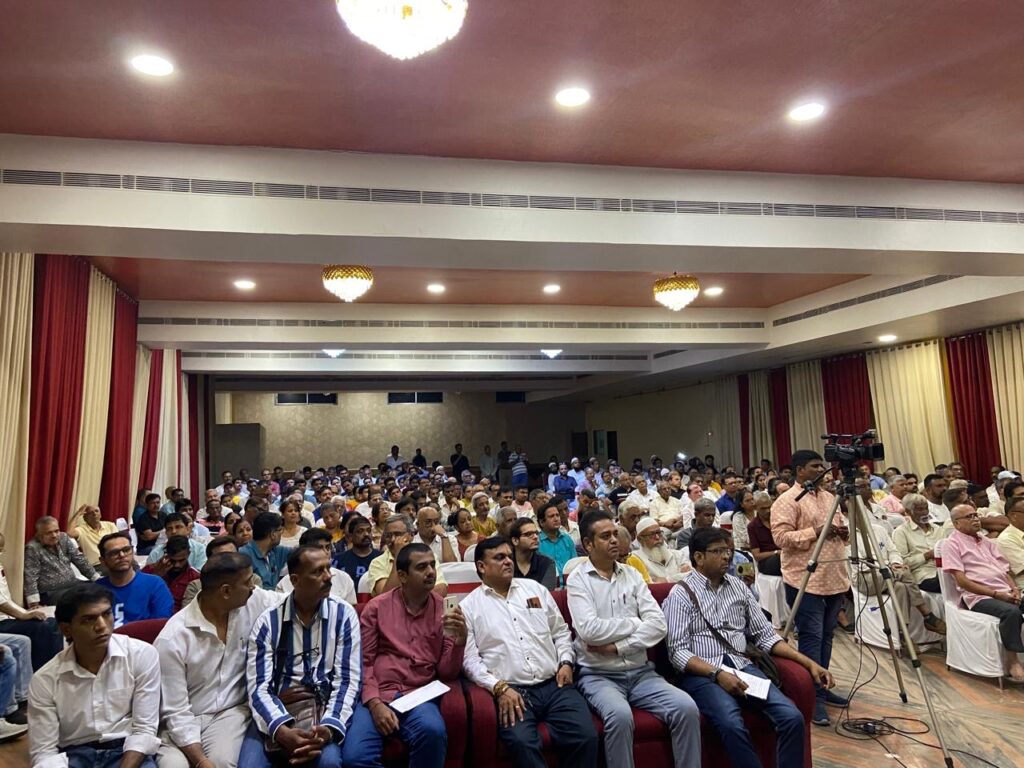
Residents alleged that the 2021 GR not only stripped them of their rights to increased carpet area, but also paved the way for private developers—especially Adani Properties—to gain a disproportionate advantage in the MHADA redevelopment tender.
According to the Samiti, MHADA considered only the original 21 sq.m. units as the base entitlement, ignoring the additional 45 sq.m. legally purchased by many residents in 1986-87. Urban planner Sandeep Kanagutkar and PMC Akbar Jeevani presented a detailed breakdown, arguing that as per DCPR 2034, Clause 33(5), and with benefits of 4 FSI, fungible FSI and pro-rata entitlement, every resident should be eligible for up to 3,560 sq.ft. carpet, while non-residential units could get up to 3,395 sq.ft.
Even after adjusting for construction cost and MHADA/C&D company profit, residents claim they deserve a minimum of 2,400 sq.ft. carpet area (residential) and 2,100 sq.ft. (non-residential)—far more than the 1,333 sq.ft. and 822 sq.ft. being offered under the current plan.
The residents further pointed to the timing and structure of the tender. Earlier this year, Adani Properties Pvt. Ltd. won the bid to redevelop 143 acres of Motilal Nagar, committing to build 3.97 lakh sq.m. of rehab housing for MHADA while receiving 18.8 lakh sq.m. of sale area in return. The residents allege that the terms of the MVA-era GR directly facilitated this outcome by reducing developer obligations and cutting citizen benefits.
“We’ve seen the government reverse several such unfair decisions made during the previous regime. We are only asking for the same in our case,” said Nilesh Prabhu, Joint Secretary of the Samiti. He added that if the government finds it difficult to grant them their due, residents are fully prepared for self-redevelopment, and urged CM Devendra Fadnavis to support them under his One-Window policy for self-redevelopment projects.
A legal challenge to the 2021 GR is already underway in the Bombay High Court, and the Samiti has made it clear that it is ready to take the matter to the Supreme Court if needed. In the coming days, delegations plan to meet Chief Minister Fadnavis and Deputy CM Eknath Shinde to present a formal memorandum of their demands.
Until then, residents have called on the government to withhold the allotment letter (AOA) to Adani and put the redevelopment process on hold.
Also Read: MHADA to construct 12724 flats in the coming financial year