As India’s commercial office market rides a wave of record-breaking leasing, Mumbai Metropolitan Region (MMR) has carved out a dominant position as the country’s leading hub for BFSI Global Capability Centers (GCCs), according to a new report by JLL.
While Bengaluru retains the lion’s share (40%) of GCC leasing since 2022, Mumbai has clearly emerged as the financial services anchor, thanks to its legacy as India’s banking capital and its mature commercial infrastructure.
📊 Mumbai’s GCC Snapshot
| Category | Details |
|---|---|
| GCC Strength | Strongest in Banking, Financial Services & Insurance (BFSI) |
| Type of Tenants | Global banks, insurance firms, fintech startups |
| Preferred Corridors | BKC, Lower Parel, Powai, Airoli, Thane |
| Share of BFSI in GCCs | Highest among all metros |
| Infrastructure Highlights | Grade A towers, metro expansion, connectivity |
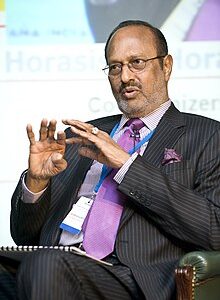
“Mumbai is the undisputed leader when it comes to BFSI-focused GCCs,”
said Rahul Arora, Senior MD, JLL India.
“The city’s historical banking and finance legacy, coupled with a maturing digital ecosystem, has made it the go-to location for global financial institutions looking to scale their India operations.”
💼 Mumbai: Banking on BFSI GCCs
As per JLL’s findings:
- Mumbai leads in BFSI GCC leasing volume across India.
- Companies prefer the city for its access to financial regulators, proximity to HQs, and abundance of finance professionals.
- Demand is especially strong from multinational banks, insurance companies, asset management firms, and digital finance players setting up innovation centers.
📦 Core Corridors Fueling Growth
| Corridor | Key Features |
|---|---|
| Bandra-Kurla Complex (BKC) | Premium Grade A spaces, global BFSI HQs, direct airport access |
| Lower Parel & Worli | Redeveloped mill land, near-central workforce accessibility |
| Powai & Airoli | Popular with fintech GCCs, strong connectivity to Navi Mumbai and Thane |
| Thane-Belapur Road | Growing as a cost-effective back-office corridor for BFSI expansions |
Across these corridors, JLL reports that 65–98% of GCC activity is concentrated in high-grade office parks offering ESG-compliant, tech-enabled campuses with excellent infrastructure.
📈 BFSI & Beyond: Mumbai’s Expanding Role
Although BFSI is the core driver, Mumbai is also witnessing:
- Gradual growth in consulting and legal services GCCs
- Fintech R&D centers targeting digital banking innovations
- Uptick in shared services hubs supporting global operations
This evolution highlights Mumbai’s growing role as a multi-sectoral innovation hub, not just a financial capital.
💬 Market Comment
“The maturity of MMR’s office ecosystem, policy support for financial innovation, and talent availability give it a long-term edge,”
noted Dr. Samantak Das, Chief Economist & Head of Research, JLL India.
“As BFSI firms modernize their global operations, MMR will remain a core GCC destination, especially for high-value financial and compliance services.”
🚀 India-Wide GCC Momentum – MMR Stays Ahead
- India GCC leasing (2022–H1 2025): ~230 million sq. ft.
- GCC share in total leasing: 35.4%
- BFSI + ER&D (2024–H1 2025): 51.5% of all GCC leasing
- Mumbai BFSI GCCs: Among highest leasing share, surpassing Chennai and Hyderabad in this segment
🧮 Outlook for MMR
| Indicator | Projection |
|---|---|
| GCC Employment | From ~1.9M (2025) to ~3M by 2030 |
| BFSI Headcount Share | Mumbai likely to account for >20% |
| Vacancy Rate | Expected to tighten in core submarkets |
| Development Pipeline | Steady with pre-commitments from BFSI |
Also Read: MMR Saw 16,510 Launches in Q3 of 2021, 140% Increase from Q2