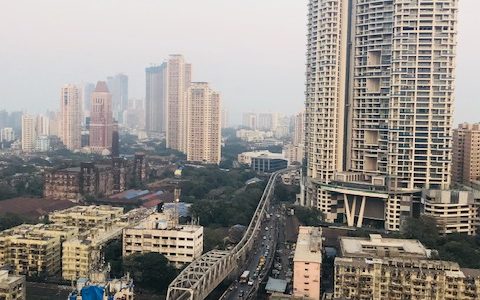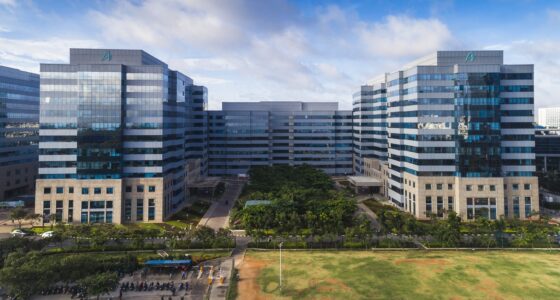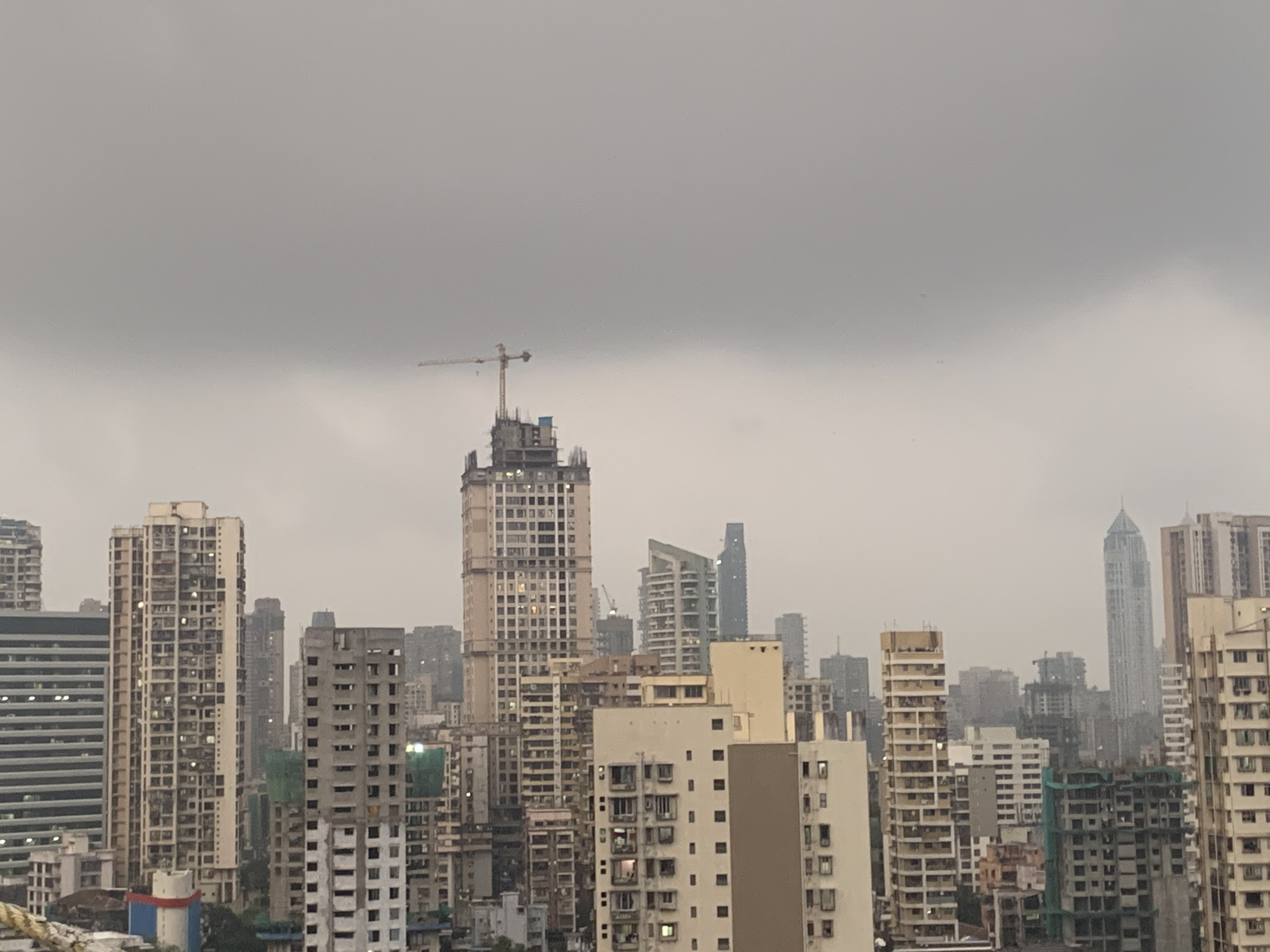
Mumbai reaffirmed its position as India’s most dominant real estate market in 2025, backed by strong residential absorption and one of the highest office leasing volumes recorded in the last decade, according to Knight Frank India’s latest report India Real Estate: Office and Residential Market, July–December 2025 (H2 2025).
Despite global economic uncertainties and moderated supply additions, Mumbai’s real estate sector demonstrated resilience, underpinned by steady end-user demand, disciplined developer activity, and growing occupier confidence—particularly from Global Capability Centres (GCCs).
Office Market: Leasing at 9.8 mn sq ft, Second Best in Over 10 Years
Mumbai’s office market closed 2025 with 9.8 million sq ft of total leasing, marking the second-highest annual leasing volume in more than a decade, even as volumes declined marginally by 5% year-on-year. Leasing activity in H2 2025 stood at 4.3 million sq ft, supported largely by large-format transactions in scalable suburban micro-markets.
New office completions during the year fell by 12% YoY to 5.1 million sq ft, helping keep vacancy levels contained at 18.3%. The slowdown in fresh supply, coupled with quality-driven demand, contributed to firm rental growth across key business districts.
Average transacted office rents in Mumbai rose 6% YoY to INR 125 per sq ft per month. Core business districts such as BKC and Worli continued to command premium rents in the range of INR 350–600 per sq ft per month, while suburban locations emerged as cost-effective alternatives for occupiers seeking scale.
GCCs Emerge as the Primary Growth Engine
A defining shift in 2025 was the sharp rise in Global Capability Centres (GCCs) as a key occupier segment. GCCs accounted for 27% of total leasing in H2 2025, nearly tripling from 9% a year earlier. This growth was driven primarily by BFSI, technology, and engineering firms expanding analytics, product development, and shared services operations in Mumbai.
India-facing occupiers remained the largest segment with a 40% share, though significantly lower than the 72% share recorded in H2 2024, indicating increasing diversification of demand. Third-party IT and ITeS firms also expanded their footprint, accounting for 20% of leasing, particularly in cost-sensitive suburban hubs.
Large transactions were concentrated in SBD West and PBD, which together contributed over 60% of total leasing, led by Andheri East, Goregaon, Airoli, and Thane.
Commenting on the trend, Gulam Zia, International Partner and Senior Executive Director, Knight Frank India, said Mumbai’s deep talent pool and improving infrastructure continue to make it a preferred destination for global firms setting up high-value operations.
Residential Market: Stable Growth Despite Higher Prices
Mumbai also retained its status as India’s largest residential market, registering 97,188 housing unit sales in 2025, a 1% YoY increase despite a higher base. The second half of the year was particularly encouraging, with H2 2025 sales rising 3% YoY to 50,153 units.
Average residential prices increased 7% YoY to INR 8,856 per sq ft, reflecting sustained demand and limited speculative supply. Developers exercised caution, reducing annual housing launches by 10% to 87,114 units, aligning supply with absorption levels.
This disciplined approach led to a 6% reduction in unsold inventory, which stood at 155,604 units by the end of 2025—signaling improved market health.
Shift Towards Higher Ticket-Size Homes
A notable trend during H2 2025 was the declining share of affordable housing (homes priced below INR 5 million). The segment’s contribution to sales fell from 42% in H2 2024 to 37% in H2 2025.
In contrast, demand strengthened in higher ticket-size categories, especially the INR 20–50 million segment, which emerged as the market’s sweet spot with a healthy Quarters-to-Sell (QTS) ratio of 3.9. Sales in the INR 50–100 million segment also gained traction, reflecting growing buyer confidence in premium and lifestyle-oriented housing.
Infrastructure Boosts Peripheral Demand
The Peripheral Central Suburbs remained Mumbai’s strongest residential demand driver, accounting for 28% of total sales. Demand in these locations was further supported by the operationalisation of major infrastructure projects such as the fully underground Metro Line 3 and the Mumbai Trans Harbour Link (Atal Setu), significantly improving connectivity and commute efficiency.
According to Knight Frank, improved metro access and infrastructure-led development are enhancing the value proposition of peripheral locations, making them increasingly attractive to end-users seeking better affordability without compromising connectivity.
Outlook: Consolidation with Long-Term Stability
Mumbai’s real estate market in 2025 reflected a phase of healthy consolidation, marked by balanced supply-demand dynamics, price appreciation driven by genuine demand, and a structural shift toward higher-quality office and residential assets.
With GCC-led office demand, infrastructure-backed residential growth, and disciplined developer strategies, Mumbai is well-positioned to maintain its leadership across both commercial and housing segments in the coming years.
Also Read: Metro Line 3: A Game-Changer for Mumbai’s Real Estate Landscape