By Varun Singh
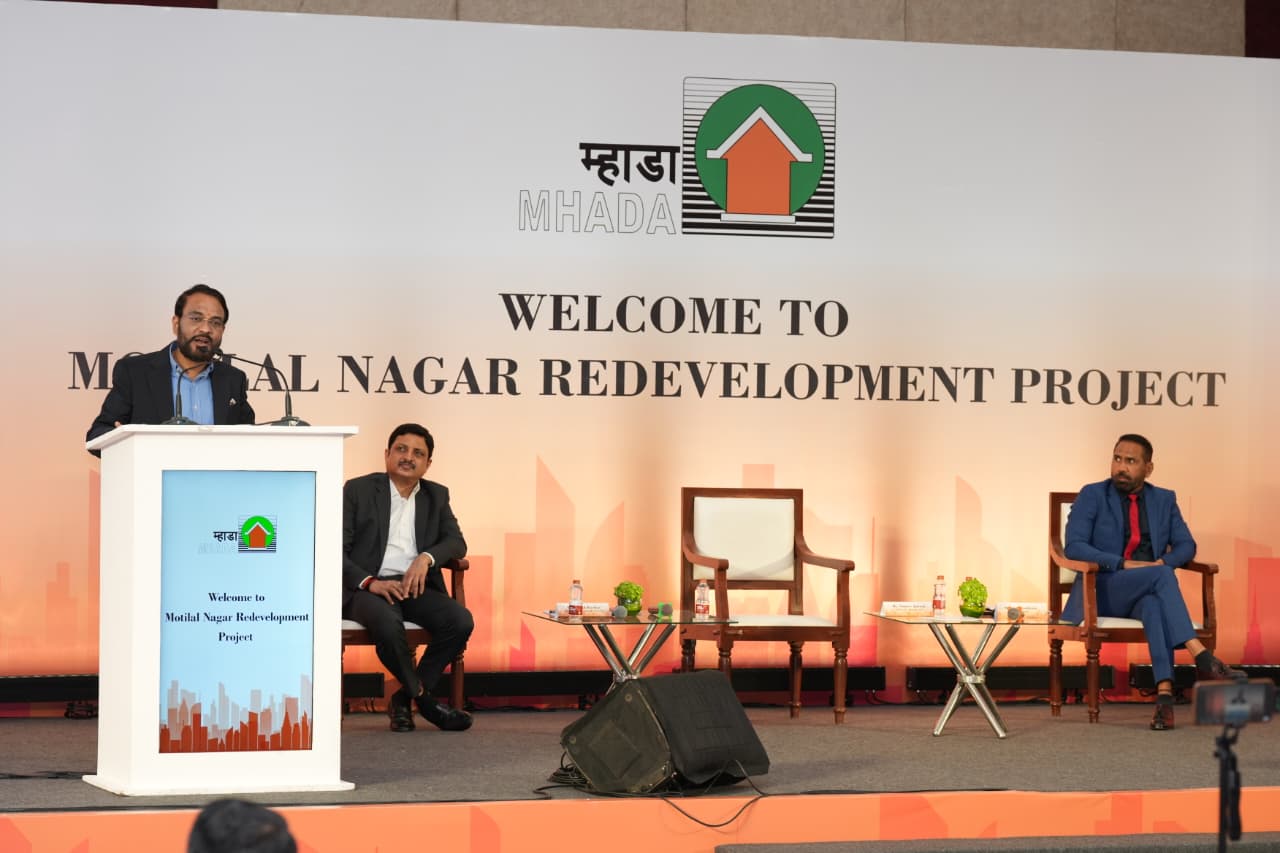
The recent controversy involving IAS officer Sanjeev Jaiswal at the Motilal Nagar public meeting has sharply divided public opinion in Mumbai. The episode is being viewed through multiple lenses, sparking debate not just about individual conduct but also about deeper issues of governance, language, and accountability in urban redevelopment projects.
The Divided Opinions
One section believes the protester was out of line—especially when the rehabilitation package on offer is highly favourable. Reports suggest that tenants occupying around 260 sq ft are being offered homes as large as 1,600 sq ft, making the opposition appear disproportionate.
Others, however, feel the IAS officer went too far. Their argument is simple: regardless of provocation, a senior public servant is expected to maintain composure. The tone and language used in response to a citizen holding a protest placard, they argue, crossed the limits of acceptable conduct in a public forum.
Political voices have now entered the debate, accusing the officer of overstepping boundaries. The result is a polarised Mumbai—one side insisting protesters must stay “within limits,” the other demanding the same from those in authority.
What is the Real “Limit”?
In a democracy, citizens have the right to protest peacefully. At the same time, such protests should ideally respect local sensitivities, including language and decorum.
However, the burden of restraint is not equal.
Government officers represent the state. They are expected to uphold a higher standard of conduct—marked by dignity, patience, and emotional control—even in challenging situations.
When either side fails to maintain this balance, confrontations like the one at Motilal Nagar become almost inevitable. The real issue, therefore, is not who crossed the line—but why the system allowed the situation to reach that point.
The Bigger Governance Vacuum
Beyond the immediate clash, the incident exposes a deeper institutional problem within MHADA.
For years, key leadership positions have remained vacant:
- MHADA President (the apex political head)
- MHADA Mumbai Board Chairman
These are not redundant posts. They exist precisely to bridge the gap between bureaucracy and public sentiment.
Had either of these positions been filled, it is highly likely that a political leader—not a bureaucrat—would have chaired such a sensitive public meeting.
Why the Long Delay in Appointments?
This raises a fundamental question for successive Maharashtra governments:
If these positions are so unimportant that the system can function without them for years, then they should be abolished altogether.
But if they serve a real purpose—bringing political accountability and public sensitivity into governance—then why have they remained vacant since 2019?
Across both the previous and current regimes, the failure to appoint individuals to these roles reflects a concerning lack of administrative priority.
This prolonged vacuum has consequences:
- Increased pressure on bureaucrats
- Reduced political accountability
- Greater disconnect between policy decisions and public sentiment
The Way Forward
Incidents like Motilal Nagar are not inevitable—they are preventable.
First, the government must immediately fill vacant leadership positions within MHADA. These roles exist for a reason and cannot remain symbolic placeholders.
Second, there is a need for clear guidelines governing public meetings—especially those involving redevelopment and rehabilitation. This should include protocols around protest management, communication standards, and acceptable conduct from both officials and citizens.
Finally, there must be a renewed emphasis on mutual respect:
- Citizens should protest constructively
- Officials must remember they are public servants, not authority figures above scrutiny
Conclusion
The Motilal Nagar episode is not just about one confrontation—it is a symptom of a larger governance gap.
An over-reliance on bureaucrats for politically sensitive roles, combined with a persistent leadership vacuum in key housing bodies, creates the perfect conditions for such conflicts.
The Maharashtra government must decide:
Either strengthen institutions through timely appointments—or accept that such controversies will continue to surface.
Because in the end, this is not just about one incident. It is about whether governance can truly bridge the gap between policy and people.
Also Read: Motilal Nagar Residents Oppose Adani, Claim MVA’s 2021 GR Favoured Developer Over Residents